

@BarkaiLab
Account based inIsrael
About this account
- Account based in
- Israel
- Connected via
- Israel App Store
Account-level information from X, not a live location or the device used for a specific post.
Systems Biology Lab @ 🔬Weizmann Institute of Science. # Understanding design principles of biological circuits.
Israel
Joined September 2017
- Tweets402
- Following894
- Followers2.5K
- Likes771




(7/7) This is the lab’s first mammalian study, extending principles of IDR-directed genome targeting from yeast to mammalian transcription factors while introducing a mammalian ChEC-seq platform for high-resolution mapping of protein-DNA interactions. genome.cshlp.org/content/ear…
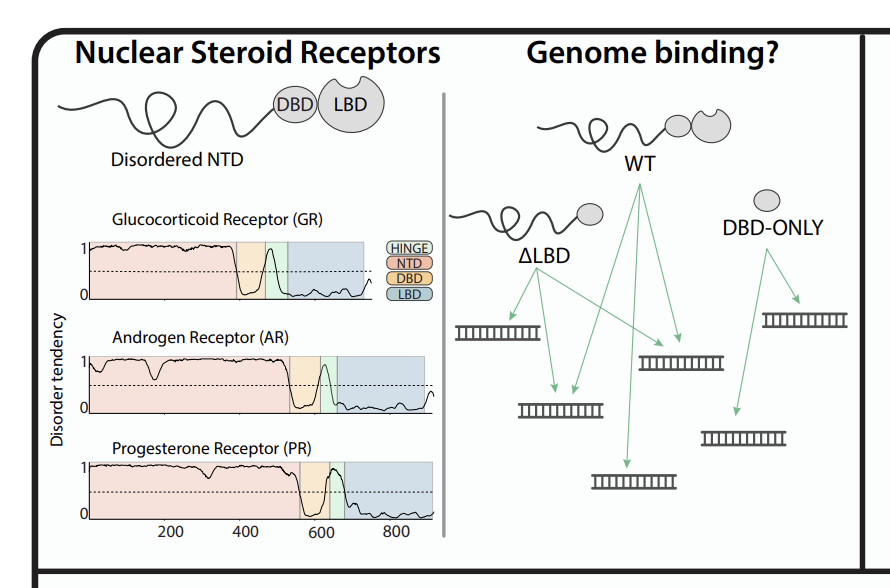
(6/7) The NTDs also direct genome targeting to distinct SR motifs, but not to other Transcription factor’s motifs in budding yeast, where mammalian cofactors are absent.

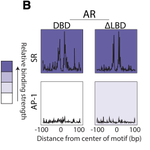
(5/7) Footprint analysis uncovered an unexpected role for AP-1. Rather than simply recruiting steroid receptors, AP-1 strongly shapes binding when the NTD is absent. The NTD relieves this AP-1 bias, enabling receptors to efficiently bind canonical steroid response elements.

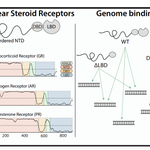
(4/7) Progressive NTD truncations reveal that this targeting is encoded by many weak determinants spread throughout the disordered sequence.

(3/7) Although androgen, glucocorticoid, and progesterone receptors recognize the same DNA motif through similar DNA-binding domains, their intrinsically disordered N-terminal domains (NTDs) direct them to distinct genomic targets.

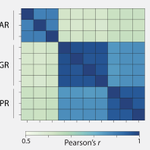
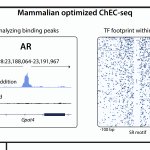
(2/7) Our mammalian ChEC-seq workflow generates reproducible, high-resolution maps of steroid receptor binding. Beyond identifying binding peaks, it resolves footprints at individual DNA motifs.

(1/7) How do steroid receptors identify their target sites within the mammalian genome, despite the abundance of similar DNA motifs? We tackled this question by adapting ChEC-seq for mammalian tissue culture, enabling footprint-resolution mapping of transcription factor binding.
We propose a model in which Med15 recruitment is affected by weak ABD-TF interactions and C-terminal interactions with Med2/3, leading to Med15’s UAS specificity.

Analysis of a strain deleted of 12 recruiting TFs showed that a subset of Med15 UAS specificity does not depend on recruiting TFs.

The C-terminus biases Med15 binding towards a subset of UASs favored by Med2 and Med3, likely by interacting with them.
Is Med15’s genome-wide UAS selection entirely TF-dependent?

Systematic mutations pinpointed a disordered C-terminal region that affects Med15 UAS selection.
As the C-terminus coordinates subunit interactions within the Mediator, do other subunits affect Med15 recruitment?

We deleted ABDs individually and observed slight to no changes in binding profiles. Combining ABD deletions had prominent effects.
What else may contribute to Med15 recruitment?

The paradigm says that coactivators are passively recruited to targets by transcription factors (TFs). But is that the whole story?
We explore the Mediator subunit Med15 to ask: Do its activator-binding domains (ABDs) alone drive UAS targeting?
biorxiv.org/content/10.64898…
Barkai Lab retweeted
How do transcription factors (TFs) that recognize the same DNA motif end up binding different places in the genome? 🧬
We're excited to show you how we tackle this question in our new bioRxiv pre-print!
doi.org/10.64898/2026.04.27.…
Our work suggests that TF specificity isn’t just encoded in DNA motifs or chromatin state...
Intrinsic TF features—especially disordered non-DBD regions—play a central role in determining where it binds, highlighting mechanisms beyond motif or chromatin-based models.

So what’s driving this genomic selectivity?
Our data point to disordered regions outside the DNA-binding domain as major determinants of binding strength and genomic preference, even in the absence of specific cofactors.

Chromatin accessibility helps explain binding, but doesn’t totally solve the problem.
Binding is generally enriched in low-nucleosome regions, yet many occupied sites remain nucleosome-covered.
And importantly, TFs that share the same motif still bind different genomic targets.


But motif recognition alone is far from sufficient to determine TF binding patterns.
Even though TFs preferentially recognize their cognate motifs, they only occupy a small fraction (~5–20%) of all motif occurrences in the genome.

We systematically profiled 60 human TFs across 10 different DBD motif families and obtained robust genome-wide binding profiles for 42 of them (~70%).
We show that budding yeast can function as a reproducible system for studying human TF binding.

