

Basic Research in Cardiology is an international journal for cardiovascular research.
- Tweets128
- Following57
- Followers271
- Likes9





ALT Study outline for investigating the efficacy of intravenous administration TY1 in a mouse two-hit model of HFpEF. Wildtype c57BL/6 mice were placed on a high-fat diet and the nitric oxide synthase inhibitor Nω-Nitro-L-arginine methyl ester (L-NAME) for five weeks whereafter they were randomized to receive intravenous (retro-orbital) infusions of vehicle (saline; negative control) or TY1 (0.15 mg/kg) at frequencies of every other week, weekly, or biweekly (total of 10 weeks). TY1 administration reduced diastolic dysfunction as indicated by echocardiographic E/e´(n = 4–10 animals per group).

ALT Venn diagram illustrating relative proportion and overlap of DMPs within HFpEF and HFrEF relative to CON, and X–Y plot of overlapping DMPs revealing a strong positive correlation irrespective of disease etiology.

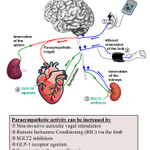
ALT Different treatments can recruit interorgan protective afferent (blue), and efferent PNS (red) signalling pathways. Sympathetic signalling pathways are shown in green.

ALT Mechanisms of immune-checkpoint inhibition resulting in changes in T-cell metabolism and gene transcription, as well as anti-tumor response and potentially cardiovascular immune-related adverse events.

ALT Schematic overview of immune checkpoint-inhibitor-related myocarditis. Modified from: Seidel JA, Otsuka A, Kabashima K (2018) Anti-PD-1 and Anti-CTLA-4 Therapies in Cancer: Mechanisms of Action, Efficacy, and Limitations. Front Oncol 8:86. https:// doi. org/ 10. 3389/ fonc.2018. 00086

ALT Effect of ventricular fibrillation on infarct size in patients with STEMI The area under the curve (AUC) of 48-h troponin I was significantly lower in the VF group than in the CTRL group (right panel). Data are expressed as median (first-to-third quartiles). The circles represent individual data.

ALT CD4+T cells were isolated from WT and 4E-BP3 KO EAM mice and stimulated with MyHC-α peptide for 48 h. Cytokine levels in the culture supernatants were analyzed by ELISA, n = 6 per group. Results are presented as the mean ± SEM. *P < 0.05. EAM experimental autoimmune myocarditis; SEM standard error of mean; WT wild type; KO,knockout.

ALT The current study aimed to assess the effects of sex and obesity on immune checkpoint inhibition-related cardiac systolic dysfunction in aged mice. Anti-PD-1 treatment caused systolic dysfunction in the lean, normocholesterolemic mice, nevertheless, systolic dysfunction was not observed in the obese, hypercholesterolemic mice. This effect was independent of the sexes.

ALT Single-cell landscapes of ECs across 24 organs in human. Heatmap showing the scaled expression levels of top 10 tissues-specific marker genes (left). Expression patterns of 49 marker genes conserved in two or more tissues are shown on the right (z-score, Poisson mixed model; corresponding P value calculated from two-sided Wilcoxon rank-sum test, FDR < 0.01). PFC, prefrontal cortex; ACC, anterior cingulate cortex; EC, entorhinal cortex; OC, occipital cortex; OTC, occipitotemporal cortex; HIP, hippocampus; RA, right atrium; RV, right ventricle; LA, left atrium; LV, left ventricle; AX, apex; SP, septum; MG, mammary gland; SAT, subcutaneus adipose tissue; VAT, visceral adipose tissue; PIT, pituitary; SC, spinal cord.

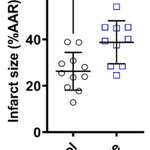
ALT Response to ischemia–reperfusion injury. Differences in cardiac infarct size (n = 11 for control and n = 10 for adenine, **P < 0.01, Student’s t test). (Data are expressed as mean ± SD)

ALT Pooled and site-specific analysis of infarct size from the 5 sites providing triphenyl-tetrazolium-chloride images. A) Pooled analysis of IS quantified by TTC revealed a significant reduction in IS with IPC (closed squares) when compared to I/R (open squares). B) Sitespecific analysis of IS revealed significant reduction in IS with IPC in 4 sites and no reduction in IS with IPC at one site. Data are presented as minimum and maximum (whiskers), interquartile range, mean (square), median (line), and outlier (x) in a box plot and as intra-individual single data points. AAR area-at-risk, IPC ischemic preconditioning, I/R ischemia/reperfusion, IS infarct size, TTC triphenyl-tetrazolium-chloride.

ALT Early molecular and functional changes Post CKD in the heart.

ALT Macrophages enhance the effects of flecainide on cardiomyocytes. For electrophysiological analysis, patch-clamp of CMs in coculture conditions with macrophages were compared with a single suspension of CMs. (a) Co-culture experiments show a more positive RMP and a decrease in APA with an increase in Vmax and APD50. Application of flecainide does not significantly change the absolute values in CM alone. However, we can see the expected change as a trend towards a lower Vmax after the application of flecainide. In contrast, under co-culture conditions with macrophages significant changes can be observed upon flecainide treatment. Numbers of individual experiments are indicated in the figure.

ALT The field of cardio-oncology presents both chances and challenges. Currently, many of the existing recommendations are based on expert consensus, which highlights the need for further research to better understand the interactions between cancer, cancer treatments and cardiovascular health. The simultaneous management of cancer and cardiovascular disease requires seamless multidisciplinary team coordination. It is therefore essential to implement comprehensive cardio-oncology programmes based on personalised risk scores to optimise resource investment. Ensuring equitable access to cardiooncology care remains a challenge. Integrating cardiovascular care into oncology is an effective strategy for improving overall patient outcomes.

ALT Example of segmentation areas, showing two slices (the third slice in basal orientation and the fourth slice in apical orientation) from a representative experiment. AAR area at risk, TTC triphenyl tetrazolium chloride.

ALT Possible mechanisms of cancer-related cardiac wasting.

ALT Integrated atlas of cardiac fibroblasts from different disease models. UMAP embeddings, showing the integrated fibroblast atlas colored by cell clusters, i.e. the integrated fibroblast states (IFS). Labels indicate possible fibroblast differentiations based on functional characterization.

ALT Mechanisms and proposed therapies for anthracycline cardiotoxicity. This figure summarizes the complex interactions between the mechanisms of cardiotoxicity and the potential therapeutic interventions that could ameliorate these effects. Left Panel: Various mechanisms contributing to anthracycline cardiotoxicity are depicted. Right Panel: Proposed cardioprotective therapies than can target the mechanisms of anthracycline cardiotoxicity (AC).

ALT Immunotherapy drugs mechanisms; A) CTLA-4 mAbs; B) PD-1/PD-L1 mAbs

ALT Exercise protects heart in breast cancer via STAT3. Exercise protects against breast cancer-induced cardiac injury via activating cardiac STAT3-miRNA crosstalk, proved by Adeno-associated virus erotype 9 (AAV) control (AAVc) or with AAV driving STAT3 tyrosine 705 mutation (AAVmu) injection.