

MSc Nature Management from @koebenhavns_uni l Bsc Biology from @ImperialCollege | Co-founder of @Theextinctions
Copenhagen, Denmark
Joined February 2021
- Tweets637
- Following89
- Followers59
- Likes940


Soren Bay Kruse Thomsen retweeted

NEW at The Extinctions: a guest article exploring the extinctions in the South American tropical lowlands - the factors of climate, hunting and more - from the Cerrado savannas of Brazil to the Chaco of Paraguay and Argentina and beyond.
theextinctions.com/articles-…

Soren Bay Kruse Thomsen retweeted

Have just launched my personal website/blog, where I will be hosting links to all the articles I write for @Theextinctions, @NoemaMag, @Quillette and others, as well as posting reviews of books, movies and other media occasionally. Link in my bio.

Soren Bay Kruse Thomsen retweeted

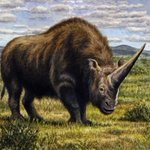
So there is a rumor that a mummified woolly rhino was found in Alaska. Just in case it turns out to be true here is some art :B Also visit my instagram to read on more intriguing scenarios re: the creatures depicted!


Soren Bay Kruse Thomsen retweeted

At the request of a Twitter friend, I’m coming out of posting limbo to talk about the ecology of freshwater ponds in the palearctic region, their history, and the rich fauna they support. There’ll be a second part about floral biodiversity, and how to design biodiverse ponds

Soren Bay Kruse Thomsen retweeted
NEW - my article at Quillette on the Indo-European migrations, the aDNA revolution, the state of modern archaeology and the pig-headedness of an academic old guard facing obsolescence.
I'm sure this won't be remotely controversial.

Soren Bay Kruse Thomsen retweeted

Agriculture & rewilding, culture & nature, are often regarded as stark antitheses. New insights from ecology, however, suggest a path by which these seeming opposites may be reconciled, @Hieraaetus argues.
noemamag.com/farming-the-wil…

Soren Bay Kruse Thomsen retweeted
“The case of the dingo strikes at the heart of the ecological conundrum of ecosystem change — of what it means to belong somewhere in nature. Fundamentally, the dingo forces us to question the coherence of ‘nativeness.’”
—@Hieraaetus
noemamag.com/the-dingos-fate…

Soren Bay Kruse Thomsen retweeted

🌿🌳Rethinking Europe’s #Nature🍃🐘Our new study challenges the closed-forest paradigm—pre-Homo sapiens landscapes were a fine-grained mosaic of open areas, closed #forest & light #woodland, likely linked to the rich #megafauna🐂🌼sciencedirect.com/science/ar…

Soren Bay Kruse Thomsen retweeted
Just out now - my new essay on rewilding, agriculture, grazing ecology and the coexistence of culture and nature. In it, I span everything from Pleistocene and Neolithic Europe to Knepp in England, Dutch rewilding, Yellowstone and, briefly, the Moon!


Agriculture & rewilding, culture & nature, are often regarded as stark antitheses. New insights from ecology, however, suggest a path by which these seeming opposites may be reconciled, @Hieraaetus argues.
noemamag.com/farming-the-wil…
Soren Bay Kruse Thomsen retweeted
Check out the new article at TheExtinctions by @GottGro! Art by yours truly of course 😌 This year started with a lot of lions, but the true protagonists here are the ground squirrels :B


NEW at The Extinctions: In this latest article, @GottGro traces the history of the European steppe since the late Pleistocene through one of its quintessential inhabitants: the ground squirrel, or souslik.
#extinction #macroecology #Holocene
theextinctions.com/articles-…

Soren Bay Kruse Thomsen retweeted
NEW at The Extinctions: In this latest article, @GottGro traces the history of the European steppe since the late Pleistocene through one of its quintessential inhabitants: the ground squirrel, or souslik.
#extinction #macroecology #Holocene
theextinctions.com/articles-…
Soren Bay Kruse Thomsen retweeted
Somewhere in Pleistocene South Africa, a quagga crosses a river in an attempt to rescue a foal caught by a leopard. Unfortunately, there's leopards in the water too... Apparently colder climate allowed leopard seals to roam South African waters during the last ice age....

Soren Bay Kruse Thomsen retweeted
A sight for Pleistocene eyes only... A herd of Stephanorhinus in a central European forest. These rhinos adapted well to temperate and even cold climates and were related to today's highly endangered Sumatran rhino. Check out the new article at @Theextinctions about them!

Soren Bay Kruse Thomsen retweeted
NEW on The Extinctions - The Lost Rhinos of Europe
Everyone knows the woolly rhinoceros, a famous member of the Ice Age fauna, but are you familiar with the *other* lost rhinos that once haunted ancient Europe?
#extinction #megafauna
theextinctions.com/articles-…

Soren Bay Kruse Thomsen retweeted
Today on The Extinctions, @Hieraaetus reviews the new book Nature's Ghosts by @some_yeo, a wide-reaching exploration of the ways in which humanity has transformed the world's ecosystems over the last 100,00 years or so, and what this might mean today.
theextinctions.com/blog-1/na…

Soren Bay Kruse Thomsen retweeted

Really happy with this detailed review of NATURE'S GHOSTS by @Hieraaetus. Feel like it gets to the heart of what I wanted to achieve with it – very satisfying to read as a writer! Published in @theextinctions.
theextinctions.com/blog-1/na…
Soren Bay Kruse Thomsen retweeted
Insular dwarfism in snakes! #WorldSnakeDay Vipera latastei ebusitana was only 36 cm long, whereas its mainland ancestor, which still exists today, can grow to over 70 cm! It dissappeared 4000 years ago with the arrival of humans (and dormice!)

Soren Bay Kruse Thomsen retweeted
NEW on The Extinctions - Timor and the Lesser Sundas. The lost world of the Sunda Islands boasted dwarf elephants and giant dragons. In our latest article we continue to explore these islands and the demise of their megafauna
theextinctions.com/articles-…

Soren Bay Kruse Thomsen retweeted
Very glad and proud to announce the release of my latest article for @NoemaMag, "Paradise Lost?"
In it I tackle the concept of the 'Noble Savage', the myths of a primordial harmony between Man and Nature, and the implications for our relationship with the natural world today.


“The total association in popular culture of Indigenous peoples & environmental stewardship has birthed what academics have termed the ‘ecologically noble savage,’” @Hieraaetus writes.
But it’s a complete myth.
noemamag.com/paradise-lost/?…
