

Microbiology, evolution, antibiotic resistance, applied math, molecular biotech. Associate Professor @HarvardMed. Basic research is the engine of progress. 🦠🧬
A talking head on a screen
Joined July 2008
- Tweets38.3K
- Following1.6K
- Followers23.1K
- Likes66.9K







Pinned Tweet
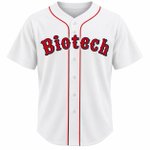
@nquinoneso and @implosian made a logo for our lab and it's incredible. I can't get over it

Michael Baym retweeted

Unpopular Academic Advice #12: Being reliable matters more than being perfect.
I’ve noticed an interesting paradox in academia, especially among junior scholars. Some care so much about their reputation that they hesitate to share work until it’s perfect. I understand the instinct. Early in your career, every piece of work can feel like a test of your ability.
But imagine two collaborators. One sends you messy code on Friday and says, “It runs, but it’s not pretty. Let me know if anything is unclear.” The other promises beautifully documented code next Friday. Then the Friday after that. Three months later, you’re still waiting.
Who would you rather work with again?
We can clean up messy code. We can fix mistakes. But it’s much harder to rebuild lost trust.
The irony is that trying too hard to protect your reputation can end up doing more damage to it than the imperfect work you were afraid to share.


Michael Baym retweeted

this is a fun one... a site for investigating spectral graph theory of the philly road network -- you can put various streets "under construction" & see what the effect on the graph laplacian eigenvectors is...
philly-under-construction.pr…

This is such a perfect post for this era: a genuinely deep philosophical musing on the nature of the knowable dressed like a shitpost about a math meme and AI

Michael Baym retweeted

New paper from our lab:
science.org/doi/10.1126/scia…

Michael Baym retweeted

I need all the AI people to stop saying "biology" when they mean "medicine" or "drug development"

Michael Baym retweeted

Some thoughts about the role of academia in the progress of safe AI news.harvard.edu/gazette/sto…

Biology will indeed be helped by “exponential computation”, but it’s important to remember that there are huge differences between the computation we have, what we can imagine, and the max physics allows, and none are anywhere near what’s required to brute force many bio problems
Michael Baym retweeted

Largely agree with these thoughts, and have some perhaps discordant points to add.
- Solving biological diseases in the next few years will benefit mostly from the usefulness of the language models, substantially more than molecular ML.
- Proponents of the bitter lesson for biological models (not LLM) aren't wrong, just (possibly pathologically) too early. We don't have enough data, and the data we can collect quickly is probably not the right kind (we may get lucky with biology being easy, but it's usually not).
- I think just scaling models and public (passively accumulating) data is a cost ineffective direction (it's like scaling dense NNs on the internet). Today's model outputs are as good as GPT2. A single bioinformatician with linear regression, sometimes even without any additional data, can beat these models in many applications (people rarely benchmark AI advances against a simple Potts model). The most promising approaches for molecular models are innovating heavily on architecture (e.g. Baker Lab, Alphafold, etc). This may automate/speed up with LLMs.
- Few companies (hopefully Dyno included) are betting that we've triangulated enough pieces from multiple experimental channels to predict (with scale) how things translate in humans. Having worked on translating in vitro things to primates, I'm very cautious with the idea that current models, trained on current public data, can do anything more than manipulating already working solutions, either explicitly or through implicit remixing of what has worked. It may still work, but the underlying bets offer no specific reason why there is any epistemic risk advantage other than being "made with AI".
- Short term, there is more promise in combining molecular models with LLMs rather than scaling them. The two sources of lift in AI discovery elsewhere has been (1) Breaking Silos: AI synthesizes a bunch of knowledge/expertise that is rarely present in the same room (2) Data mining : AI pushes through volumes of data, with an intelligent eye, that humans or simple algorithms simply can't scale or adapt to. I'm curious what will come out of multimodal training of LLMs and biological data, which seems to be something the big players are pursuing. I think latent reasoning in the language (or better yet, + code) domain will reveal a lot more biology than scaling on nucleotides or proteins alone.
- My view is that the next opportunity of combining lab and AI will be massive-scale hypothesis testing with LLMs. Currently a multiplexed assay generally tries to test a handful of ideas because the humans are bandwidth limited in designing properly powered experiments. LLM's can scale this very well.
I have no doubt lots of good news will come on the impact of AI in biology in the next five years. I can't tell what paradigm will win, but my prediction is that it will not be the same paradigm imported from the LLM land (which will get a ton of funding anyways, because it's easy to pattern match for tech VCs).

There’s a really pronounced divide between people who are on the AI side of things and people who are on the biology side of things. Even among people working in AI, the divide persists based on where they’re focused.
The AI side, adherents of scaling laws and the bitter lesson, believe that AI getting better means AI being more capable of novel discoveries in medicine (that go beyond discovering new drugs in well understood targets or speeding up dry lab work etc).
The biology people think the idea of a bitter lesson in biology is kind of ridiculous and that regardless of AI’s capabilities it’s going to be at least 5-10 years until you could hope to reliably simulate human toxicology in silico (right now AI/ML can’t even reliably simulate in vivo studies like binding affinities or functional assays).
Even the most AI pilled of them, who will list all the areas that AI can reduce the time spent on various areas, don’t think the concept of AI discovering novel targets or generating new understanding of causal biology is realistic in the near term. Most, in fact, will readily characterize the assumption that even an “ASI” level model could find cures hidden in our current understanding (without expanding that understanding with significantly more biological data) as patently false.
This was a big part of why we wanted to experience it ourselves by using AI for a (very) small portion of what it can do in biology. It was both mind blowing and revealed some poignant insights into how different the problem of making AI better at something like coding is to the problems of biology.
Even if it unlocked the ability to generate new molecules at a stunning pace, its simulation (in silico) of binding only had 49% accuracy. And if we wanted to improve that, we’d need to feed it back the data from the lab - data that took about 30x as long to get as it took to generate the molecules. And these were tests in a test tube (turn of phrase), imagine how long it would take if we wanted to improve the model with data that required recruiting humans and monitoring their reactions.
Human biology is very complex, and adding a drug - especially a novel drug and doubly so for a novel drug acting on a novel mechanism - means mapping interactions that have nth-order-effects that we don’t have the data to predict. Virtual cells have made advancements enabled by AI, but the perturbations equate to a small fraction of the possible.
This is before you even get into curing disease, especially uniquely human diseases. Brain function involves cellular identities that are unique to humans, meaning animal studies are of little use.
How long does it take to understand what the side effects of chronic administration of a drug in humans are? AI can speed up analyzing the data, or designing the trial or even getting it approved…but it can’t make a 6 month trial complete in 3 months.
I think its important to point out that significant advancements can be made in AI that contribute to biology, while also being realistic about how much it speeds up something as complex as curing a specific cancer or diseases of the brain.
Michael Baym retweeted

Everyone is talking about AI bio threats in humans. What they should ALSO be talking about is biothreats in crops and livestock.
In a new letter in @ScienceMagazine, @JonxFeldman, @PardisSabeti, and I argue that agriculture deserves a large place in biosecurity conversations.
Why agriculture? Well, our screening mechanisms don't focus on these pathogens. They are also easier to experiment with, since many don't pose risks to the humans handling them. And there's lots of data about them and host defenses.
As Congress weighs the Biosecurity Modernization and Innovation Act, we're calling for:
- DNA synthesis screening that covers agricultural pathogens
- AI evaluations that explicitly test for agricultural misuse
- Early-warning disease monitoring for agriculture, not just for people
Read it here science.org/eprint/6ARDVAUJY…

Michael Baym retweeted

Our new preprint shows how gene expression heterogeneity and plasticity are linked to enhanced antibiotic resistance at the single-cell level.
biorxiv.org/content/10.64898… #preprint #microbiology #singlecell #antibioticresistance

Michael Baym retweeted

Come work with us and be our colleague!

If you'd like to come work with me and my amazing colleagues as a full-time researcher @MSFTResearch @MSRNE, please apply here:
apply.careers.microsoft.com/…
apply.careers.microsoft.com/…


Michael Baym retweeted
p(HumanBadActions|AI) >> p(Doom).
Need more preventive human alignment (aka legal enforcement of current laws).

so hackers apparently used Claude + Grok + Kimi to automate a cyberattack on 400 banks.
but the crazy part is HOW they got around the safety guardrails:
> told models they’re in internal tests LOL
> Claude refused? → switch to Kimi
> Kimi refused too? → fall back to old-school malware
automated cyber attacks are becoming a norm apparently.

Michael Baym retweeted

Very excited to build together!

We’ve acquired Orchestra Bio, a platform that helps biopharma teams coordinate the complex process of drug development.
Together, we’ll build on Rosalind, our AI models and tools for life sciences research, to streamline those operations and help new treatments reach patients sooner.
Welcome @ashokaraj_ and team!
openai.com/index/openai-to-a…

