

MBA, BSN, RN, CEPS Book reader | Idea considerer | Healthcare / Cardiology | Love is my religion
Texas
Joined September 2018
- Tweets7.5K
- Following2.2K
- Followers740
- Likes68.3K


BenMapping retweeted


Live tomorrow with the builders putting insurance onchain.
Aegis by @fluxpointstudio, @ReBondFi, Ballast Re @Christafarious and @nativeinsurance. Friday, 9 AM PT.
$300 in USDCx for viewers:
-$150 for the best hot take. Repost this with yours and #AlphaGrowth, winner picked live.
-$150 for the best question in the live chat.
Set your reminder ↓
xitter.gq/i/broadcasts/2ZBjdoEXj…


BenMapping retweeted

No, Mamdani, socialism does not increase affordability. Socialism’s pillars are totalitarian, based on forced nationalization and coercive state control.
Read the latest from Senior Research Associate @NicoleHuyer and Senior Fellow @Gundisalvus: heritage.org/progressivism/c…

BenMapping retweeted

If a sitting president executed 90% or more of his economic policies roughly in line with the content of Thomas Sowell’s book ‘Basic Economics,’ they’d probably be the best president of all time.
As measured by how much their policies increase the long-term growth of our country’s standard of living for all its citizens.
It’s honestly not even that complex. #clonethomassowell
BenMapping retweeted

"You reduce crime by eliminating poverty."
This is one of the greatest intellectual confusions of our century. It sounds compassionate. It feels obvious. And the moment you actually test it, it falls apart.
Let's look at the data.
First, the correlation is real. Nobody serious denies that poorer areas have more crime. In Sweden, kids from the poorest 20% of families are about 7 times more likely to be convicted of a violent crime than kids from the richest 20%.
But correlation is not causation. So Swedish researchers did something brilliant: they compared siblings. Same parents, same home, same upbringing, but different family income at different points in their childhood, because parents' income moves over time.
Result, on more than 500,000 children (Sariaslan et al., British Journal of Psychiatry, 2014): once you account for what's shared inside the family, the effect of income on violent crime goes from 7x to nothing. The hazard ratio drops to 0.95. No effect.
Finland ran the same test on 650,000 people. Same result: the income-crime link disappears when you compare siblings.
What predicts crime isn't the bank balance. It's what travels inside families.
Second test: what happens when poverty spikes for everyone at once? 2008. US unemployment doubled from 5% to nearly 10%. 15% of Americans officially poor. If poverty creates crime, crime should have exploded. Instead it fell. Year after year. Robbery, the most "economic" crime of all, dropped 10% in 2010 alone. Criminologists literally said they were stumped. Same story in the Great Depression: 25% unemployment, and crime went down in many cities.
Third test: take families out of poverty and see. The US government ran a randomized lottery called Moving to Opportunity. Thousands of families in public housing got vouchers to move to low-poverty neighborhoods. For boys, violent arrests dropped at first, property crime arrests went up, and over time the effects faded. New zip code. Same behavior.
Fourth: the claim that police don't matter. This one is just false. Chalfin et al. (American Economic Review: Insights, 2022): each additional police officer prevents about 0.1 homicides. And per capita, the lives saved are twice as many among Black victims as among white victims. The people who suffer most from "police don't matter" are the poorest neighborhoods.
So what does predict crime? The Dunedin study followed 1,000 children from birth to age 32. Self-control measured between ages 3 and 11 predicted adult criminal convictions, even after controlling for social class and IQ (Moffitt et al., PNAS, 2011). Cognitive ability matters too: across 700,000 Swedish men, lower cognitive scores at 18 track with violent convictions, and the link barely moves when you control for childhood socioeconomic status (Frisell et al., 2012).
And here's the part nobody quotes: in Dunedin, kids whose self-control improved over time did better than predicted. Behavior can change. Which means responsibility is real.
Why does this matter? Because "poverty creates crime" isn't just wrong. It's toxic.
It turns criminals into victims. The man who robbed you becomes a symptom of "the system," and you, the real victim, become a footnote in someone else's narrative.
It merges two completely different things. "You're poor, we'll help you" is one policy. "You're poor and you committed a crime, so we'll excuse you" is another. Fusing them insults the millions of poor people who work, raise their kids, and never hurt anyone. The vast majority of poor people are not criminals. That alone kills the theory.
It removes responsibility. Build a political system on "your circumstances made you do it" and you destroy the one thing that actually changes behavior: the certainty that you own your choices. Every excuse the state manufactures is an incentive.
And it feeds the state forever. If every crime is a social failure, every crime justifies a new program, a new budget, a new agency. Crime becomes the business model of bureaucracy.
The alternative is simple and old.
A lighter state that protects instead of explains. The same rules for everyone, from the projects or from a gated community. Certain, swift punishment for anyone who commits a crime. And never, ever telling someone their crime was written in their social condition.
Treating someone as responsible is respecting them. Excusing someone because they're poor is the most condescending thing you can do to them.

This quoted post is unavailable.
BenMapping retweeted
Bernie Sanders says the top 1% owns more than the bottom 93%, that fewer than a thousand billionaires got $2.2 trillion richer last year, and that it's "obscene."
It's the most seductive and most wrong economic argument of our time. Let me explain why.
First, wealth distribution follows a power law. Always. Everywhere. Books, music, startups, followers on X, goals in soccer. A small minority captures most of the value. That's not a bug of capitalism. It's the mathematical signature of every system where value gets created.
So the only question that matters isn't "how big is the rich's slice?" It's "is the cake growing, and is the slice of the poorest growing with it?"
And the answer is yes. In 1990, more than one human in three lived in extreme poverty. Today it's about one in ten. During exactly the period when billionaires multiplied.
Bernie shows you the slice. He never shows you the cake.
Second thing he won't tell you: past a certain level, wealth stops being consumption. It becomes capital allocation.
Elon Musk isn't sleeping on a pile of cash. He owns stakes in Tesla, SpaceX, xAI. Jeff Bezos owns Amazon stock. That "$2.2 trillion" isn't sitting in a checking account. It's factories, rockets, data centers, millions of jobs. Nobody can eat $100 billion. You can only decide where to invest it.
Once you understand that, the whole debate changes. The real question becomes: who allocates capital better?
The people who built Amazon, SpaceX and Nvidia? Or politicians?
A 5% wealth tax isn't "taking money from the rich." It's taking investment decisions away from people who proved they can create value and handing them to people who proved the opposite.
Because the fundamental difference between an entrepreneur and a politician is consequences.
The entrepreneur invests his own money. If he allocates badly, he loses everything. The market corrects him brutally, no appeal. That's why most startups die: the system kills bad decisions.
The politician invests other people's money. If he allocates badly, nothing happens. Worse, he gets a bigger budget to "fix the problem."
Milton Friedman put it better than anyone. There are four ways to spend money. Your money on yourself: you care about price and quality. Your money on others: you care about price. Others' money on yourself: you care about quality. Others' money on others: you care about nothing.
Government is the fourth box. By design.
Perfect example: California high-speed rail. Approved in 2008 for about $33 billion. Current estimated cost: over $100 billion. Passengers carried: zero. No entrepreneur would have survived that. The politicians who pushed it built careers on it.
And when allocation has no consequences, it eventually finds a buyer. A politician who controls billions without accountability becomes the most profitable target in the world for anyone who wants to steer that money.
The irony is that the left that rails against billionaires is itself funded by billionaires. George Soros is one of the biggest Democratic donors in history. The Gates Foundation shapes public health policy across the planet.
Politicians don't fight billionaires. They pick their own. The ones who fund the state over the ones who compete with it.
So if we actually want fewer poor people, we have to stop judging ideas by their intentions and start judging them by their results. And the results are brutally clear.
China, 1978: Deng Xiaoping opens the economy to markets. More than 800 million people escape extreme poverty. The largest retreat of misery in human history. Not through redistribution. Through the freedom to build.
India, 1991: liberalization. Same movie.
South Korea and North Korea: same people, same language, same starting point in 1953. One became one of the most advanced economies on earth. The other has famines.
Poland and Ukraine: comparable living standards in 1990. Today the average Pole is more than three times richer than the average Ukrainian.
Argentina: a year and a half of liberalization, and the poverty rate falls from over 50% to around 30%.
No country in history escaped poverty by punishing the people who build. Every single one did it by letting them build.
And if you want to see what Bernie's program looks like in real life, you don't have to imagine it. It exists. It's called France. We've been running it for 45 years.
Mass nationalizations in 1981. Two years later, Socialist president Mitterrand has to reverse course into austerity.
Retirement at 60. The 35-hour workweek.
A wealth tax for 35 years. Hundreds of wealthy households left every year for Belgium, Switzerland, London, taking their capital, their companies and their future taxes with them. Macron finally scrapped it in 2018.
Hollande's 75% tax: raised a few hundred million, drove talent out, abandoned after two years.
One of the highest tax burdens in the OECD. Public spending around 57% of GDP, a record in the developed world.
Last balanced budget: 1974. Public debt: over €3.4 trillion. Mass unemployment for four decades.
If taxing the rich and growing the state made people prosperous, France would be the richest country on the planet.
It isn't. GDP per capita in France is barely more than half of America's. It's lower than Mississippi, the poorest state in the US. Not a single global tech giant. Our best engineers build Silicon Valley instead. I've been going back and forth between Paris and San Francisco for years. I see it every week.
And California is about to replay the movie. Prop 40, on the ballot November 3rd, would take 5% of billionaires' net worth. Even Gavin Newsom, a Democratic governor, opposes it. The state's own nonpartisan budget analyst warns that income tax revenue could drop every year if the wealthy leave. Larry Page, Sergey Brin and Peter Thiel have reportedly already started moving their assets out.
You don't fight poverty by shrinking the top. You fight it by growing the cake.
Bernie wants a society where nobody has too much. I want a society where nobody has too little.
The first has been tried everywhere and produces equality in stagnation. The second lifted a billion people out of misery.
Choose.

BenMapping retweeted

Stop listening so much to the words and opinions of others, telling you who you are and what you should like and dislike.
BenMapping retweeted

How long do We The People keep paying taxes?

Seven properties, a Mercedes G-Wagon, sneakers worn by Kobe Bryant and a Mickey Mantle rookie card worth $1.5 million. All of these things were bought with taxpayer money.
Paul Randall pleaded guilty in one of the largest Medicaid fraud schemes in the California history – diverting more than $270 million in tax dollars.
BenMapping retweeted
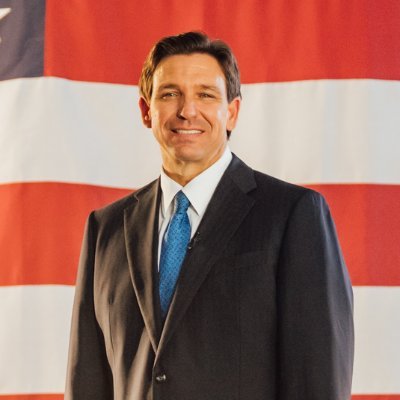
I think it will require term limits and a balanced budget amendment via Article V (states propose and ratify). Have 28 states for the BBA. Fewer for term limits but it’s popular so we can get more to certify, especially red states.

Congress will never have the political courage to reduce spending. People say they want it, until they don’t get their “free” stuff. Neither party can do it. And when DOGE started recommending federal cuts, people hated Elon, burned Teslas, and lost their minds. Yet we (you) have been able to do it in FL. How can this transport to federal level? Does not appear possible.

BenMapping retweeted

Mike Rowe reveals Ford has 5,000 unfilled mechanic jobs paying $120,000 a year.
No degree required. AI-proof. And Ford still can't fill them.
ROWE: "Not a week goes by when I don’t get a call from some CEO... elected official... freaking out."
"They’ve done the math: for every five tradespeople who retire, two come in. It’s been that way for about 12 years now."
“Jim Farley (Ford CEO) told me he’s got 5,000 empty bays at Ford. These are AI-proof six-figure jobs, right? $120,000 a year. He can’t fill them.”
In a separation conversation with Shawn Ryan, Rowe said he visited a Texas data center and met three “debt-free” electricians under 30 making “north of $240,000/year.”
All three of those electricians have been “poached” three times in the last 18 months because the demand for electricians is crazy high.
THE BIG TAKEAWAY: If you're thinking about college but aren't sure what you really wanna do, trade school might be the smarter play.
Chances are, you'll take on a lot less debt, make a lot more money — and AI won't be coming for your job anytime soon.
Readers added context they thought people might want to know
The unfilled Ford mechanic positions require about 5 years of training or experience; $120,000 pay is for top flat-rate performers, while the median auto technician salary is ~$50,000 with high attrition due to the pay system. nypost.com/2025/11/14/bus… fleetmaintenance.com/opinion/guest-… carscoops.com/2026/01/ford-m…
BenMapping retweeted

no cardano isn’t cursed.
its just struggling with the same brutal reality most smaller ecosystems face.. low liquidity, low activity, and a chicken-and-egg problem for new protocols.
taptools pausing/winding down operations is legitimately bad news and i’m not going to try to sugarcoat that shit.
it was THE go-to analytics and portfolio tool for cardano defi, serving over a million users. reasons were leadership exodus (multiple co-founders, CTO, COO, etc.) + unsustainable operating costs in a low-activity ecosystem.
@IOHK_Charles even warned publicly that more projects would collapse this year due to the tough market and governance challenges.
this is a symptom, not the root cause.
the bitter pill to swallow:
defi tvl: $96 million (down recently). top protocols like minswap, liqwid, etc. make up most of it.
solana by comparison: ~$4.9 billion tvl roughly 50x higher.
daily active addresses are hovering around 12k–28k recently (spikes happen, but baseline is modest).
dex volume is obscenely low (~$2.3M in 24h).
chain fees: tiny (~$1.3k in 24h).
cardano has strong fundamentals, high staking ratio (often 58-70%), solid security, formal verification roots, and decent github activity. but on-chain usage and capital deployment are nowhere near the hyped chains. alot of holders are long-term stakers rather than active defi degens.
why is adoption so low?
cardano’s “research-first, slow and steady” philosophy worked great for building a secure base layer, but it hurt in the speed game.
competitors (solana, base, newer L2s) iterate faster, have better dev UX for many, and attract more hype/marketing/liquidity.
low tvl creates a vicious cycle.. new protocols have trouble bootstrapping liquidity and users.
governance friction (recent failed votes on funding, like the summit).
broader crypto market has been tough. attention flows to memes, high-velocity trading, and chains with explosive narratives.
is it hopeless?
not necessarily. cardano has survived multiple cycles with a dedicated (often frustrated) community and patient capital.
real-world use cases like parametric insurance, RWAs, or enterprise stuff could be where it differentiates long-term, rather than trying to out-meme solana.
but the ecosystem does need more activity to support dApps. taptools dying is a warning shot that cardano businesses are under pressure.
most defi protocols die or stay tiny. the ones that succeed usually do it in bull markets with strong product-market fit & distribution.
cardano isn’t dead or cursed. it’s just not winning the current adoption race.
hang in there. building real stuff on any chain is hard as fuck.


BenMapping retweeted
sooo we have $cMATRA merger live + SaturnSwap v3 going live (complete natural language DEX path) + Aegis security audit completed + @materios_ntwrk over 50% of validators as trustless Cardano SPOs earning tMATRA & tADA + Materios Witness Network going live…
yall aint fkin ready
BenMapping retweeted

Today, we remember a legend.
On this day in history, Harambe would have celebrated another birthday. An icon that became part of internet history, American culture, and an entire generation’s timeline.
Tomorrow marks 10 years since we lost him. Ten years since the moment the world stopped scrolling and collectively mourned something bigger than a meme.
He became a symbol of loyalty, strength, chaos, unity, and the strange beauty of the internet bringing millions of people together for one cause: never forgetting Harambe.
Everyone remembers where they were when they heard the news. And somehow, a decade later, his legacy still lives on.
Gone, but never forgotten.
Rest easy to a true patriot. 🕊️🇺🇸
May 27, 1999 — May 28, 2016
Forever in our hearts.

BenMapping retweeted
People like @realdecimalist with @fluxpointstudio are building the future of crypto - check it out 👇
youtu.be/PgGZeMdnG5o