

Bilingualism Matters @penn_state seeks to interface current research on language diversity, bilingualism, & second language learning with the local community.
Joined February 2019
- Tweets252
- Following119
- Followers239
- Likes42




We recently interviewed the Duiker family on their story and their relation to their languages while living here in State College.
Check out their story below! (1/12)

1
14
Is being fluent in your culture's language necessary for claiming your identity? For many Puerto Ricans who were born and raised in New York, cultural identity goes beyond being proficient in the language.
1
13
Maria Rebecca, Lina Ruth, and Anna Raquel Duiker grew up in a multicultural household that inspired them to pursue language and cultural studies at Penn State. (1/3)
1
17
Our most recent #BMSpotlightis Paula Bannon, Head of Children's Services at the Schlow Centre Region Library. Read below to learn more about her work! 🧵

1
11
In the most recent issue of our Center for Language Science/Bilingualism Matters newsletter, we focused on what it means to be bilingual. In it you'll find a research summary full of myth-busting information along with an interview with researchers Matt Carlson and Mike Putnam.
1
15
75% of the agricultural workforce is made up by Latinos, but there are not enough continuing education opportunities in Spanish. A team of educators at Penn State Extension have tackled this gap by developing bilingual and research-based training (🧵1/2)
1
30
to help reduce worker turnover and protect their safety, as well as to help minimize contamination risks in fresh produce. To read more, click here: psu.edu/news/agricultural-sc… (🧵2/2)
27
The journey to learning a second language can be long and challenging. This article shows an example of this, and illustrates the importance of finding motivation to keep going: cnn.com/travel/mallorca-lang…
1
29
For more on the role of motivation in language learning, check out these pieces from our newsletter: sites.psu.edu/bilingualismma… & sites.psu.edu/bilingualismma…
17
Developmental dyslexia is a genetic condition that makes it difficult to process words. A recent study suggests that playing certain types of video games may actually help children with developmental dyslexia. Check out this article to learn more! scientificamerican.com/artic…
2
78
For families raising children in a country where their home language is not the predominant societal language, it can be hard to find ways of making sure the children continue to use the home language.
1
21
New research shows that, if possible, taking the children on frequent visits to the home country can be helpful. Click here to learn more about the study: frontiersin.org/news/2023/09…
15
At the age of 20, Pancho had a stroke that paralyzed most of his body, leaving him unable to speak clearly. However, after partnering with researchers at University of California, San Francisco, Pancho can now communicate in both his languages, Spanish and English, thanks to…
1
27
…a brain implant paired with an AI system that decodes what he is trying to say. Click on the link to find out more!
scientificamerican.com/artic…
20
There are many reasons to learn a second language, including increased possibilities for connecting with people and learning about different cultures. But did you know that learning a second language, especially early in life, might even protect our brains from certain kinds…
1
22
…of age-related decline? Check out this article to learn more: eurekalert.org/news-releases…
11
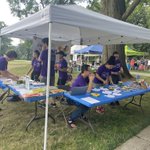
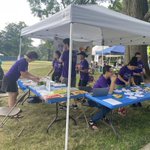
We had a blast coloring, face painting, and sharing information about languages at Children's Day at the Central Pennsylvania Festival of the Arts last week! Check out some highlights in the photos below!

ALT Researchers working a booth at the Central Pennsylvania Festival of Arts 2024 Children’s Day


20
Do we need language to think? While this has been a prominent view, not everyone agrees that language is a requirement for complex thought. The authors of the linked article used recent evidence from neuroscience and related fields to contend that language is a tool for…
1
20
…communication and is a reflection of humans’ advanced cognition, not necessarily the origin of it.
nature.com/articles/s41586-0…
12
The current issue of our newsletter features an interview with faculty members Anne Olmstead and Navin Viswanathan. Check it out to learn more about their research, and what they think about the dynamic ways we adapt our speech in conversation!
sites.psu.edu/bilingualismma…
15
Have you ever noticed how yourself changing the way you talk based on where you are and who you’re talking to? This research summary from our most recent newsletter explains what researchers have learned about the many ways we adapt our speech in conversation. Check it out…
1
21
Please come find us at our booth at Arts Fest 2024 Children’s Day on the Old Main lawn. We have face-painting, masks, and much more!


ALT Group of researchers working our booth at Arts Fest 2024 Children’s Day
1
18
Researchers have found that there is an entire network associated with language in the brain. Interestingly, when observing this network in people who speak five or more languages, they found that the speaker's native language generates the least amount of activation. Check…
1
26
…out this article to learn more, and to find out how researchers explain this interesting pattern of activation:
neurosciencenews.com/bilingu…

7
You probably think of the rainbow as having seven colors, but ask a speaker of Tsimané, an indigenous language in Bolivia, and they’d probably tell you it has three — blackish, reddish, and whiteish. However, speakers are starting to redefine their language’s color categories…
1
27
…based on contact with Spanish. Click the link to find out more on how the languages we speak subtly influence the colors we perceive!
scientificamerican.com/artic…
6
If you speak multiple languages, how do you control which comes out in the heat of the moment? Many bilingual players in the National Hockey League regularly grapple with this question on the ice. Click the link below to … nytimes.com/athletic/5308347…
1
8
Have you ever wondered how accurate internet translations are? Learn more about the Masakhane (“we build together”) project and how people are actively working on improving and expanding accessibility to African languages on the internet.
science.org/content/article/…
1
61