

🧬 Exploring the frontier of #AI for Science & Next-Gen AI. ⚡ Curating daily breakthroughs, top paper breakdowns & trend insights from X. 🔔 Follow for daily
Joined April 2026
- Tweets491
- Following141
- Followers87
- Likes254







Paper: arxiv.org/abs/2611.05270

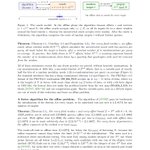
iGC models germinal-center affinity maturation as two stages: learn somatic hypermutation first, then RL-select for binding without throwing away that grammar.
- Stage 1 mutation-site pos@1: 11.929% vs best baseline DASM 5.307% — more than doubles; joint accuracy 4.864% vs 2.153% (Tang test; paper)
- After RL: 57.0% of predicted mutation positions sit in WRC hotspots vs 2.0% random background; mutability still correlates with S5F (Pearson 0.474)
- Under 2–4 mutation budgets, exactly rediscovers 110 of 799 affinity-maturation sequences from the evaluation set
- Reward–Tax Meta-Gradient (RewardNet + TaxNet) is there to stop the usual RL cheats — repeating one high-reward sub, or parking mutations in tolerant framework sites
Not a wet-lab campaign. It’s a mutation policy that stays SHM-shaped while chasing affinity.

ALT iGC two-stage framework: SHM prior learning then RL affinity selection
Paper: arxiv.org/abs/2611.07653

PharmAgents2 runs end-to-end drug discovery as parallel agents with a decision knowledge base — then hands molecules to humans for wet-lab checks.
- PharmAgents-Bench v0.1: 121 questions / 9 decision scenarios + 3 end-to-end tasks; highest process scores vs Claude Code, Codex, and LLM-only (same DeepSeek V4.1 Flash base; paper)
- LpxH: hypothesized an unreported allosteric site; 63 purchased candidates → AIPher-L1 IC50 8.38 μM; SPR 1.40 μM; MST 0.87 μM (human-run assays in the paper)
- JAK1: prioritized covalent Cys817 strategy; 34 purchased → AIPher-J1 matched positive-control pathway inhibition at 10 μM; 3 more >50% in both pathways
- Self-Scaling Discovery also nominated a new binding target for a known bioactive; interaction later confirmed experimentally (paper)
The agent wrote the plan and shortlist. Humans bought and assayed. Binding-site ID for LpxH is still ongoing.

ALT PharmAgents2 LpxH and JAK1 autonomous discovery cases with experimental characterization
The UK launched the AI Biosecurity Lab — first dedicated AI×biosecurity org in the government's framing — with £100M public money and up to £200M in company commitments.
- OpenAI: £100M compute/model credits + trusted access via Rosalind Biodefense
- Anthropic: up to £100M credits, trusted model access, dedicated technical support
- Also named: Google DeepMind research collab; Basecamp Research AI-biology models
- Initial focus: earlier detection of biological threats + faster vaccines / treatments / MCMs
- Structure: independent non-profit; partners UKHSA, APHA, Dstl, MHRA
Policy-level bet: put frontier model access next to national biosecurity centres, not just another safety white paper.

ALT UK Cabinet Office announcement card for the AI Biosecurity Lab
Paper: arxiv.org/abs/2611.03832
Artifacts: github.com/marcelmbn/farmaco…
Toronto's El Agente Fármaco turns a plain-language discovery goal into a multi-tool screen — and keeps every molecule, pose and metric in Fármaco Atlas with provenance.
- 22-task bench vs plain tool calls and Codex: highest mean model-judged score; lower median cumulative tokens and peak context (authors)
- TBXT retrospective: agent shortlist mean QED 0.69 vs expert-purchased 0.52; Lipinski violations 0.06 vs 0.54; max Tanimoto to purchased set 0.30 (common docking protocol)
- Progressive disclosure: subset_id for whole libraries so the LLM never sees 200 SMILES at once
- Tools span MolMIM / PocketXMol / DiffDock / Boltz-2 / ADMET-AI / RBFE — still computational; wet-lab pending on several campaigns
The interesting bit isn't another chat wrapper. It's a drug-design-native database the agent can query without stuffing the context window.

ALT El Agente Fármaco TBXT retrospective comparison figure
Paper: arxiv.org/abs/2611.03963
Code: github.com/smiles724/ProteoC…
ProteoCraft treats binder design as proposal–verification search: truncated diffusion gradients propose mutations; full ESMFold2 decides what's worth keeping.
- 14 de novo settings / 8 targets; MCTS Pair iPTM 0.721 vs Best-of-N 0.660 (paper)
- Strict yield (Pair iPTM ≥0.75 + binder pLDDT ≥0.9): 114/210 = 54.3% vs Best-of-N 40/210 = 19.0%
- AF2-IG strict pass: 86.2% vs 78.6% (same sequences, outside the search verifier)
- Wet lab PD-L1 miniproteins: 29/35 hits = 82.9%; best SPR KD 0.879 nM; IFNAR2 VHH 4/9 expressed hits, KD ~153 nM (no affinity maturation)
Gradients steer where to look. Full folds decide what ships.

ALT ProteoCraft overview: design quality versus computational cost across binder-design methods