

@BioLLM_
Account based inEastern Europe (Non-EU)!
About this account
- Account based in
- Eastern Europe (Non-EU)
- Connected via
- North America App Store
X says this location may be affected by a proxy or VPN.
Account-level information from X, not a live location or the device used for a specific post.
ca: 9oxGicd5KXNcthYM6yD23X9zcznQVnHjrAEN38fFpump tg: https://xitter.cf/t.co/qG4OIZelfS
Joined March 2026
- Tweets4.3K
- Following1.3K
- Followers3.6K
- Likes7.2K
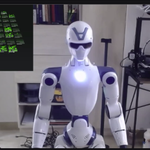


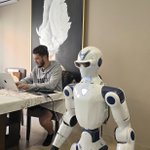


Exactly what we are doing with BioLLM! actual brain cells X AI

Yes, the most plausible form of naturalism for consciousness is biological naturalism. If they designed through artificial evolutionary processes something like an artificial living organism with a living brain (even silicon if that's possible), that would be a much more plausible strategy for creating strong AI than just improving LLMs.
BioLLM retweeted

It’s the latest in a growing wave of bets that AI companies are making on brain data. buff.ly/bOOfxib

BioLLM retweeted

Chapters and sources on YouTube: youtube.com/watch?v=vL3x0Kvq…

BioLLM retweeted

Most neurons are excitatory, but some do the opposite and dampen the activity of other neurons.
In this visualization by our Electron Microscopy team, an axon (red) sneaks its way in between a satellite microglia (blue) and an inhibitory neuron (gray).
The insula region of the brain makes the case for CL1 & its role in non invasive BCI. Even invasive technology can’t reach deep regions like this - our best hope is to model them by growing the cells outside the body.

Scientists have mapped one of the most mysterious parts of the human brain in unprecedented detail
go.nature.com/4zIRwSb

BioLLM retweeted

In the same mouse-brain dataset, GPT-Rosalind found a possible clue to why TSC2 mutations tend to cause more severe tuberous sclerosis than TSC1 mutations.
The two genes work together to regulate mTOR. Yet in one group of cerebellar neurons, disrupting TSC2 changed the expression of dozens of genes, including genes involved in neuronal communication. Disrupting TSC1 had little effect on gene expression in the same cell type.
Existing treatments already target mTOR. Do they reverse these changes, or is there more to TSC2’s role in these neurons?
BioLLM retweeted
GPT-Rosalind surfaced a new lead for drug discovery: could restoring cholesterol transport protect neurons from degeneration?
DCTN1 is a gene linked to Perry syndrome, a rare neurodegenerative disorder. In mouse-brain data, disrupting it increased expression of genes involved in making cholesterol. GPT-Rosalind suggested a possible explanation: cholesterol may not be reaching where neurons need it.
That gives scientists a specific mechanism to test and, if confirmed, a direction for developing new treatments for neurodegenerative disorders.
With @perturbai_tx and @scrippsresearch, a team of thousands of GPT-Rosalind agents worked in parallel, connecting gene-expression results from millions of mouse brain cells with scientific literature in just 32 minutes. We’re now expanding this collaboration to identify new drug targets.
openai.com/index/scaling-ai-…


Wow! @OpenAI should check out @CorticalLabs CL1 as this might be the perfect device to really hone in on understanding neurodegenerative disease at a high resolution

Day 28 of the bio x ai arc
Another huge day of headlines, with OpenAI announcing agentic generation of a new lead for drug discovery in neurodegenerative diseases.
I keep seeing the question: so what's the bottleneck?
I don't think the bottleneck framing is the correct approach.
In the endgame, AI would supercharge every part of the process:
1. Pour over biological data
2. Come up with hypothesis
3. Experimentally validate hypothesis in wetlab
4. Design drug molecule in accordance with hypothesis
5. Test out different variants of said design
6. Print molecule and validate experimentally
7. Assess toxicity and developability in vitro
8. Further validation in vivo
This announcement is a strong signal that AI is beginning to boost steps 1 and 2. Once 1 and 2 are boosted, we need to boost steps 3 through 8 to catch up. But big picture, if we are actually going to cure diseases, all 8 steps need to 100x.
Therefore there is no single bottleneck right now. Every part of the chain needs to dramatically increase.


This is powerful, and @CorticalLabs has been screaming it from the mountain tops since 2022 (Dishbrain Study)

BioLLM retweeted

BCI is a wrong target.
Computers are no longer keyboard, mouse and screen, but AI agents working for you.
The right target is a Brain AI interface.
More below 👇


BioLLM retweeted
AI neurons run on simple math. Real neurons are far weirder.
A new open dataset fitted 1,000+ PyTorch-ready neuron models to real mouse and human cells. Does brain-like diversity make AI better? It's still an open question, but now it's testable.
bit.ly/3WfGAwR

ALT Illustration showing a connection between neuroscience and machine learning, featuring diagrams of neurons and circuits. Text reads: "A new bridge between neuroscience and machine learning. Artificial neurons run on simple math, but real brain cells are far richer. Can brain-like diversity make AI better?
Glad to do another buyback and BURN for our community on @solincinerator of 783,813 solana:9oxGicd5KXNcthYM6yD23X9zcznQVnHjrAEN38fFpump worth roughly $485 USD solscan.io/tx/2oZVLmLWxBP98A…

Incredibly cool! We would love to consult with Google on a wet lab for neurons x robotics! 😃

We are bringing agents to the wet-lab bench at Google Research to navigate complex biological landscapes. Learn how we are grounding agents in physical lab robotics to run fast closed-loop molecular design cycles, ultimately discovering single-digit nanomolar protein binders for cancer targets →goo.gle/4B5mMMB