

👽 🪦 🧟 👽 💯 Club 💯
🪐 Saturn 🪐
Joined September 2026
- Tweets795
- Following140
- Followers500
- Likes2K








💯🧬 Jake 🧬💯 retweeted
Site-wide sale at BioLongevity Labs until the end of the month!
Research like FLGR-242 and A-Klotho, as well as a mountain of bioregulators and other small glass cylinders with rubber on them.
Nothing regarding any of this is meant for human use.
It's not even meant for use.
You shouldn’t even click on the link because that directs you to things that aren’t even for use.
In the name of research not use only.
Check em out if interested and yours truly’s link is go.biolongevitylabs.com/aff_…
Every use of this link provides me with another writeup using a anime character that has some sort of meaning behind the post, but is intentionally cryptic, or not at all and just happened to look sweet.

💯🧬 Jake 🧬💯 retweeted

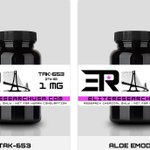
Emodin is not a single pathway supplement. It is a complete multi-target anthraquinone that simultaneously blocks cortisol regeneration, antagonizes estrogen drive, raises mitochondrial ATP while cutting oxidative damage, and hits anticancer and anti-inflammatory programs most molecules never touch in the same pass.
Before enzyme transcription even enters the picture, emodin selectively shuts down tissue cortisol reactivation, displaces estrogen at the receptor, clears nitric oxide brakes on respiration, and recruits HER-2, HIF-1α, VEGF, MMP, and fibrosis pathways inside one structure.
1. Emodin Starts Upstream: Cortisol Synthesis Blockade and Dual 11β-HSD Control
Emodin's primary stress-hormone target is tissue cortisol regeneration through 11β-hydroxysteroid dehydrogenase type 1, the enzyme that converts inactive cortisone back into active cortisol inside liver and fat.
Selective Nanomolar 11β-HSD1 Inhibition:
Emodin is a potent and selective 11β-HSD1 inhibitor with an IC50 of 186 nM against human 11β-HSD1 (and 86 nM against the mouse enzyme). A single oral dose significantly suppressed 11β-HSD1 activity in liver and fat, reversed prednisone-driven insulin resistance, and improved metabolic readouts including insulin sensitivity, lipid handling, and hepatic gluconeogenic enzymes.
Dual Enzyme Control and Estrogen Antagonism:
Emodin goes further by downregulating 11β-HSD1 expression while raising activity of 11β-HSD2, the enzyme that deactivates cortisol, locking tissue cortisol from both directions at once. It is also a potent estrogen receptor antagonist that displaces estrogen at ER, including ER-α–linked suppression of breast cancer cell proliferation, with inhibitory effects discussed across other estrogen-sensitive cancers including prostate. Relative cortisol excess is a common reason sleep quality collapses after mid life, and reports describe deeper sleep, settled heartbeat, and a relaxed body once that stress tone drops. Cortisol block plus estrogen antagonism is the hormonal background most single-target agents never deliver together.
2. Gut Motility, Mitochondrial Energy, and Anti-Inflammatory Cover
Emodin does not stop at hormone enzymes. It simultaneously supports bowel transit, elevates cellular energy, and calms inflammatory tone at the tissue level.
Colon Motility and Local Inflammation:
Emodin reaching the colon supports bowel movement rhythm, reduces intestinal water over-absorption, and delivers local anti-inflammatory cover exactly where inflamed gut walls impair contractile tone. Digestion reports include smoother elimination, reduced bloating, and visibly improved gut comfort alongside systemic stress-hormone support.
Mitochondrial ATP and Cleaner Respiration:
Emodin increases mitochondrial oxygen consumption and ATP synthesis while decreasing oxidative damage, supports electron transport and NADH recycling back to NAD, and inhibits nitric oxide formation and iNOS so cytochrome oxidase is no longer choked by NO. COX and LOX inhibition add anti-inflammatory metabolic cover on top of the energy lift. Reports of warmer temperature, clearer vision, and higher mood track with that metabolic push.
Endotoxin and Barrier Tone:
Emodin ranks among OTC TLR4 blockers that blunt endotoxin-driven inflammation, reduces vascular leakage, and pairs systemic cortisol control with lower inflammatory drive. Energy up, stress chemistry down: that is the quinone signature.
3. The Anticancer Toolkit That Puts Emodin in a Class of Its Own
Where most anti-inflammatory or cortisol agents stop, emodin recruits HER-2, hypoxia, angiogenesis, invasion, and antifibrotic repair pathways across the same molecule.
HER-2 / Neu Tyrosine Kinase Suppression and Differentiation:
Emodin suppresses HER-2/neu tyrosine kinase autophosphorylation and transphosphorylation, preferentially inhibits growth of HER-2–overexpressing cells, and induces differentiation toward a more orderly, less invasive phenotype.
Hypoxia, Angiogenesis, and Metastatic Invasion:
Under hypoxic inflammatory stress, emodin attenuates COX-2, VEGF, HIF-1α, MMP-1, and MMP-13 at the mRNA level, cutting the hypoxia survival switch, vessel recruitment, and collagenase-driven invasion program in one stroke. Related work links emodin and aloe-emodin to ER-α inhibition in breast cancer models and lower HIF-1α with attenuated cachexia readouts in pancreatic cancer research.
Fatty Acid Synthase, Angiogenesis, and Invasiveness:
Emodin inhibits angiogenesis and invasiveness, blocks fatty acid synthase, and promotes cellular differentiation, collapsing membrane-building and blood-supply pathways aggressive tumors lean on.
Antifibrotic, Antimicrobial, and Systemic Resilience:
Anti-fibrotic studies report reversed fibrosis of heart and liver, with emodin framed as heart protective and as a serotonin antagonist with heart-failure relevance. Broader coverage spans antiviral, antibacterial, and antifungal activity, plus antioxidant, memory-enhancing, and anxiolytic support. One anthraquinone, many disease fronts.
Emodin operates as a complete multi-receptor, multi-enzyme neurometabolic and anticancer anthraquinone by uniting nanomolar 11β-HSD1 cortisol blockade, dual cortisol enzyme control, estrogen antagonism, mitochondrial ATP elevation with lower oxidative damage, nitric oxide and TLR4 cover, gut motility plus colon anti-inflammatory action, HER-2 suppression, HIF-1α / VEGF / MMP attenuation, and antifibrotic systemic repair inside a single molecule.


💯🧬 Jake 🧬💯 retweeted
Zoom in. Customer tried to claim this is how their package arrived. Legit photo or AI?
This is why we built badcustomers.org. If you aren't on this as a peptide vendor, you're going to get screwed by these crooks.

💯🧬 Jake 🧬💯 retweeted

Peptides & TRT: Troy White x Jay Campbell ( @troywhiteyyc x @JayCampbell333) xitter.cf/i/broadcasts/1DxLdZzLv…

💯🧬 Jake 🧬💯 retweeted

Makai Lemon is pretty good when he doesn't have to catch unblocked bubble screens
💯🧬 Jake 🧬💯 retweeted

Eli Lilly Sends Armed Lawyers To Antarctica To Shut Down Florida Man Brewing Retatrutide In His Igloo thereconstitutionalist.com/e… @pepfessions @troywhiteyyc @JayCampbell333

💯🧬 Jake 🧬💯 retweeted

The Eagles not giving Saquon an injury designation as he limps off the field after every run
💯🧬 Jake 🧬💯 retweeted

Eagles running back Saquon Barkley said his “hamstring came out great” and he doesn't believe his back issue will keep him out.
Story via @Tim_McManus: espn.com/nfl/story/_/id/5029…


💯🧬 Jake 🧬💯 retweeted

How are you buying your NAD+ anywhere else? 🔌

Today’s best price for 5000mg NAD+ 👇
Find the best price for your entire stack in one click at thepeptideplug.ai

💯🧬 Jake 🧬💯 retweeted

Part 2
What actually happens when you stop GLP-1 medications? And can tapering, exercise, or preserving muscle change the outcome?
The research is more nuanced than simply telling everyone they’ll need these medications forever.
Tapering vs. stopping abruptly
We still lack randomized trials directly comparing gradual tapering to zero against abrupt discontinuation.
SURMOUNT-MAINTAIN (Lancet, 2026) offers some insight. After 112 weeks, participants maintained weight reductions of:
• 21.9% with continued treatment
• 16.6% with reduced-dose treatment
• 9.9% after switching to placebo
Lower doses preserved substantially more weight loss than discontinuation, although approximately 25% of the reduced-dose group required rescue treatment.
Does exercise prevent regain?
One of the more interesting findings comes from research involving liraglutide.
Lundgren et al. (NEJM, 2021) investigated exercise, liraglutide, and their combination.
At the one-year post-treatment follow-up, participants originally assigned to exercise maintained weight loss considerably better than those receiving medication alone.
The medication-only group regained approximately 6 kg more.
Important limitation: Only 109 participants completed that follow-up, and we don’t yet have equivalent long-term evidence for tirzepatide.
What about muscle loss?
SURMOUNT-1 body-composition data suggest approximately 75% of weight lost on tirzepatide was fat mass, while 25% was lean mass.
But losing weight and regaining it aren’t necessarily symmetrical processes.
Research in postmenopausal women suggests lean mass lost during weight reduction may not return proportionally when fat is regained.
That’s one reason resistance training and adequate protein intake deserve more attention throughout treatment.
Can GLP-1s permanently reset your weight set point?
We don’t have convincing evidence of that.
In the STEP 1 extension, participants regained approximately two-thirds of their semaglutide-associated weight loss within a year of discontinuation.
A 2026 BMJ meta-analysis projected substantial weight regain following withdrawal, with newer GLP-1 therapies showing particularly rapid rebound.
These findings challenge the idea that temporary appetite suppression necessarily produces permanent biological changes.
My takeaway:
GLP-1 medications are extremely effective tools for weight reduction, but weight loss and long-term weight maintenance are two different challenges.
The evidence supports continued treatment for many patients. Reduced maintenance doses may offer another approach, and structured exercise appears promising.
What remains unproven is whether gradually tapering completely off newer GLP-1 medications can meaningfully prevent rebound.
Rather than arguing that everyone must stay on medication forever or that everyone should eventually discontinue, we need better research into individualized maintenance strategies.
That’s where the next generation of obesity research should focus.
Not medical advice.
#GLP1 #Tirzepatide #Semaglutide #MetabolicHealth #ObesityResearch #WeightLoss #ExerciseScience

Stopping tirzepatide is the part of the GLP-1 story that doesn’t fit into a before-and-after photo.
The clearest evidence comes from SURMOUNT-4 (Aronne et al., JAMA, 2024), a randomized withdrawal trial funded by Eli Lilly.
Stage one:
783 adults with obesity or overweight, without diabetes, received tirzepatide for 36 weeks.
The 670 participants who reached randomization had lost an average of 20.9% of their starting body weight.
Stage two:
Participants were randomized to continue tirzepatide or switch to placebo for another 52 weeks.
The results:
Continued tirzepatide: another 5.5% weight reduction.
Switched to placebo: 14% weight regain.
89.5% of participants continuing treatment maintained at least 80% of their initial weight loss.
Only 16.6% of the placebo group maintained that same threshold.
Here’s what people overlook.
At week 88, the placebo group was still approximately 9.9% below its original weight.
So no, everyone didn’t simply regain everything. But substantial weight regain was common.
What the trial didn’t establish:
Whether gradual tapering reduces rebound weight gain.
How resistance training and dietary interventions might influence weight maintenance.
How much of the regained weight consisted of fat versus lean tissue.
The takeaway?
Tirzepatide isn’t failing when weight returns after discontinuation.
Obesity is a chronic condition, and the biological mechanisms driving appetite and weight regulation don’t necessarily disappear because someone lost weight.
These medications may be better understood as long-term metabolic therapies rather than temporary weight-loss interventions.
That’s an important distinction when discussing expectations, treatment duration, and long-term outcomes.
#Tirzepatide #GLP1 #MetabolicHealth #WeightLoss #ObesityResearch #Biohacking #ClinicalResearch
💯🧬 Jake 🧬💯 retweeted
New: four peptide sprays. Semax, Selank, Semax + Selank, and Oxytocin.
They’re big bottles. 15 mL each, with up to 76mg of peptide in a bottle, so the price per mg beats even our own vials. Semax works out to $1.64/mg, against $4 in the vial.
Every lot tested by Freedom Diagnostics in mg/mL, three samples each. Certificates on the product pages.
peptideplugs.com/product-cat…


💯🧬 Jake 🧬💯 retweeted
Bi-weekly reminder 👽: Comment under this post or DM me if you want in on the private Telegram. Still active and slowly rebuilding after the mass exodus weeks back!
Looking for people who will be active preferably in the mosh pit (general chat LOL) while I rebuild this new X account like a COD Prestige 😀🤘💪.

💯🧬 Jake 🧬💯 retweeted

Devonta Smith - Out
Dontayvion Wicks - Out
Nolan Smith - Out
Jonathan Greenard - Out
Michael Carter II - Out
Live look at Saquon Barkley coming back for week 7


💯🧬 Jake 🧬💯 retweeted

Taurine is one of the cheapest supplements out there, and its probably in your energy drink
But WHAT does it do?
Taurine is a naturally occurring compound that plays a role in:
- Cardiovascular health and blood pressure
- Cellular hydration and electrolyte balance
- Muscle contraction
- Exercise performance and fatigue resistance
- Recovery and protects against cellular stress
- Nervous system function
- Glucose metabolism and insulin sensitivity
But why is it in energy drinks? It's NOT a stimulant
It interacts with inhibitory neurotransmitter systems, which helps take the edge off caffeine's jittery effects.
The idea is to get the wakefullness of caffeine without feeling as cracked-out
Take 1-6g daily. It's pretty well tolerated by most.
And unlike what you heard in middle school, it doesn't come from bull semen. It was originally discovered in ox bile, which somehow doesn't sound much better.