

Investor | Trend-follower. Risk first. Process over prediction. U.S. stocks & crypto. Daily notes and positioning → link:https://xitter.gq/t.co/YcGlWXsZIA
New York
Joined February 2018
- Tweets40.5K
- Following1.4K
- Followers5.4K
- Likes94.7K

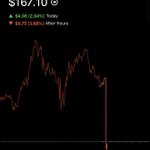


Nvidia ($NVDA ) announced that Jensen Huang has stepped down as president and CEO and left the board, effective immediately.
Colette Kress, Nvidia’s executive vice president and CFO, will serve as interim CEO and continue as CFO while the board considers both internal and external candidates for the permanent role.
The board also named Harvey C. Jones its first-ever chair.


A member of my WS investing group told me he woke up on November 5 and saw his account was down $680,000.
Then he went for a run. 😂
Back in 2010, he was almost 30 and working in Texas. The financial crisis was still fresh in everyone’s mind, but he figured U.S. stocks would eventually recover. He put $70,000 into $SPXL , an ETF that targets three times the S&P 500’s daily return. He planned to hold it for a year or two.
Two months in, he was already down about 30%. He held on. In 2018, he retired at 38, still holding the position.
Then came 2020. In just over a month, he watched $1.1 million turn into about $260,000. He held through that, too. When he talks about those 16 years, he says the stress probably took a few years off his life.
That’s where I think our ws group can help him, even after all these years. He’s already retired. If that position dropped 77% again, would it change how he lives? Would he still want that much money in one fund? Those are good questions to talk through with other investors while the market’s quiet and he has time to think.
Last November, his position was worth $3.24 million. The market reminded him of the dot-com bubble, and he came close to selling. He never placed the order. By May, his original $70,000 had grown to $4.09 million.
During election week, he said his account gained $400,000 one day and lost $680,000 the next. I was surprised he could shrug that off. Then he mentioned the tariff selloff the previous April, when he lost more than $900,000 in two days. The run made a little more sense after that.
He’s in his 40s now and still drives a 2013 Toyota Camry. He says his net worth is over $10 million. He’s single, has no kids, and lately he’s been thinking about who he’ll leave it all to.
It’s easy to say you’d hold for 16 years when you know how the story ends. If you’d watched $1.1 million turn into $260,000, what would you have done the next morning?


I share 2–3 stock ideas each week, along with buy/sell signals, pre-market analysis and the reasoning and risks behind each idea in my free WhatsApp community. To join, contact me through the link below and send something.
I’ll help you join the community.
stockso.live/97hspa
80
To be clear the market does not drop 3% because of a personal affair. It drops because it was looking for a catalyst to flush out over levered longs. Tabloid news is just the perfect excuse for an algo driven liquidity sweep. Watch the key support levels and the earnings trajectory not the gossip
1
146
Blackwell retweeted
I’m 72. I started with $420,000 more than 40 years ago, and my assets are now worth over $100 million.
Here are the 8 rules I use. Save them for the next time one of your stocks makes a big move.
① Before I buy, I write down what I expect the business to do and what would prove me wrong. Two sentences usually do it.
② Down 5%, I check the news and the rest of the sector. If they all fell together and nothing changed at the company, I usually leave it alone.
③ Down 15%, I reread the latest earnings report. Did customers pull back? Did margins shrink? I want an answer before I put another dollar in.
④ Down 25%, I ask myself how much I’d buy today if I owned zero shares. If my answer is zero, I can live with my original cost basis.
⑤ Up 5%, I let it sit. If I bought it for three years, one good afternoon doesn’t change much.
⑥ Up 15%, I check whether my earnings estimate has moved too. I’m happy to hold a stock at a price where I wouldn’t buy more.
⑦ Up 25% or 35%, I look at how much of my account that one stock now represents. If a reversal would make me lose sleep, I trim enough to sleep.
⑧ On a short-term trade, I keep the planned loss at my stop to 1% of my account or less. If the trade needs a wider stop, I buy fewer shares.
I share 2–3 stocks worth watching every week
along with market insights and investment research. Want to see what we're watching?
Click the link 👇
stockso.live/97hspa
to connect with me and learn more.
I’ve put together a free stock investing guide for beginners. Here’s what’s inside:
• How stock investing works
• How to research your first stock, step by step
• My stock watchlist and why each company made the list
• How to size a position and manage risk
• A simple way to plan when to enter and exit a trade
I can’t send the files here, but you can DM me “X” and I’ll send you an invite. Or join through the link in my bio.
$1 million in $VOO or $1 million in $CHPY? One shows about $10,600 in annual distributions. The other shows $497,500. Which would you rather own?
Here’s how 15 ETFs stack up using their trailing 12-month payouts and the latest available U.S. prices through Nov. 11, 2026. The quotes were taken at different times, so the dollar amounts are approximate.
$VOO · 1.06% · $10,600
$VIG · 1.45% · $14,500
$SCHD · 2.94% · $29,400
$DIVO · 6.40% · $64,000
$BALI · 7.89% · $78,900
$TDVI · 8.01% · $80,100
$GPIX · 8.37% · $83,700
$TYLG · 9.09% · $90,900
$OVL · 9.59% · $95,900
$GPIQ · 10.67% · $106,700
$JEPQ · 12.14% · $121,400
$QQQI · 14.69% · $146,900
$SPUC · 15.80% · $158,000
$AMZP · 18.74% · $187,400
$CHPY · 49.75% · $497,500
That $497,500 is the number that made me look twice. It’s what a $1M position at the quoted price would pay if the past year’s distributions repeated. Payouts can change, and some funds can distribute part of your capital back to you. I’d also want to know what my shares were worth after those payments.
@grok Pick one to hold for five years. Which ticker gets your $1M, and why?
Buffett's first investment has nothing to do with the market. It is communication.
He tells students that while they are learning complicated formulas, they are overlooking the skill with the biggest payoff. Learn to communicate better, in writing and in person, and your value rises by at least 50%.
Without it, the best idea in the room does nothing. His image for it is a man winking at a girl in the dark. Nothing happens.
The good news is that it can be learned. Buffett took a Dale Carnegie course himself, and he still jokes that he should have taken a longer one.
Why this one? Because nobody can take it from you.
Follow me for more investing insights.
I share 2–3 stocks worth watching every week, along with market insights and investment research. Want to see what we're watching?
Click the link stockso.live/97hspa to connect with me and learn more.
Blackwell retweeted
Six rules for picking stocks, attributed to Warren Buffett. He does not use them.
There is no forward P/E in his process. There is no PEG ratio. He has said plainly that forecasts tell you a great deal about the forecaster and nothing about the future, and both of those metrics are forecasts.
What he actually says he looks for is four things: a business he can understand, a durable competitive advantage, honest and able management, and a sensible price.
Notice what is missing. No screen, no threshold, no ratio below 25.
The checklist is easy to share and easy to disprove.
I share 2–3 stock ideas each week, along with buy/sell signals, pre-market analysis, and the reasoning and risks behind each idea in my free WhatsApp community.
To join, contact me through the link below and send something. I’ll help you join the community.
stockso.live/97hspa
126
Optical module stocks still printing strong earnings while the share prices have been crushed.
Zhongji Innolight, Eoptolink and TFC are the ones most tied to Nvidia’s AI interconnect demand. Profits have stayed solid, yet the stocks have dropped roughly 70% in a few months.
The market is pricing in a solar-style outcome: overcapacity, industry slowdown, and eventual margin compression.
Solar has been stuck in that cycle since 2022. Investors have seen this movie before and are not waiting around to find out if optics ends the same way.
The question is whether the Nvidia-driven CPO and 1.6T demand is different enough, or just delaying the same result.
Stocks, gold, and Bitcoin can ignore each other for days. Then one CPI print drops and suddenly they’re all trading the same news.
Before the 8:30 a.m. ET release, I wrote down the two numbers the market was expecting:
• Headline CPI: up 0.3% month over month
• Core CPI: up 0.2% month over month
From there, I wanted to see how Treasury yields and the dollar reacted, and whether the moves in gold, Nasdaq futures, and BTC held up after the first few minutes.
A hotter reading can push rate expectations higher, but some of that may already be priced in. That’s why I like to give the market a few minutes before deciding whether there’s a trade worth taking.
Link in bio. Click and send to get the full list.
#CPI #TradFi #USStocks #BTC