

reader & writer (film, fiction, poetry) — cult.anthropology — scavenger & assembler — wanderer — 🇮🇪🇧🇪— cultural nomad — neurodegenerative disorder ♿️ he/him
Hermit
Joined November 2013
- Tweets127K
- Following6.9K
- Followers3.2K
- Likes294K
Pinned Tweet
I walk, I observe, I scavenge, I gather, I walk
I reflect
and let the words find me
#amwriting #amediting – at West Midlands, England
Bo Mandeville 🍉 retweeted

In 1850, under the scorching Georgia sun, a thirteen-year-old Black girl named Ella stood helplessly before an auction crowd. To the strangers examining her, she was property-not a child with dreams, tears, and a tuture of her own. A plantation owner purchased her, and her childhood disappeared into a life of forced labor.
For years, Ella worked under the harsh realities of slavery. She spent long days in the fields before eventually being assigned to the plantation kitchen.
Every sunrise brought another day of exhaustion, and freedom seemed like something that might never come.
Then, in 1865, everything changed. The Civil War ended, and slavery was abolished. At twenty-eight, Ella finally became free. But freedom did not mean life suddenly became easy. She had no land, no savings, no secure home, and few opportunities in a society still determined to keep Black Americans disadvantaged.
But Ella refused to let her past decide her future.
For the next twelve years, she worked as a snarecropper, caretully saving whatever money she could. Every dollar represented another step away from dependence and another step toward owning something of her own.
Then came 1877.
At forty years old, Ella accomplished something that once would have seemed unimaginable. She purchased forty acres of Georgia farmland for $400 in cash.
Think about that moment. The little girl once placed on an auction block, whose future had been decided by someone else, now stood on land that legally belonged to her.
She spent the tollowing decades cultivating her property, raising seven children, and building something greater than personal wealth. She was creating a foundation for generations who would come after her.
Before her death in 1907, her will reportedly carried a powerful instruction:
This land was bought with hands that were once sold. Do not sell it. Ever
Her descendants reportedly honored that wish, preserving the property for more than 140 years.
Ella's story is about more than forty acres of Georgia soil. It is about a woman who went from being treated as property to becoming a property owner, from having her future controlled by others to creating an inheritance for he

Bo Mandeville 🍉 retweeted

"Where is justice? Who has been held accountable for Issam's death? Who has answered for the attack that changed my life? Impunity sends a dangerous message: that journalists can be targeted without consequences," said #IPFA awardee @Christina_assi, presented by @LinaAbuAkleh.

Bo Mandeville 🍉 retweeted

If I'd grown up in a different land,
one with lighter days and slimmer hours,
I would have made for you a great fete,
and my hands would not have held you
the way they often do, clenched and afraid..
-from The Book of Hours.


Bo Mandeville 🍉 retweeted
the sea
always the sea
winter blues — autumnal to winter light
1/2
on my last visit home
Clonea — Co Waterford
years of observing, witnessing and foraging the changing light
last years — my archive
#landscapephotography #seascape
#dawn #blues
#NaturePhotography

Bo Mandeville 🍉 retweeted
the sea
always the sea
winter blues — autumnal to winter light
2/2
on my last visit home
Clonea — Co Waterford
years of observing, witnessing and foraging the changing light
last years — my archive
#landscapephotography #seascape
#dawn #blues
#NaturePhotography


Bo Mandeville 🍉 retweeted

War crimes complaint filed against ex-Mossad chief ahead of Germany visit haaretz.com/israel-news/isra…

Bo Mandeville 🍉 retweeted

📝 AFP journalist Christina Assi, who lost a leg in an Israeli strike reporting from the Lebanese border and has become a vocal campaigner for reporters' safety, was honored by the Committee to Protect Journalists.
➡️ u.afp.com/SFB3


Bo Mandeville 🍉 retweeted

"i always hold on a bit
longer before we all drive home.
in the space between embrace and the
got home safe! text, i try not to
remember. i may tempt fate into premature
loss..."

"i ask when trans day of remembrance is and siri says i don’t know what that is
but i guess i’m the one who
forgot first..." #tdor #transdayofremembrance
—Jazz Bell
beestungmag.com/issue22/i-as…

Bo Mandeville 🍉 retweeted
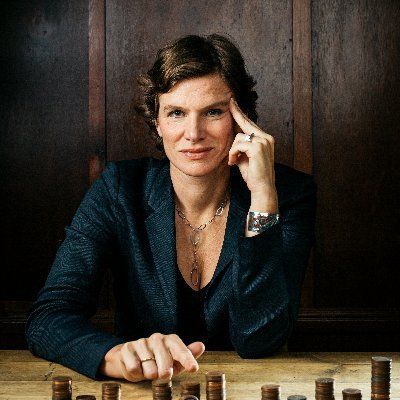
Looking forward to Cambridge Literary Festival @camlitfest tomorrow, discussing my new book “The Common Good Economy: a new compass” with John Eatwell.
Sat 21 Nov | 10:00 GMT | Join virtually ➡ cambridgeliteraryfestival.co…
Order the book ➡ marianamazzucato.com/books/t…

the sea
always the sea
winter blues — autumnal to winter light
2/2
on my last visit home
Clonea — Co Waterford
years of observing, witnessing and foraging the changing light
last years — my archive
#landscapephotography #seascape
#dawn #blues
#NaturePhotography
the sea
always the sea
winter blues — autumnal to winter light
1/2
on my last visit home
Clonea — Co Waterford
years of observing, witnessing and foraging the changing light
last years — my archive
#landscapephotography #seascape
#dawn #blues
#NaturePhotography
Bo Mandeville 🍉 retweeted
the sea
always the sea
winter blues — autumnal to winter light
1/2
on my last visit home
Clonea — Co Waterford
years of observing, witnessing and foraging the changing light
last years — my archive
#landscapephotography #seascape
#dawn #blues
#NaturePhotography

Bo Mandeville 🍉 retweeted

Dublin folk band Madra Salach have won the Breakthrough Award at the Rolling Stone UK Awards in London rte.ie/entertainment/music/2…

Bo Mandeville 🍉 retweeted

Bo Mandeville 🍉 retweeted

Great post about relationship between Hindutva and Zionism

Since my post about Hindu nationalism triggered so many sanghi trolls yesterday, I figured I should explain a little further and draw the important connection between Hindutva and Zionism that share striking ideological similarities.
Both have strands that define national identity through ethno-religious supremacy and belonging, tie sovereignty to a particular religious or ancestral identity, and privilege one group’s claims to land and political power over those of others. And perhaps, most importantly, both are extremely violent.
Their histories and political contexts are different, and neither Hinduism nor Judaism should be conflated with these political movements, however, the comparison is extremely important because of the ways exclusionary forms of religious supremacy and nationalism operate in practice in both India and Israel.
Firstly, the connection is not just theoretical. Early Hindutva ideologues, particularly V.D. Savarkar and M.S. Golwalkar, openly expressed admiration for the Zionist project. Savarkar wrote in 1923 that the realization of a Jewish state in Palestine would bring joy to Hindu nationalists.
Golwalkar similarly regarded the reconstruction of a Hebrew nation in Palestine as an example of how religion, culture, ancestry and territory could be fused into a national identity. Today, the relationship has developed into a strategic partnership between India and Israel, encompassing military technology, surveillance, intelligence and security cooperation.
The consequences of exclusionary nationalism and violence are particularly visible in two territories: Indian-occupied Kashmir and Israeli-occupied Palestine.
The violence and militarization of Kashmir date back decades, particularly since the armed uprising began in 1989 and the Indian government's subsequent “counterinsurgency” campaign. Since then, generations of Kashmiris have experienced military raids, arbitrary detention, torture, extrajudicial killings, sexual violence and enforced disappearances.
The Association of Parents of Disappeared Persons (APDP), an organization established by families searching for their missing loved ones, estimates that between 8,000 and 10,000 Kashmiris have been subjected to enforced disappearance since 1989.
Many are believed to have been taken into custody by security forces and never returned. Their families are left without confirmation of whether their loved ones are alive, dead or buried somewhere in an unmarked grave.
These families are often referred to as the half-widows: women whose husbands have disappeared and whose uncertain fate leaves them unable to establish whether they are legally widowed or still married.
The discovery of mass graves has added another horrifying dimension to this history. In a 2011 investigation, the Jammu and Kashmir State Human Rights Commission identified 2,730 unmarked graves in three districts of northern Kashmir.
It called for further investigation into the identities of those buried there. In 2022, UN human rights experts also raised concerns about thousands of unmarked and mass grave sites and called for independent forensic investigations.
Kashmiris have also endured widespread torture, custodial deaths, staged encounters and extrajudicial executions. Human rights organizations have documented the use of torture in detention, including beatings, electric shock and other forms of physical abuse.
Pellet-firing shotguns, introduced extensively during the 2016 protests, have blinded and permanently injured protesters, including children. Security forces have also been accused of using excessive force against civilians during demonstrations.
Sexual violence has been another deeply disturbing feature of the violent occupation. The 1991 Kunan Poshpora incident, in which women reported mass rape by Indian army personnel during a military search operation, remains one of the most notorious cases. Survivors have faced decades of obstacles in their pursuit of justice.
And the repression is not confined to physical violence. Kashmiris who document abuses, demand self-determination or criticize Indian government policy have faced arrest and prolonged imprisonment.
Consider some of the prominent cases:
· Khurram Parvez: A prominent Kashmiri human rights defender and coordinator of the Jammu and Kashmir Coalition of Civil Society. Arrested in November 2021 under India's counterterrorism legislation, he spent years in prison. He was subsequently granted bail in 2026, but his release came with restrictions and legal proceedings continued.
· Irfan Mehraj: A Kashmiri journalist and human rights researcher arrested in March 2023. He was imprisoned under the Unlawful Activities (Prevention) Act in connection with allegations involving the funding of militant activities. Human rights organizations have called for his release. He was also granted bail in 2026.
· Aasif Sultan: A journalist who spent more than five years in prison before being released in 2024, only to be arrested again under the UAPA shortly afterward.
· Shabir Ahmad Shah: A prominent Kashmiri political leader who has spent many years in detention. His imprisonment has become emblematic of the suppression of Kashmiri political leadership.
· Muhammad Yasin Malik: A prominent Kashmiri political leader serving a life sentence in a terrorism-funding case. His imprisonment has been widely criticized by supporters of Kashmiri self-determination.
· Masarrat Alam Bhat: A Kashmiri political leader and chairman of the All Parties Hurriyat Conference who has faced repeated detention under India's Public Safety Act.
· Aasiya Andrabi: A Kashmiri political activist and founder of Dukhtaran-e-Millat, imprisoned under counterterrorism legislation.
These cases illustrate a broader pattern: the criminalization of political dissent and the use of national security legislation against people advocating for Kashmiri political rights.
The scale of this repression intensified following August 2019. The Indian government imposed a communications blackout, detained hundreds of political leaders and activists, restricted public assembly and severely curtailed journalism. Human Rights Watch has documented arbitrary detention, extrajudicial killings and restrictions on freedom of expression and association.
In April 2025, following an incident in Pahalgam that killed 26 people, UN human rights experts raised concerns about another sweeping crackdown. They reported that approximately 2,800 people had been arrested or detained, including journalists and human rights defenders. The experts also raised allegations of torture, suspicious deaths in custody, punitive demolitions and restrictions on the press.
This is the reality behind the language of “national security”. A population cannot exercise meaningful political freedom when its journalists fear imprisonment, its activists are detained for years, its families cannot find their disappeared relatives and its civilians live under the constant threat of military violence.
The removal of Kashmir's special constitutional status also opened the way for changes to domicile and land rules, raising serious concerns about demographic engineering and the erosion of Kashmiri political autonomy.
In occupied Palestine, the system of control is even more extensively documented. Human Rights Watch, Amnesty International and the Israeli human rights organization B'Tselem have all characterized Israeli policies toward Palestinians as apartheid. Human Rights Watch's 2021 report, A Threshold Crossed, concluded that Israeli authorities were committing the crimes against humanity of apartheid and persecution.
Palestinians in the occupied West Bank live under a system of checkpoints, permits, military orders, barriers and movement restrictions that fragment their communities and restrict access to work, education, healthcare and family members.
According to the UN Office for the Coordination of Humanitarian Affairs (OCHA), by March 2024 there were 793 movement obstacles across the West Bank, including 89 permanently staffed checkpoints, 196 road gates and numerous roadblocks and earth barriers.
These restrictions affected approximately 3.3 million Palestinians. The 712-kilometre separation barrier further fragments Palestinian territory, with much of it running inside the occupied West Bank rather than along the Green Line.
Gaza has faced an even more extreme regime of isolation through Israel's blockade and restrictions on the movement of people and goods, alongside the catastrophic consequences of Israel's genocide.
Gaza represents one of the most devastating manifestations of this system of domination. It is important to understand that Gaza did not become occupied in October 2023.
Israel claimed to have withdrawn its settlements and permanent ground forces in 2005, but essentially retained control over Gaza's airspace, territorial waters, most border access, population registry and the movement of people and goods.
For years, more than two million Palestinians lived under an Israeli blockade that severely restricted their ability to travel, trade, access medical treatment and maintain connections with the outside world. Gaza was effectively isolated from the rest of the world, with Palestinians unable to exercise meaningful freedom of movement.
The common thread:
In both cases, national security, through the incendiary language of "war against terror", is repeatedly invoked to justify extraordinary restrictions on civilian populations. In Kashmir, criticism of Indian government policy can lead to detention, surveillance, censorship, violence, and prosecution. In Palestine, Palestinians face even more severe restrictions and violence.
These are not identical situations. The international legal classification of Israel's system as apartheid has been advanced by major human rights organizations, whereas Kashmir has not received an equivalent established apartheid determination.
Kashmir is claimed to be a “disputed territory under Indian administration”, and its political and legal status is contested. Nevertheless, the comparison raises legitimate questions about military control, unequal rights, demographic policies, territorial dispossession and the systematic suppression of political self-determination.
No state should be permitted to invoke security, nationalism or religious identity to justify the permanent subjugation of a population.
The destruction of Gaza must also be understood alongside the suppression of Palestinian political expression. Journalists have been killed in extraordinary numbers, foreign journalists have faced severe restrictions on independent access, and Palestinian voices documenting the destruction have been subjected to censorship, intimidation and criminalization.
The result is a population subjected not only to military violence but also to the destruction of the material conditions necessary for collective survival: homes, hospitals, schools, food systems, water supplies, cultural institutions and the ability to move freely – GENOCIDE.
Drawing a connection between Zionism and Hindutva is also important because India's relationship with Israel is not merely diplomatic. The two governments have developed extensive military, intelligence, surveillance and security partnerships. Israel has become one of India's major arms suppliers, while India has increasingly embraced Israeli security technologies and counterterrorism frameworks.
Whether expressed through Zionism's exclusionary ethno-nationalist currents or Hindutva's vision of a Hindu nation, the underlying danger is the same: the normalization of ethno-religious supremacy, the dehumanization of minorities and the belief that one community's safety, dignity and destiny is superior to others.
In Palestine, we are witnessing the catastrophic consequences of this politics in the destruction of Gaza and the genocide identified by the UN Commission of Inquiry. In India, Muslims, Christians, Sikhs, Dalits and other marginalized communities face discrimination, intimidation and violence within an increasingly exclusionary conception of national belonging. And in Kashmir, an entire population continues to struggle against militarization, dispossession and the denial of its political aspirations.
We must understand that these are not isolated injustices, disconnected from one another.
Bo Mandeville 🍉 retweeted

“Called by its true name”: UN expert, @UNSRHRMyanmar, welcomes historic @CIJ_ICJ genocide verdict on #Myanmar. “#Rohingya survivors, their community and those who stand with them around the world will never stop demanding justice. I stand with them.”
ohchr.org/en/press-releases/…


the sea
always the sea
winter blues — autumnal to winter light
2/2
on my last visit home
Clonea — Co Waterford
years of observing, witnessing and foraging the changing light
last years — my archive
#landscapephotography #seascape
#dawn #blues
#NaturePhotography


1
60
the sea
always the sea
winter blues — autumnal to winter light
1/2
on my last visit home
Clonea — Co Waterford
years of observing, witnessing and foraging the changing light
last years — my archive
#landscapephotography #seascape
#dawn #blues
#NaturePhotography