

Welcome back to CyberTown Discord: https://xitter.gq/t.co/COde0l7A3N https://xitter.gq/t.co/eFehw5GwzQ https://xitter.gq/t.co/2eW0caaiP3 https://xitter.gq/t.co/ZAWF7RGOSa
The Plaza in Cybertown!
Joined April 2022
- Tweets194
- Following129
- Followers69
- Likes168


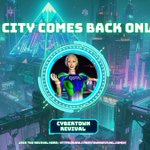


CybertownRevival retweeted

Revisiting Cybertown: The proto-metaverse of the 1990s
Back in the late 1990s, as the internet was rapidly evolving from a network of information to a bustling hub of communities, a unique virtual city named Cybertown opened its doors. In this three-dimensional world, I found a second home from 1999 to 2002, alongside many others who sought the thrill of a new kind of online interaction. Cybertown wasn't just a novelty; it was an online community pioneer, long before the term 'metaverse' would enter the lexicon.
Built on the once-cutting-edge technology of VRML (Virtual Reality Modeling Language), Cybertown offered an experience that was unparalleled at the time. It was an ambitious attempt to digitally replicate the dynamics of a real city. Users like myself became residents, not merely visitors, creating avatars that served as our alter egos. We could don virtual clothes, adopt pets that required no feeding, and buy properties that needed no maintenance. Property ownership in Cybertown went beyond the screen; it was an extension of personal identity and creativity.
As a resident, I invested time in personalising my virtual home, a pixelated dwelling that became a digital reflection of my taste. The living room became a gallery of my virtual achievements and a cosy corner for friends to gather. Neighbours weren't just names on a screen; they were fellow adventurers, each with a unique backstory. We visited each other's homes not out of obligation but out of a genuine curiosity to see how others expressed themselves in this shared but separate world.
Cybertown’s economy was its lifeblood, surprisingly intricate for its time. Users could engage in entrepreneurship, creating content or providing services in exchange for Cyberbucks, the town's currency. I watched talented 3D modellers and artists make their mark, earning in-game wealth that, at times, converted into real-world value. This microcosm of an economy foreshadowed today's digital marketplaces and in-game trading systems that we see across various platforms.
However, it was the community spirit that truly defined Cybertown. Events were a regular occurrence, from concerts and movie nights to art exhibitions, all virtual yet vibrantly alive. These gatherings were more than just scheduled programming; they were social lifelines that connected us. I recall attending virtual weddings, events that seemed curious at the time but in retrospect, were harbingers of how deep digital connections could go. The celebrations were real, the emotions genuine, and the sense of community palpable.
Amid this bustling digital life, however, there were signs that Cybertown's foundations were not as sturdy as its community spirit. As the early 2000s progressed, the limitations of VRML became apparent. Load times were sluggish, graphics were far from immersive, and the overall user experience started to pale in comparison to emerging technologies.
This is where successors like 'Second Life' entered, offering a more sophisticated platform for users to express themselves and interact with others. Second Life built upon the idea of a living, breathing virtual world, but provided users with tools that were far more advanced, allowing them to craft entire worlds of their own. Yet, despite its initial success, Second Life also faced its own set of challenges, battling to maintain user interest as the novelty wore off.
Around the same time, MMORPGs like 'Everquest' and 'World of Warcraft' were gaining traction. These games took Cybertown's premise of a virtual community to new heights, with deep lore, constant updates, and gameplay that was both addictive and satisfying. The communal spirit that Cybertown fostered found a new home in these vast online worlds, which offered not only a social hub but also an engaging experience wrapped in epic storytelling.
As these new platforms rose to prominence, Cybertown struggled to find its place. The digital city that had seemed so futuristic was now a relic, constrained by its own design and the limited technology it was built upon. VRML, once heralded as the language of the virtual future, couldn't compete with the rapidly evolving game engines and the increasing expectations of users accustomed to more dynamic and visually stunning environments.
Despite these challenges, for those of us who spent time in Cybertown during its peak, its legacy persists. We were pioneers in the early days of a digital revolution, part of an avant-garde experiment that navigated the then-uncharted realms of virtual interaction, digital economics, and the construction of online personas. The lessons Cybertown imparted about the capabilities and complexities of fostering an online community continue to resonate in contemporary platforms. The bonds formed and insights gained within its world have shaped our engagement with today’s sophisticated virtual realities. So profound was its impact that, although Cybertown officially ceased operations in 2012, a devoted community has resurrected its essence with ‘Cybertown Revival.’ This revival is a vivid replication of the original, bringing back the digital streets and avenues where I and many others first glimpsed the future of online community.
As I reflect on the time spent in Cybertown, I'm reminded that innovation is a relentless pursuit. What was once a bustling virtual metropolis is now a footnote in history, but for those of us who were there, it was a formative chapter in our online lives. Cybertown's impact can be seen in the fabric of current online worlds, a testament to the human desire to connect, explore, and exist in spaces beyond the tangible. It paved the way for today’s virtual experiences, setting the stage for the next generation of digital frontiers that we are only beginning to explore.


