

Professor, Department of Pharmaceutical and Chemical sciences, Universidad Icesi, Cali-Colombia
Cali, Colombia
Joined May 2019
- Tweets3.9K
- Following1.2K
- Followers140
- Likes11.3K





Carlos A Arango retweeted

In 1969, Cyrus Levinthal calculated that a 300-amino-acid protein has roughly 10^143 possible shapes. Checking a trillion per second would take longer than the age of the universe. Real proteins fold in milliseconds. A neural network using the same attention mechanism as every LLM solved it - without simulating a single fold.
AlphaFold 2 hit 92.4 at CASP14 - error about the width of an atom. Its Evoformer runs 48 layers of attention over a pair table enforcing the triangle inequality, the same geometric constraint governing distance metrics in every high-dimensional embedding space. Sixty years of experiments gave us 200,000 structures. AlphaFold predicted 200 million. In 2024, Hassabis and Jumper won the Nobel Prize in Chemistry.
14 minutes. Bookmark & watch today. Life written in one dimension, lived in three - and a transformer learned to read the fold.

Carlos A Arango retweeted

Why a model might store a field on a torus.
The field is two travelling waves. Its whole state is just two phases, and two angles together form a torus.
The encoder maps the field to a latent point, which is projected onto that torus. There the dynamics is simple: both phases rotate at constant speed. Step forward, decode, and you get the next field.
A latent space shaped like the data keeps predictions on valid states.
Carlos A Arango retweeted
Nine ways to measure how far apart A and B are.
Minkowski ties three together: d = (|Δx|ᵖ + |Δy|ᵖ)^(1/p). It gives Manhattan, Euclidean or Chebyshev depending on p. The purple shape shows all points at the same distance from A.
Cosine ignores length and keeps only the angle. Hamming counts positions where two strings differ. Jaccard and Dice compare the overlap of two sets.
Haversine gives the great-circle distance on a sphere.
Carlos A Arango retweeted

In 2006, I wrote a short essay called "The End of Insight".
We're not quite there yet, but the stunning proof of the Riemann hypothesis hints at what might lie ahead.
For more on this, see johnhorgan.org/cross-check/t…

Carlos A Arango retweeted

Riemann Hypothesis Proof Explained: this is by far the best explanation on the internet. I studied mathematics at Cambridge & spent the last 3 nights sleepless to get this out.
This is NOT AI slop. A lot of human effort went into this lecture. Watch till the end & you'll agree
Carlos A Arango retweeted
All of linear algebra is index gymnastics.
Dot product contracts every shared index into a scalar. Outer product leaves indices free, expanding two vectors into a full matrix.
Matrix-vector and matrix-matrix products contract only the connecting index. Trace closes both loops, summing the resulting diagonal.
One notation shows every contraction pattern at once.


Carlos A Arango retweeted

Fluid flow around objects: p + ½ρv² + ρgh = constant.
Top: a streamlined body (a Rankine oval, made from a source and a sink in a uniform stream). The flow splits smoothly around it and joins up again behind it.
Middle: a cylinder. The flow around it is potential flow, and a von Kármán vortex street sheds from it, alternating top and bottom. It uses the measured Strouhal number fD/U = 0.2 and Kármán's stable spacing h/l = 0.281.
Bottom: a teardrop (a Joukowski aerofoil). The arrows are the surface pressure from Bernoulli, p − p∞ = ½ρ(U² − v²). They point in where the flow slows (the nose and the tail) and out where it speeds up (the shoulders).
Every particle moves at the real speed of the flow. Faster flow means lower pressure.
Carlos A Arango retweeted

The Mathematics Structures of Physics (5 volumes)
Vol.1: link.amazon/B0e4507OK
Vol.2: link.amazon/B04A5iInz
Vol.3: link.amazon/B0dYwqK3u
Vol.4: link.amazon/B0iKebV6O
Vol.5: link.amazon/B0iNetvUQ


Carlos A Arango retweeted

A new report published by Quanta Magazine on 19 October 2026 describes significant progress in the independent examination of an AI-generated proof of the quasi-Riemann hypothesis.
Leading number theorists, including Peter Sarnak, Maksym Radziwiłł, and Alexander Dunn, have been closely studying the argument. According to the report, experts increasingly believe that the proof is correct, although a complete mathematical assessment is still underway.
The classical Riemann hypothesis, one of mathematics' most famous unsolved problems, asserts that every nontrivial zero of the Riemann zeta function lies on the critical line Re(s) = 1/2.
The AI-generated argument addresses a weaker but still significant result, claiming that every nontrivial zero satisfies
1/12 < Re(s) < 11/12.
If established, this would narrow the region in which nontrivial zeros can occur, bringing mathematicians closer to the prediction of the original hypothesis.
After studying the 49-page manuscript, Radziwiłł reportedly found that he could summarize its essential argument in approximately half a page.
Sarnak has also redirected a university course toward examining the proof, reflecting the growing mathematical interest in the result.
Nevertheless, important questions remain. The 49-page argument has not yet been formally verified in Lean. A separate AI-generated argument claims the stronger bound
1/8 < Re(s) < 7/8
and is accompanied by a Lean formalization, although researchers are currently concentrating on understanding the shorter proof.
The full Riemann hypothesis remains unsolved, and the mathematical community has not yet reached a final consensus on these AI-generated results.
Even so, the ongoing independent examination marks a noteworthy development in the emerging relationship between artificial intelligence and advanced mathematical research.

Carlos A Arango retweeted

The application of ideas from topological band theory to reaction pathways in molecular systems with strong electronic interactions is challenging. Now, a many-body framework based on Green’s functions is introduced to solve this problem.
nature.com/articles/s41567-0…

Carlos A Arango retweeted
In April 2013, a 58-year-old mathematician named Yitang Zhang submitted a paper to the prestigious Annals of Mathematics.
At the time, he was virtually unknown in the mathematical community.
After earning his PhD from Purdue University in 1991, Zhang struggled to find a permanent academic position.
For years, he worked outside academia, including at a Subway sandwich shop, before eventually becoming a lecturer at the University of New Hampshire, where he taught undergraduate mathematics.
Yet throughout those difficult years, he continued pursuing his own mathematical research, particularly the mysteries of prime numbers.
In July 2012, while visiting a friend in Colorado, Zhang was sitting quietly in the backyard when an idea came to him. He had spent three years working on a problem involving the gaps between prime numbers, and suddenly he saw a way past an obstacle that had frustrated some of the world's leading number theorists.
Over the following months, he carefully developed that insight into a rigorous mathematical proof.
On April 17, 2013, he submitted his manuscript to the Annals of Mathematics.
The response was remarkable. Within just three weeks, the referees had delivered an unusually enthusiastic report, recognizing the work as a landmark achievement. The paper was formally accepted on May 21.
For centuries, mathematicians had wondered whether infinitely many pairs of prime numbers could occur within some fixed distance of one another.
The famous twin prime conjecture predicts that infinitely many pairs differ by exactly 2, such as 11 and 13 or 17 and 19.
Zhang did not prove the twin prime conjecture itself. Instead, he established something that had never been proved before: there are infinitely many pairs of consecutive primes whose difference is less than 70 million.
Seventy million might seem enormous when compared with 2. But the crucial breakthrough was that the gap was bounded by a fixed number, no matter how far along the number line one went.
It was the first proof that bounded gaps between consecutive primes occur infinitely often.
His discovery opened an entirely new chapter in number theory, inspiring mathematicians around the world to improve his bound. In 2014, Zhang received a MacArthur Fellowship in recognition of his extraordinary achievement.

Carlos A Arango retweeted
The Riemann hypothesis makes a precise claim: every nontrivial zero of the zeta function has real part ½.
Why should we care where a function vanishes? These zeros govern the fluctuations in prime counting. Their location tells us how accurately we can estimate the number of primes.

Carlos A Arango retweeted
A visual proof does not merely show that a theorem is true; it helps us see why it must be true


Carlos A Arango retweeted

We congratulate Levent Alpöge and Tristan Buckmaster on their remarkable mathematical work.
We (the researchers and the agents) did not see any of their work through any means until they released it publicly — in particular, no specific user data was accessed in order to solve this problem.
While unlikely, we cannot rule out that de-identified data derived from their usage of our products helped improve our models.
However, our proofs differ significantly and even the precise results proved are different in the Euler case (forced vs. unforced).

We’re sharing a solution to the Navier-Stokes Millennium Prize Problem, one of the deepest problems at the frontier of mathematics.
The proof was produced by a group of agents, using an OpenAI next-generation model significantly more capable than GPT-6 Astra.
The problem concerns whether the description of smooth three-dimensional fluid motion modeled by the Navier-Stokes equations can break down. It has remained unresolved for roughly 90 years.

Carlos A Arango retweeted
We’re sharing a solution to the Navier-Stokes Millennium Prize Problem, one of the deepest problems at the frontier of mathematics.
The proof was produced by a group of agents, using an OpenAI next-generation model significantly more capable than GPT-6 Astra.
The problem concerns whether the description of smooth three-dimensional fluid motion modeled by the Navier-Stokes equations can break down. It has remained unresolved for roughly 90 years.


Carlos A Arango retweeted
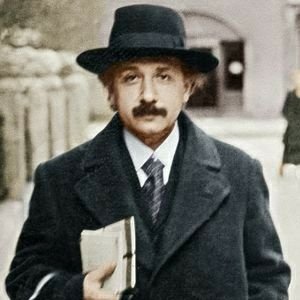
In November 1967 Grothendieck spent three weeks teaching mathematics in North Vietnam at the invitation of its Mathematical Society. He began with general lectures in Hanoi to about sixty people, covering schemes, homological algebra, sheaf theory and the Weil conjectures, interrupted by air raids.
A week into the visit, delay-action bombs hit the Hanoi Polytechnical Institute and killed two mathematicians, so the seminar moved to the evacuated Faculty of Mathematics roughly 100 km outside the city, where thirty to forty listeners who had followed him from Hanoi continued with categories and homological algebra in the forest. Hoàng Xuân Sính took the notes, later completed her doctorate with him by correspondence at eight months per letter, and went on to found Vietnam's first private university.
