

🧠 Autism and Neurodiversity Consultancy Services 🎓 Educational content on Autism and Neurodiversity 📚 Author of From The Dark Into The Light
- Tweets138
- Following82
- Followers86
- Likes112



ALT Callum standing in front of his roller banner and presentation slides while getting ready to be interviewed.

ALT It’s normal for anyone to get stressed or experience some form of anxiety, occasionally, in our everyday lives. Autistic people can find certain situations so overwhelming that they have meltdowns and shutdowns. I’ve recently talked about realising that I have experienced shutdowns. I have also written about what to do in the event of a meltdown or shutdown. However, I’ve not yet explained why we get stressed or experience anxiety, meltdowns or shutdowns. This is mainly down to a part of the brain called the Amygdala. The Amygdala is a small part in the centre of the brain that carries out a couple of functions around the body that are relevant here. These are as follows: It detects situations where you may be in danger and triggers warning signals. It activates your fight-or-flight response. These functions produce a hormone in your body called Cortisol (also known as the “stress hormone”), which is released into your bloodstream. The effects of Cortisol are to increase your blood

ALT pressure and your heart rate speed, which can raise your stress levels. I found that anxiety in autistic people can be associated with an overactive amygdala. This means that more warning signals may be triggered in many more situations for autistic people than for neurotypicals. This made sense to me, as I get fight-or-flight responses when my plans are interrupted or if I hear eating or keyboard noises, for example. I hope that, if you suffer from stress or anxiety, this post has helped you to figure out why.

ALT Callum looking up into midair. There is an arrow pointing to the part of his brain where the Amygdala is located. The text "Amygdala" is next to the arrow.

ALT Callum stood on the front terrace of his high school, Fulneck School, with the Church in the background. He is holding up the document with his GCSE results.

ALT Callum getting ready for his first day at Fulneck School, his high school. He is 11 years old at this point, wearing his uniform and looking nervous.

ALT Callum, Geoff and Ashley sat side by side with the presentation slides in the background for Creased Puddle's NCA training.

ALT Callum, with everyone else in the training, holding up his book.

ALT Getting your autism diagnosis is only half the battle won. Another, and arguably even more critical, part of an autistic person’s development is the support they receive. My parents fought to get funding that paid for my support in school. They also gave me their time to support me at home and helped me unlock my entitlement to support at university. I’ll give you a quick summary of the support measures. Funding for School Support. My school received funding from the Local Authority that was available in the UK for special needs children. My parents had to fight hard to keep getting the funding through in my secondary school years. The funding paid for Learning Support Assistants (LSAs) in the classroom and for my specialist Learning Support Unit (LSU) classes. This was only possible because I had an autism diagnosis. Support at Home. My parents also worked hard to support me at home. My mum helped me with my homework and acted as a go-between with my teachers to ensure homework was

ALT handed in on time or get a deadline extension. My dad, meanwhile, has supported me in strengthening my practical skills. This was in terms of helping me to ride a bike, getting involved in playing sport or showing me how to do important life skills. He knows how to give me clear, precise instructions to learn all these invaluable skills. Support at University. My diagnosis allowed me to receive a Disability Student Allowance (DSA) which paid for assistive technology that helped me to do lots of online reading that I had to do as part of my research. It also paid for me to have a Specialist Learning Mentor (SLM) for two one-hour sessions a week (like LSU) to help me with my work. My SLM was also autistic, so she understood my anxieties and helped me in the most effective way. I hope that this short summary helps you to see which benefits the autism support can offer.

ALT Callum with his parents when he graduated from Leeds Beckett University with a First-Class Honours Degree. He is wearing his graduation gown and hat.

ALT Callum stood on top of the hills, on a sunny day, in the Yorkshire Dales on the Muker trail.

ALT Callum stood up, holding a steering wheel in a bar on a ferry from Hull to Rotterdam.

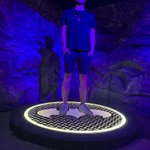
ALT Callum stood on a platform at the Batman Unmasked Exhibition in Manchester, United Kingdom. The platform has a Batman logo on it.

ALT Callum is sat in front of a fire in the garden at night time.

ALT Callum is stood on the second floor of Burberry's flagship store on Regent Street in London, United Kingdom.

ALT Callum and Caren sat down in front of their roller banner. Caren is interviewing Callum. She has prompts in her hands while Callum is answering the questions.

ALT Workout timetable image 1. Table row 1. Heading column 1: Day. Heading column 2: Workouts. Table row 2. Column 1: Monday. Column 2: Biceps curls, Triceps extensions, Chest fly, Shoulder blade squeeze, Jog. Table row 3. Column 1: Tuesday. Column 2: Shoulder press, Sit-ups, Press-ups, Jog. Table row 4. Column 1: Wednesday. Column 2: Forward lunges, Squats, Deadlifts.

ALT Workout timetable image 2. Table row 4. Heading column 1: Wednesday. Heading column 2: Jog. Table row 5. Column 1: Thursday. Column 2: Backward lunges, Calf extensions, Jog.

ALT Callum looking into the camera at the gym with his vest on as he got ready to workout.

ALT One of the biggest challenges for many autistic people is that they struggle to understand non-verbal communication. Body language has so many different meanings and contexts that non-autistic people can understand instantly. Non-autistic people have a processing filter that allows them to do this, whereas autistic people don’t have this ‘tool’. An autistic person must take their time to figure out the meaning and context behind the body language they are presented with. To solve this conundrum, I’ve been studying human behaviour and body language for the last two years. I’ve watched videos from YouTube body language experts, who analyse different interviews on TV and scenes from films and TV series. I’ve also read personal development books that cover body language. I then combined what I had learned with my intuition to take note of the important nuances of social cues and other types of interactions. The most important lesson I learned through this process was that often reading

ALT was that often reading people’s body language is much more important than listening to their words. The reason is that people generally choose consciously what they want to say, but their body language is instinctive, showing their real intentions. I would recommend that anyone who struggles with reading non-verbal communication initially assesses how the body language makes them feel, without listening to what is being said. Once you know the intentions of the person, you can start processing their words.

ALT Callum, looking at the side, confused.

ALT Callum sat on a balcony, with mountains and the sea in the background, in Menton, France, smiling at the camera.

ALT Callum in the Ned Bar, in London, sipping on a cocktail.

ALT Callum standing next to a Ferrari car in Monaco.