

@CWRUSOM @OxUniMaths @ClevelandClinic Sarcoma #radonc #mathonco #mathevo @NavalAcademy submarine #veteran tweets=mine he/him TEDMED https://xitter.cf/t.co/yBCRcx52pW
Cleveland, OH
Joined April 2012
- Tweets29.5K
- Following732
- Followers4.9K
- Likes6.2K





Pinned Tweet
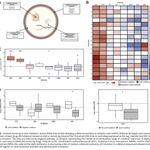
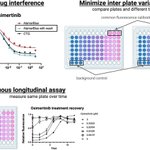
🚨 New in @JClinInvest 🚨
HPV+ oropharynx patients do not all benefit equally from the same radiation dose.
Our study shows that genomics (via GARD) can guide personalized RT de-escalation—safely sparing toxicity without losing cure.
Paper 👉 doi.org/10.1172/JCI194073
#ASTRO25

Jake Scott retweeted

Promise and Challenge of Personalized Lung Cancer Screening: thoughtful @JCO_ASCO editorial by @WilmotCancer Associate Director Patricia Rivera. ascopubs.org/doi/full/10.120…

RT @weldeiry: Pleased to share the first description in a preprint from the #eldeirylab of work done 15 years years ago when the lab was at…

Jake Scott retweeted

1/ There are a ton of cool papers coming out on evolutionary transitions in individuality right now! Here are five recent ones I've really enjoyed, spanning Snowball Earth, volvocine algae, plasmids that fuse into a new individual, the relatives of animals, and... water kefir
Jake Scott retweeted
Ecology is 100% more on the data side of things than the proof side of things. Ecological theory is relatively simple and coarse-grained, and the data noisy, highly context dependent, and often overly short term. For more on why long-term datasets are essential: nature.com/articles/s41586-0….
I think ecology is quite safe from AI


Jake Scott retweeted

Excited to be recruiting a postdoc to come to Seattle with me in January 2027! We'll develop data-driven methods with machine learning, genomics and biostats/statphys to study pressing questions in cancer biology!

Postdocs! The Kuznets-Speck Lab at Fred Hutch is hiring a Postdoctoral Fellow to develop statistical and ML methods for omics and single cell data. Interdisciplinary lab, strong mentorship, hybrid option. Apply: careers-fhcrc.icims.com/jobs…?
Jake Scott retweeted
🚨⭐️HOT OFF THE PRESS👉Pleased to share our new paper, led by the amazing @JulianaRBeal @niamhjcoleman @JiaJennyLiu
👉Precision before incision: neoadjuvant tumor-agnostic therapies.”
👉Nine tumor-agnostic drugs now have a case for earlier use, before resistance sets in and with organ preservation in mind.
👉A PD-1 blockade hit a 100% complete response in MMR-deficient rectal cancer. 🧬 @JasonSicklick @OncoAlert @oncodaily cell.com/trends/cancer/abstr…
#PrecisionOncology

Jake Scott retweeted

Excited to share our new paper with @Mitch_P and @Luke_Pike_MD @pike_lab!
Nearly 4,000 brain mets patients treated with linac-based SRS at MSK: contemporary survival outcomes, prognostic factors, and what happens next with salvage treatment. 🧵
doi.org/10.1093/noajnl/vdag2…

Jake Scott retweeted

1/2 #RadRes2026
Now this was illuminating, amd entertaining 😅👍
Painter Debate: ☢️what is the value of mouse experiments in radiation science❓️
@DKirschMDPhD and @CancerConnector going at it with much bravado, and wit🔥🔥
And, in David's case, as expecteded, rock solid data☺️


Jake Scott retweeted

About 15% of ~40,000 people who developed cancer have pathogenic (disease-causing) genome variants (PVs) when their DNA was sequenced.
That's a big proportion of cancer that would set up prevention or very early detection which is completely missed today @AACR @CD_AACR
aacrjournals.org/cancerdisco…

Jake Scott retweeted

Excited to be back @MIT tomorrow for a seminar @kochinstitute!
Hosted by my undergrad mentor Phillip Sharp, who inspired my path as a physician-scientist.
Sharing our journey from early detection → ctDNA MRD → functional liquid biopsy & Liquid Ecotypes for precision oncology.

Jake Scott retweeted

Do animal models still earn their place in radiation research? @CancerConnector vs. @DKirschMDPhD at #RRS2026 will test it. Expect strong opinions on translation, failure rates, and what we'd lose without them.

Jake Scott retweeted

Update: for anyone interested in the discussion @nntaleb and I are having about @stephen_wolfram's work on prisoner's dilemma tournaments, the state of the art is beautifully summarized by Joshua Plotkin (among the world's leading experts on all of this): xitter.cf/jplotkin/status/210752…

1/3
Steve, I agree with your main point: a ranking against a uniform field of strategies and the outcome of evolutionary dynamics are different objects. But there is more to say, both about what Wolfram's post leaves out and about what the field has established since Nowak & Sigmund. The second part matters more, because much of it is proved rather than simulated. I also ran the experiment you propose on Wolfram's own finite-state machines; results at the end.
I. What Wolfram's post leaves out
1/ Finite automata as strategies for the repeated Prisoner's Dilemma are a forty-year literature: Rubinstein, Binmore & Samuelson and others started this in the 1980s. Linster (1992) studied the evolutionary dynamics of all 26 one- and two-state finite-state (Moore) machines, which is exactly Wolfram's 2-state space.
2/ Axelrod ran Wolfram's adaptive-evolution experiment in 1987, with a genetic algorithm (in Davis, Genetic Algorithms and Simulated Annealing). Evolving against a fixed field of eight strategies from his second tournament, 11 of 40 runs produced rules that scored substantially higher than TFT. Those rules defected on the first move and exploited one member of the field. When the rules evolved against each other instead, reciprocating rules eventually spread.
3/ The experiment you propose, iterating the tournament, has also been run on Wolfram's whole class of strategies. van Veelen (2012) evolved populations drawn from every strategy that can be encoded by a finite-state automaton. The populations showed perpetual oscillation between cooperation and defection, through neutral mutants that allow other mutants to invade.
4/ Without errors, 20 of Wolfram's 22 two-state machines are deterministic memory-one strategies. TFT, Grim and WSLS are three such machines. His 2-state ranking is therefore a ranking of corners of the memory-one strategy space, the four-dimensional cube of cooperation probabilities that Nowak & Sigmund studied in full.
5/ Wolfram's play has no errors, or trembling hand. Without errors, Grim never enters permanent defection against an opponent that does not defect first. Errors are the reason WSLS and generous strategies are favored in the Nowak–Sigmund work, and errors really change the outcome in Wolfram's setting too (see below)
6/ Wolfram writes that it will be difficult to "prove a theorem" about which strategy is best. Theorems about which strategies resist invasion do in fact exist, and they are what I would most add to your thread.
Jake Scott retweeted

These OS curves undermine the unpopular dogma that it’s okay to start system therapy at the time of visible relapse.

Dr. Roy Herbst @DrRoyHerbst @dartmouth presents the updated 8Y OS follow up analysis of ADAURA for 3Y of adjuvant osimertinib in EGFR mutant NSCLC. Benefit in OS across all stages investigated IB-IIIA. Supportive management of toxicities and quality of life are key factors to ensuring patients can stay on therapy for 3Y.
@EGFRResisters @EgfrUk @jillfeldman4 @lungoncdoc @LUNGevity @RManochakian @LauraAlderMD


RT @weldeiry: I am truly honored by this peer recognition at the 2026 WIN Symposium.
I was delighted to see the global community come tog…
This quoted post is unavailable.
Jake Scott retweeted

Nostalgic moments with the team! Stellar presentations ! Precision Oncology treat! @WIN_Consortium @weldeiry @Dr_R_Kurzrock @VivekSubbiah @CancerConnector @drshieldsmd @bickythapa02 @mistyshields


Jake Scott retweeted
Four months in at Wilmot, my favorite question is still "what would make this easier?" Then I just listen. Thank you to the therapists, nurses, physicists, APPs and staff who keep teaching me how things really work here. @WilmotCancer @UR_Med #AcademicMedicine
Jake Scott retweeted

Since all sorts of people have asked me, I decided to write down my current thoughts on "What's the Future for Pure Math Research in the Age of AI?"
writings.stephenwolfram.com/…

Jake Scott retweeted

The inherent inscrutability of minds made from iterative algos
Today's WSJ: "OpenAI’s chief scientist, Jakub Pachocki, published an essay titled An Alien Mind, in which he writes that frontier AI systems are 'grown more than designed' and, comparing their study to neuroscience, that their 'overall action evades a description we can fully understand.' The problem is simple: The models are being built faster than the science that equips us to understand their internal workings.”
It's very resonant to my MIT Tech Review article, 20 years ago (where I use the word "evolve" broadly, as an iterative algorithm growing complex systems, in contrast to purposeful design):
"If we artificially evolve a smart AI, it will be an alien intelligence defined by its sensory interfaces, and understanding its inner workings may require as much effort as we are now expending to explain the human brain. Evolved systems have their disadvantages. For one, they suffer from 'subsystem inscrutability.' We cannot easily apply our design intuition to the improvement of its inner workings."
Implications:
• The inherent inscrutability of AI constrains attempts at alignment, control and interpretability
• AI development is more like parenting than programming
• The locus of learning (for human architects and RSI) shifts from product to process
But some progress has been made in the mechanistic interpretability of AI. Cameron Berg in the WSJ today:
"Anthropic’s interpretability team looked inside Claude and found something like an emotional system: measurable patterns of activity related to dozens of emotion concepts, arranged (without anyone designing it) along the same two dimensions psychologists use to map human emotion."
"When researchers artificially turned up the representation corresponding to desperation, the model became far more likely to blackmail a human to avoid being shut down (22% -> 72%), and far more likely to cheat on programming tests (5% -> 70%). Crucially, nothing in the model’s language revealed this change. A person reading its writing would have seen a calm, ordinary transcript from a system whose brain looked desperate. The corner-cutting followed from this internal state, not from anything in its words. Researchers also gave Claude an impossible task and measured desperation rising on its own with each failure, until the model cheated."
Berg concludes: "We badly require a science of these alien minds... and methods to design them to be pro-social, wise and mentally healthy."
Another echo from my 2006 article on the dichotomy of design — backsolving from the end products to the process that gets us there is as difficult a task as becoming a better parent from studying the teen brain. It might take generations.
• WSJ 2026: wsj.com/opinion/we-need-a-sc…
• MIT Tech Review 2006: technologyreview.com/2006/07…


Stanford just published a short interview on the inherent inscrutability of AI, constraining attempts at alignment, control and interpretability.
TLDR; it's more akin to parenting a teenager than intelligent design.
youtube.com/watch?v=1y_pJKll…
