

Bourbon and smoked meat
Columbus, OH
Joined May 2022
- Tweets1.5K
- Following571
- Followers1K
- Likes1.5K





Scott Cardone retweeted
You’ve framed this incorrectly. The proper analogy is if your fire alarm goes off in the middle of the night and you call the fire department and they thoroughly investigate and find there was no fire and it was a false alarm, and you then complain that they didn’t do anything for you because they didn’t fix anything.
Scott Cardone retweeted

If you think doctors are the problem when it comes to healthcare costs…check this:
Physician reimbursement ($/RVU) is DOWN 12%
Meanwhile…
Health insurance premiums are UP 146%
Inflation is UP 65%
Medical school debt is UP 72%
Healthcare administrator roles are UP 156%
The math is not mathing🤨


It's annual paycut season for doctors, brought to us by @CMSGov…
And, drumroll…it's a cut. Again.
-2.31% for most of the house of medicine in 2027 on the RVU conversion factor (to $32.63/RVU).
Adjusted for inflation, that's:
A one-year 4.7% decrease,
A 10-year cut of 32.6%,
A 20-year cut of 46%.
Yikes.
Thanks, @RobertKennedyJr.
😬😬😬
Scott Cardone retweeted

Private Equity Firm purchases Pennsylvania Hospital, paid all their executives hundreds of millions of dollars, sold their land, then started charging the hospital $35 million per year in rent forcing the hospital to shut down
“The private equity firm that owned and shut down this Delco hospital pocketed hundreds of millions of dollars in the process, while it left its community stranded of emergency services. And it has already ruined lives.
- Prospect Medical Group bought the nonprofit Crozer Hospital System back in 2016, while the hospital system was struggling financially
- 2 years later, in 2018, Prospect took out a $1 billion loan and then paid out investors over $450 million
- The CEO, Sam Lee, pocketed almost $100 million
And obviously, when you take out a loan, you have to pay it back. So Prospect sold all the land and buildings of all the hospitals they owned across the country to a real estate Investment Trust for $1.4 billion. That real estate trust then rents out the land and the buildings back to the hospitals in what's called a sale leaseback agreement.
For the Crozer system in Delco, this now meant that they had to pay $35 million a year in rent to the trust. That's $35 million a year in rent that they didn't have to pay before Prospect took over.
On top of that, Prospect was accused of aggressively cost cutting, reducing quality of care at their hospitals, and got sued multiple times for Medicare fraud. Surprise, surprise. Prospect had to file for bankruptcy back in January, listing debts of more than $400 million, which is also suspiciously similar to the 450 million that was paid out to investors back in 2018.
So Prospect had to shut down two of its hospitals here in Delco, making it much harder for the people in this area to get the proper care they need. Quite literally, some people in emergency situations will now, because of the extra time it takes to get to another hospital.
And mind you, that is not an exaggeration. It has already happened — The Prospect investors basically got away with all of this, and they're now hundreds of millions of dollars richer.”
Scott Cardone retweeted

"I'm not fat, I just have a lot of muscle. BMI doesn't work for me."
How often is this true? How often does a high BMI suggest healthy, muscular people are fat?
Rarely.
Obesity based on direct measurement of body fat agrees with the BMI-based obesity label in ~98% of cases!

Scott Cardone retweeted

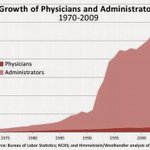
It’s not just education…
Two broken systems. One common disease.
Healthcare and education—different missions, same diagnosis:
Administrative bloat.
Over the past 30 years:
•Physicians didn’t multiply. Administrators did.
•Teachers didn’t double. Bureaucrats did.
•Both got more oversight, more paperwork, more “initiatives”—and less time to actually do their jobs.
What do these systems have in common?
•Government dollars with minimal accountability
•Top-heavy structures that reward compliance over outcomes
•Layer upon layer of middle management
•Complexity used as a shield against reform
And who suffers?
•Patients.
•Students.
•The professionals who are stuck carrying both systems on their backs.
The parallels aren’t accidental.
They’re systemic.
And that’s why you’re seeing more doctors leave medicine and more teachers leave the classroom.
They didn’t burn out.
They were pushed out—by a system designed to serve itself.

Young people are opting out.
In their minds, there is no reason for them to pay back their student loans.
College grads with STEM degrees can’t find a job. Young people who have jobs can’t own a house. Most are still living with their parents so they can’t settle down.
Expect this number to hit 20% next year.


Scott Cardone retweeted

The job is hard because of the Federal government.
Here is a partial list of how the government has made the job more difficult:
• ACA
• Stark laws
• site-dependent payments
• prohibition on physician ownership of hospitals
• HITECH Act
• Medicare fee schedule that has decreased by 33%
when inflation-adjusted
• MACRA and MIPPS
• HIPAA
• Prohibition on the physician ownership of hospitals
Please rectify the damage you have caused before insulting physicians.

Scott Cardone retweeted
Medicaid System Isn’t Underfunded-
It’s Engineered for Arbitrage
(Florida edition)
Remember, Medicaid programs vary from state to state
We are always told how Medicaid underpays. Hospitals and physicians claim unsustainable losses.
That is not true for certain health systems.
They have turned Medicaid into a high-margin business model.
In Florida, here is how it works:
1.Local tax dollars (sales/property taxes) flow to the state via Intergovernmental Transfers (IGTs).
2.The state uses those IGTs to pull down federal match dollars—doubling or tripling the original funds.
3.Hospitals then receive supplemental payments (LIP, DSH, DPP) that boost their Medicaid reimbursement to:
-100–150% of Medicare-hospital service
-162–195% of Medicare for employed physicians
-100-130% of Medicare for Hospital outpatient services
Community physicians—those outside the system—are paid 40–60% of Medicare, with no access to these back-end payments.
And than the large systems will still report Medicaid losses(using the non subsidized numbers to justify more subsidies, tax exemptions, and consolidation.
This isn’t a safety net.
It’s a federally subsidized reimbursement machine—powered by local taxes, optimized for margin, and structured to exclude independent doctors.
Let’s stop calling this charity care.
It’s policy-enabled arbitrage
And Florida isn’t the only state
( my app has been acting weird apologize for the repost)
@Dadudoc @DrDiGiorgio


Scott Cardone retweeted
Well… the one thing I’ve learned from today…
I am more anti-union now than before because I worry the leaders of the union will by more like Dr. Jordan than @DrDiGiorgio or @drmoneymatters or @pgipe or @DutchRojas or @SpineNeuro
Etc etc
You get the point…😬😑
Scott Cardone retweeted

When someone can’t argue the merits, they attack the messenger.
Posting my salary isn’t a rebuttal. It’s a tantrum.
By that logic, Barack Obama, Ezekiel Emanuel, Atul Gawande, and every think tank exec with a seven-figure W2 should be disqualified from healthcare policy discussions.
The truth is: I take Medicaid. I treat uninsured patients. I work in a public hospital. I see the system’s failures up close every day. I sacrifice a significant amount of income in doing so.
What I’m saying isn’t based on theory or vibes. It’s lived experience, backed by evidence. If that threatens your worldview, maybe it’s your argument that needs work.

Scott Cardone retweeted

The richest man in America. A guy who builds spaceships and robots and underground tunnels and brain chips and AI superintelligence, couldn't reform the government. He couldn't cut any spending
In fact, we are on track to spend more this year than any year EVER
We're in trouble
Scott Cardone retweeted

The remarkable thing here is not that there are errors. Every system has them. It’s the scale of error that makes this fraud at a massive scale.
50% (~$8billion) of United’s health revenue may come from diagnosis codes that don’t apply to patients.


Front page @WSJ investigative report on diagnosis upcoding by health plans & I hope y'all are sitting down b/c @UHC adds add'l diags. more than any other plan, over $1400 per #MedicareAdvantage member. UHC has nurses call Advantage members, offers $50 gift cards if their nurse can spend some time w/ the member & "Voila'" there's a new higher paying diagnosis. Insurers collected $50 billion extra from Medicare by making questionable diagnoses, often without the knowledge of patients or their doctors. wsj.com/health/healthcare/me… via @WSJ
Scott Cardone retweeted

Let’s just focus on everything but the red part of the circle 🤨

This Post is from a suspended account. Learn more
Scott Cardone retweeted

This is not fair. It’s been a slow but obvious decline my whole career. It sucks to be paid less and less as you get more skilled throughout your life.

𝐌𝐞𝐝𝐢𝐜𝐚𝐫𝐞 𝐢𝐬 𝐩𝐚𝐲𝐢𝐧𝐠 𝐃𝐨𝐜𝐭𝐨𝐫𝐬 𝟏𝟗𝟗𝟖 𝐰𝐚𝐠𝐞𝐬 𝐭𝐨 𝐩𝐫𝐚𝐜𝐭𝐢𝐜𝐞 𝟐𝟎𝟐𝟓 𝐦𝐞𝐝𝐢𝐜𝐢𝐧𝐞.
𝐒𝐢𝐧𝐜𝐞 𝟏𝟗𝟗𝟖, 𝐢𝐧𝐟𝐥𝐚𝐭𝐢𝐨𝐧 𝐡𝐚𝐬 𝐫𝐢𝐬𝐞𝐧 𝟖𝟐.𝟏%.
Medicare’s physician payment formula (the Conversion Factor)?
Down 9.9%.
That’s not “fiscal responsibility.”
That’s institutional gaslighting.
𝐌𝐞𝐚𝐧𝐰𝐡𝐢𝐥𝐞, 𝐝𝐞𝐟𝐞𝐧𝐬𝐞 𝐜𝐨𝐧𝐭𝐫𝐚𝐜𝐭𝐬, 𝐂𝐄𝐎 𝐬𝐚𝐥𝐚𝐫𝐢𝐞𝐬, 𝐚𝐧𝐝 𝐢𝐧𝐬𝐢𝐝𝐞𝐫 𝐭𝐫𝐚𝐝𝐞𝐬 𝐟𝐥𝐨𝐮𝐫𝐢𝐬𝐡.
But the doctors treating Medicare patients?
They’re being asked to do more with less, year after year, because “𝐡𝐞𝐲, 𝐰𝐞 𝐝𝐨𝐧’𝐭 𝐡𝐚𝐯𝐞 𝐭𝐢𝐦𝐞 𝐭𝐨 𝐛𝐫𝐢𝐛𝐞 𝐂𝐨𝐧𝐠𝐫𝐞𝐬𝐬 𝐥𝐢𝐤𝐞 𝐞𝐯𝐞𝐫𝐲𝐨𝐧𝐞 𝐞𝐥𝐬𝐞”, while the cost of running a practice skyrockets.
If the American people want Congress to preserve access to care for aging Americans, it’s time to speak up and tie Medicare’s payment formula to inflation, just like their own salaries.
𝐔𝐧𝐭𝐢𝐥 𝐭𝐡𝐞𝐧, 𝐠𝐨𝐨𝐝 𝐥𝐮𝐜𝐤 𝐟𝐢𝐧𝐝𝐢𝐧𝐠 𝐚 𝐝𝐨𝐜𝐭𝐨𝐫 𝐰𝐡𝐨’𝐥𝐥 𝐭𝐚𝐤𝐞 𝐌𝐞𝐝𝐢𝐜𝐚𝐫𝐞.
They’re busy trying to survive the 20th century in the 21st.
#HealthcarePolicy #Medicare #PhysicianBurnout #InflationMath #FixTheFormula



Scott Cardone retweeted

@dutchrojas is right. The reimbursement for high-risk surgical procedures is unsustainable. That is why 80% of medical students graduating, are employed even in neurosurgery. They can’t survive on their own. As you can see from the example above, Medicare pays a neurosurgeon $1255 to evacuate a blood clot from someone’s brain. After 50% overhead and taxes, that’s about $350 in his or her pocket to perform a life-saving procedure. Furthermore, this fee also implies a 90 day global payment, so if the neurosurgeon sees the patient in the ICU 10 days in a row, no payment ! sees them in the office five more times… no payment! only after 90 days can her or she start collecting the $54 office fee, which is also pathetic. We need a price transparency both ways …physicians are getting screwed. And the AMA is not our voice. They’re a political hack organization.

Scott Cardone retweeted

Everything costs more now, but doctors can’t raise their prices and haven’t had a raise since early 1990s. Our staffs all want double what they did in 2019 and rents have doubled. This has all been engineered to crush average Americans. Factor in interest rates and mortgages from 2019 and can see why so many are hurting.

Scott Cardone retweeted

𝐌𝐞𝐝𝐢𝐜𝐚𝐫𝐞 𝐢𝐬 𝐩𝐚𝐲𝐢𝐧𝐠 𝐃𝐨𝐜𝐭𝐨𝐫𝐬 𝟏𝟗𝟗𝟖 𝐰𝐚𝐠𝐞𝐬 𝐭𝐨 𝐩𝐫𝐚𝐜𝐭𝐢𝐜𝐞 𝟐𝟎𝟐𝟓 𝐦𝐞𝐝𝐢𝐜𝐢𝐧𝐞.
𝐒𝐢𝐧𝐜𝐞 𝟏𝟗𝟗𝟖, 𝐢𝐧𝐟𝐥𝐚𝐭𝐢𝐨𝐧 𝐡𝐚𝐬 𝐫𝐢𝐬𝐞𝐧 𝟖𝟐.𝟏%.
Medicare’s physician payment formula (the Conversion Factor)?
Down 9.9%.
That’s not “fiscal responsibility.”
That’s institutional gaslighting.
𝐌𝐞𝐚𝐧𝐰𝐡𝐢𝐥𝐞, 𝐝𝐞𝐟𝐞𝐧𝐬𝐞 𝐜𝐨𝐧𝐭𝐫𝐚𝐜𝐭𝐬, 𝐂𝐄𝐎 𝐬𝐚𝐥𝐚𝐫𝐢𝐞𝐬, 𝐚𝐧𝐝 𝐢𝐧𝐬𝐢𝐝𝐞𝐫 𝐭𝐫𝐚𝐝𝐞𝐬 𝐟𝐥𝐨𝐮𝐫𝐢𝐬𝐡.
But the doctors treating Medicare patients?
They’re being asked to do more with less, year after year, because “𝐡𝐞𝐲, 𝐰𝐞 𝐝𝐨𝐧’𝐭 𝐡𝐚𝐯𝐞 𝐭𝐢𝐦𝐞 𝐭𝐨 𝐛𝐫𝐢𝐛𝐞 𝐂𝐨𝐧𝐠𝐫𝐞𝐬𝐬 𝐥𝐢𝐤𝐞 𝐞𝐯𝐞𝐫𝐲𝐨𝐧𝐞 𝐞𝐥𝐬𝐞”, while the cost of running a practice skyrockets.
If the American people want Congress to preserve access to care for aging Americans, it’s time to speak up and tie Medicare’s payment formula to inflation, just like their own salaries.
𝐔𝐧𝐭𝐢𝐥 𝐭𝐡𝐞𝐧, 𝐠𝐨𝐨𝐝 𝐥𝐮𝐜𝐤 𝐟𝐢𝐧𝐝𝐢𝐧𝐠 𝐚 𝐝𝐨𝐜𝐭𝐨𝐫 𝐰𝐡𝐨’𝐥𝐥 𝐭𝐚𝐤𝐞 𝐌𝐞𝐝𝐢𝐜𝐚𝐫𝐞.
They’re busy trying to survive the 20th century in the 21st.
#HealthcarePolicy #Medicare #PhysicianBurnout #InflationMath #FixTheFormula
Scott Cardone retweeted
For those wondering why a simple doctor’s visit takes so long…
Or why medical offices can seem so inefficient…
Here’s the journey of a single patient chart… and remember only 1/3 of the quality metrics have any clinical relevance…
before we’ve even had a chance to talk about what actually brought the patient in.
It’s not care that takes the time—it’s the system built around it.
And most of it has nothing to do with healing.

Scott Cardone retweeted

Wrote today in the @nytimes about the dangers of blurring scholarship and activism.

