

From a world that carried meaning to a self that must—tracing how different traditions locate reality.
London
Joined January 2019
- Tweets5.2K
- Following2.2K
- Followers3.2K
- Likes258K
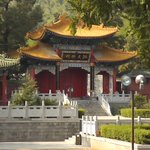




1/5
Who first said Laozi became the Buddha?
In 166 CE, the Han official Xiang Kai (襄楷) recorded it as hearsay: "Some say Laozi entered the lands of the barbarians and became the Buddha."
He reported the idea. Where it began, we don't know. 🧵👇

5/5
Pilgrims & translators brought detailed knowledge of the Buddha centuries earlier, yet the claim lingered: precedence, not evidence.
In 1281, the Yuan emperor Kublai condemned the tradition & ordered controversial Daoist texts destroyed.
Exchange gave way to competition.
1
15
119
1/8
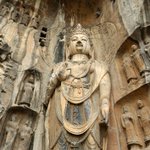
If the story of Buddhism's spread and transformation in northern China could be told through three places, they would be Dunhuang, Pingcheng, and Luoyang. 🧵
7/8
Together, these three places tell a remarkable story:
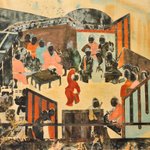
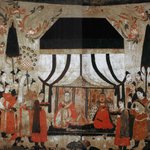
Dunhuang witnessed Buddhism travelling into China.
Pingcheng witnessed its flourishing under imperial patronage.
Luoyang witnessed its further transformation through Chinese artistic and cultural traditions.
1/8
For centuries, aristocratic ancestry could determine who reached China’s highest offices.
How did the empire loosen the grip of hereditary elites and build a government staffed by scholar-officials?
The story begins in the Northern and Southern Dynasties.🧵

8/8
The examinations did not erase aristocratic privilege overnight; elite families adapted.
But over time, recruitment shifted from inherited status toward demonstrated learning.
That shaped Chinese government for roughly 1,300 years, until the system was abolished in 1905.
