




Neil Dunridge retweeted

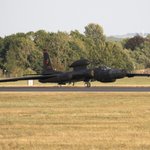
Here's the latest on U-2 divestment. It's postponed again - for good reason.
dragonladytoday.com/2026/09/…


Neil Dunridge retweeted

Everyone is wondering WHO were those brave soldiers who attached the explosives to the #CrimeanBridge! Who were these brave soldiers, these titans! 🤩 Here's a short video of their amazing work! A big round of applause for these heroes 🥰🥰👏👏👏👏👏
#Ukraine
Neil Dunridge retweeted

Pen and Sword Books: The Panavia Tornado at Low-Level - Hardback pen-and-sword.co.uk/The-Pana…

Neil Dunridge retweeted

How I Missed the D*mn War – Part 1
Monday, August 5th, 1990, my buddies phone rang and it’s his Aircraft Commander (AC) telling him he is now in crew rest, to pack a bag for 90 days, report to the squadron in 12 hours, and no, he didn’t know where they were going.
Fifteen minutes later, my AC called me. I was needed at the squadron to help load and preflight aircraft that were deploying in 12 hours. We still didn’t know where we were going or how long we’d be there, but the news was hitting the airwaves that the United States was reacting to Saddam Hussein’s invasion of Kuwait.
Twenty-four hours later, in KC-135R 58-0059, I was sitting in my cockpit seat, right behind the AC, taking off out of Loring AFB ME headed to Lajes Field in the Azores, a small island in the eastern Atlantic. We had an airplane full of support gear for the 9-hour sortie. I can’t recall for sure if we dragged any fighters on that first flight, but judging on the flight duration, I think we did.
An Air Bridge was being put in place to get Air Force fighters, sometimes referred to as chicks, from the East Coast all the way to Saudia Arabia, or Down Range as it was known to us. Our job flying from the Lajes was to meet up with tankers flying east from the east coast, take their fighters and escort them to the Strait of Gibraltar where other tankers would be waiting to take them through the Mediterranean Sea.
It would be one tanker with anywhere between two and six fighters, depending on the fighter type. A-10s tended to be flights of six aircraft, whereas F-15s usually came in groups of four. For F-4s, the thirstiest of the fighters, there were usually only two. It wasn’t a hard and fast rule, but rather determined by many factors including weather, location and availability of divert airfields, the fighter’s fuel requirements, and the tanker’s available offload.
I always had great respect for the schedulers and planners who put all this together. The amount of coordination needed was enormous. Tankers on the east coast, supported by many bases, tankers in the Atlantic at the Azores, tankers the Mediterranean, all had to be able to meet at their rendezvous points without fail or somebody was going to end up in the drink. Nobody wanted that.
For us, at the Azores, life was good. The weather was absolutely stunning with the sun shining and the temperatures in the 80s. I had never been there before, and wrongly assumed it was like that all the time. Everything we needed (food, beer, pool, gym) was within walking distance except heading to the temporary squadron that was hastily set up. If we were flying, we’d wake up late in the morning and head over to the gym, then off to the chow hall for lunch and then report to the squadron for a sortie. If we weren’t flying, then it would be the pool and the NCO club.
The formations from the East Coast came in waves about an hour apart. That worked well, until one evening mother nature intervened. The diversion for weather caused some serious confusion, and we had tankers stacking up in an orbit waiting for their receivers. One AC who didn’t get the memo decided not to coordinate with the other holding tankers, who were stacking up in altitude, and entered the orbit at the planned altitude, which was already occupied by a tanker that had taken off a couple of hours earlier. Both aircraft circled around the orbit for a while until eventually, they crossed paths and almost collided. One of the pilots said they he was able to see the map light in the cockpit of the offending aircraft and reported that they were easily within fifty feet of each other. TCAS, or Traffic Collision Avoidance System, did not exist in those days, so there was no safety net. The funny part, not that it was that funny, was that the offending pilot was actually the head of Stan/Eval or Standards and Evaluations, the people who gave Check Rides and made sure everybody was doing things correctly.
At the Strait of Gibraltar, we’d often meet up with a KC-10. They could carry more fuel for offloading and could be refueled themselves providing even more flexibility. If we had extra gas when we met up with the KC-10, we’d refuel them, giving them the extra so they’d have it if needed.
After sorties or on days we weren’t flying, the NCO club was the place to go. C-141s were landing everyday to refuel, there were no tankers available for direct flights, and they often spent the night. There airplanes were filled with ground pounders making their way down range.
One evening, we ran into some KC-130 enlisted Marines crew dogs who were bragging about how they were the “tip of the sword.” One of our older, more experienced, and more inebriated booms started yelling at them, “Tip of the Sword my ass, we’ve been here for two effing weeks.” Fortunately, we managed to avoid getting our asses handed to us by buying them all a round of drinks and doing carrier landings on a table.
By the way, we drank the base dry. They literally ran out of beer. For a few days you couldn’t find a six pack of beer anywhere on base, but eventually we were resupplied, and all was well again.
And then, all of the sudden, that little piece of heaven melted away like a chocolate bar in the sun. Aircraft and crews started moving around again. Some of our guys went Down Range, some went home. The Down Range guys went to France, Spain, Italy, Egypt, Saudia Arabia, Doha, and Deigo Garcia.
I was on a crew that was sent back home, back to good old SAC Alert watching the continuing buildup on Headline News wanting to get back to. A few weeks later, I returned to the Azores and the difference was startling. The weather had gotten cold and rainy, all the tankers were gone, the C-141s landing was reduced to a trickle, the NCO club was empty, and there were no missions to fly. All the fighters that needed to be moved had been moved.
My crew was headed down range…
(stay tuned for How I Missed the D*mn War – Part 2)
Photos: Lajes Field runway, the parking ramp, my AC and copilot, an A-10 receiver during one of the missions


Neil Dunridge retweeted

So, the next in my series of low-level books has now been submitted to @penswordbooks @AviationBooksPS and here’s the cover. All being well it should be released around this time next year…..

Neil Dunridge retweeted

What A Sight 👀
F/A-18s From VMFAT-101 Take Part In A Mass Formation Launch, Known As "Flying The Barn".
This Was Done To Honour The Squadrons Legacy As It Deactivates After 54 Years Of Service.
🗓: 29th Sept '23
📹:Chief Warrant Officer Trent Randolph
Neil Dunridge retweeted

#SAAF C-130BZ 409 has left South Africa for its major service and upgrade at Marshall's Aerospace in the UK.
->But now appears to be "stuck in North Africa or Spain with diplomatic issues."

Neil Dunridge retweeted

What’s the mission of the WC-135? Here’s a video from the inside (🎥 Tech. Sgt. Jeffry Howerton)
Neil Dunridge retweeted

The good, the bad and the ugly truth of the RAF C-130 Hercules hushkit.net/2023/03/27/why-i… via @Hush_Kit (Transall gets trashed in this!)


Neil Dunridge retweeted

Sea King from the UK has arrived in its new kingdom near the Black Sea in Ukraine!
It is a strong reinforcement for the Ukrainian Navy. Our cooperation will continue to increase.
Thank you to @BWallaceMP
Together, we will secure the seas and lands across all of Europe!
Neil Dunridge retweeted

Starting on January 22 at 2100 on BBC2 - my new naval series - THE WARSHIP: Tour of Duty @HMSQNLZ @RoyalNavy @RoyalAirForce @USMC @BrightonCollege @durhamalumni @AnthDurham1

"Hands to flying stations"
The Warship: Tour of Duty starts on @BBCTwo and @BBCiPlayer from Sunday 22 January at 9pm. Get a sneak peek at the new series from @ChrisTerrill and find out more about what’s to come!
More ➡️ bbc.in/3X7BChf
Neil Dunridge retweeted

Please help us save our museum from imminent closure. We have a precious collection of cold war aircraft.
chng.it/nyMvP97LLk
Info & petition on the link.
@TomCruise @MrJamesMay @carolvorders @Olliethecollie1 @achrisevans @RafRed1 @RAFBF @aircadets @RAFRedArrowsOC @RAFRed10

Neil Dunridge retweeted

What's old is new again: 55th Wing welcomes buffed up WC-135 "nuke sniffer," sends old one to the boneyard. omaha.com/news/state-and-reg…


Neil Dunridge retweeted
I’m pleased to be able to reveal the cover of the book. Thanks to everybody @penswordbooks for their work and help so far.

Neil Dunridge retweeted

#bookgiveaway To celebrate the book launch, I am giving away a signed copy of ‘Air Power in the Falklands Conflict’ on 19 November. All you need to do is like and retweet this tweet for your chance to win. The ‘Air Power in the Falklands Conflict’ FB page has a similar event.
