

Son, Uncle, Family Genealogist, Pro Wrestling Fan, Pro Wrestling Journalist, Women's Wrestling Historian.
Joined February 2021
- Tweets2.6K
- Following1.3K
- Followers707
- Likes1.4K




Pinned Tweet
For all the best photos, and historical Bios on the Ladies of Wrestling History join my Facebook Group.
facebook.com/groups/Fabulous…

Chris 🏳️🌈The Women's Wrestling Encyclopedia retweeted

This Month in @PoliceGazette 1941: Pro wrestlers Zoska Burska and The Swedish Angel demonstrate some moves.

Chris 🏳️🌈The Women's Wrestling Encyclopedia retweeted
This Month in @PoliceGazette 1948: The Gazette profiles Mildred Burke, the top female pro wrestler of the era.

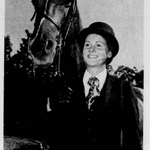
Long before she ever became Mrs. Macho, Liz was just a nice young lady who loved horses, and was in the running for Franklin County Fair's Queen.

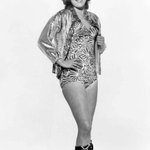
Would like to find information on whatever happened to Carol Sommers, I am told she was from Minneapolis, Minnesota.... but that's about all i have


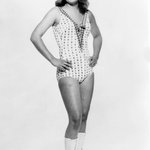
Remembering Jill Fontaine: The Story Behind Her Career-Ending Injury
Some time ago, we shared a post about early 1980s lady wrestler Jill Fontaine. Although she did not have a particularly long career, She had a memorable partnership with fellow wrestler Carol Sommers and they our remembered for their many appearances together as a tag team, especially in matches against The Texas Cowgirls, Wendi Richter and Joyce Grable, and Fabulous Moolah and Leilani Kai.
At the time of our original post, very little was known about Jill or what had happened to her after she left professional wrestling. We had heard that she later became involved in mud wrestling and suffered a devastating injury that left her paralyzed, but the exact circumstances surrounding the accident remained unknown.
After uncovering several newspaper articles from the time—and speaking with members of Jill’s family—we can now share the fuller story of the young woman wrestling fans knew as Jill Fontaine.
Jill Fontaine’s real name was Jill Marie Szymkowski, and she was originally from the Milwaukee, Wisconsin, area. After her brief professional wrestling career, Jill became involved with a touring mud-wrestling show known as the “Challenge of the ’80s.”
On August 25, 1981, the show appeared at the Somerset County Fair in Meyersdale, Pennsylvania. Jill, who was only 19 years old, was not competing as a mud wrestler that afternoon. Instead, she was serving as the referee for a novelty match in which several women selected from the audience faced a male wrestler known as “Moondoggie.”
During the match, in a unplanned moment the male wrestler lifted Jill over his shoulders and threw her onto the foam-covered mat in a body slam.
The result was devastating.
Jill suffered a severe spinal injury and immediately lost all feeling and movement from the middle of her chest down. She was transported to Memorial Hospital in Cumberland, Maryland, where she was listed in very serious condition as doctors worked to determine the extent and permanence of the paralysis.
Sadly, Jill’s family has confirmed that the paralysis was permanent. She never regained the movement she had lost.
In 1983, Jill filed a 10 million-dollar lawsuit in Milwaukee County Circuit Court against the promoter and owner of the Challenge of the ’80s, the Somerset County Fair Association, several fair officials, the County of Somerset, and others connected with the event.
The lawsuit alleged that those responsible for the show had failed to properly train and supervise the performers and had failed to ensure that the matches and wrestling area were operated and constructed safely. The lawsuit described Jill as having suffered severe injuries resulting in loss of bodily functions, disfigurement, pain, and suffering.
Later newspaper reports referred to the male wrestler involved by several different names, including “Moondoggie,” “Phil the Hulk,” “Felipe the Hulk,” and simply “the Hulk.”
Although the injury forever changed Jill’s life, it did not mark the end of her story.
In 1993, Jill married Kenneth Johnson in Las Vegas, Nevada. She lived for nearly three decades following the accident before passing away on August 20, 2009, in Sebring, Florida.
Jill was survived by her parents, Jerome and Audrey Szymkowski, and her sisters, Julie, Jodi, and Janet.
Jill Fontaine’s professional wrestling career may have been brief, but she was part of women’s wrestling during an important transitional period and shared the ring with some of the era’s most recognizable stars. Her appearances alongside Carol Sommers against Wendi Richter and Joyce Grable, and Leilani Kai and Fabulous Moolah ensured that her work would continue to be seen and remembered by wrestling fans decades later.
For many years, the details surrounding Jill’s injury—and even what became of her afterward—were largely unknown. Thanks to these newly uncovered newspaper reports and information graciously shared by members of Jill’s family, we can finally tell a more complete story of the woman behind the name Jill Fontaine.
May she rest in peace.
Jill Marie (Szymkowski) Johnson
Birth 6 Feb 1962 • Milwaukee, Wisconsin
Death 20 Aug 2009 • Sebring, Florida, USA


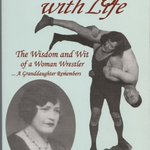
If you can find a copy, I highly reccomend Wresting With Life by Geraldean Mae McMillan about her grandmother Pro Wrestler Mae Stein.


After two seasons in GLOW as Envy of the Soul Patrol, @GLOWSOULPATROL Carmen (Campbell) Wickert followed David McLane to his new organization, Powerful Women of Wrestling (POWW). Initially competing as Lady Soul, she was later repackaged as Essence. Alongside her real-life cousin—who performed as Passion—the duo competed together as The Thrill Seekers.


Chris 🏳️🌈The Women's Wrestling Encyclopedia retweeted
Whatever Happened to Destiny?
You may remember Destiny from David McLane’s Powerful Women of Wrestling (POWW), which ran from 1987 to 1990. Well, all these years later, Destiny still looks incredible—like she could jump back into the ring anytime she wanted to!
Following her time in professional wrestling, Destiny—now known professionally as KK Harris—built an impressive career dedicated to helping others unlock their potential. As a Business Coach Psychologist, Executive Coach, leadership facilitator, and Diversity, Equity, Inclusion, and Belonging specialist, she has worked with professionals at all levels, from middle management to global leaders of multinational organizations.
Drawing upon her expertise in psychology and human behavior, KK helps individuals strengthen their confidence, develop their leadership abilities, navigate career transitions, and perform more effectively in both their professional and personal lives. Her work has also included designing and facilitating employment and parenting programs for people in prison, coaching future business leaders, and helping organizations create more inclusive workplaces.
KK is also the author of Unleashing Brilliance: A Roadmap to Confidence for Black Professionals, a book created to help ambitious professionals elevate their confidence, advance their careers, strengthen their leadership abilities, and make a lasting impact within their organizations.
From the wrestling ring to empowering the next generation of leaders, Destiny has certainly continued to live up to her name—and she still looks every bit as powerful as fans remember!


Sweet Cat LaRue: From a Childhood Dream to the Wrestling Ring
Born and raised in Mississippi, Catherine Dixon grew up loving sports and watching professional wrestling on television. Like many young fans, she dreamed of one day stepping inside the ring herself. She even told her parents that she wanted to become a professional wrestler, although at the time, she never truly believed that dream would become a reality.
Everything changed when Catherine attended a wrestling show and, as she later recalled, “snuck in to see the great one,” Frankie Cain, better known to wrestling fans as The Great Mephisto. After speaking with Catherine, Cain contacted her parents, and before she knew it, she was on a train beginning a journey that would change her life. Only a month later, Catherine was performing inside a professional wrestling ring.
Beginning her career in 1978, Catherine wrestled under the name “Sweet Cat LaRue.” Over the next several years, she competed throughout the United States and Canada, continuing to wrestle into the mid-1980s.
Among the many highlights of her career, Sweet Cat LaRue remembered performing before a sold-out crowd in Detroit as the greatest night of her time in wrestling. That evening, she stepped into the ring against the legendary Ann Casey, one of the most respected and accomplished women wrestlers of her era. Catherine proudly recalled that despite Casey’s reputation, she managed to take the wrestling great down.
Life on the road was not always filled with cheering crowds and memorable matches. As a Black woman traveling through parts of the country during the late 1970s and early 1980s, Catherine also encountered racism, particularly while making stops in small Alabama towns. She remembered those experiences as some of the most frightening moments of her career. Despite the hardships she faced, Catherine persevered and took pride in her ability to turn those negative experiences into something positive.
For a time, Catherine traveled with her daughter, Crescentia, who was affectionately known as “Cupcake.” Balancing motherhood with the demanding life of a traveling professional wrestler added another remarkable chapter to her story.
After leaving wrestling, Catherine eventually settled in Portland, Oregon. She became a proud single mother of four and later a grandmother of six. Family remained at the center of her life, and she became known among those close to her for her love of cooking Southern meals and bringing family and friends together.
Years after their first meeting helped launch her wrestling career, Catherine reunited with Frankie Cain and had the opportunity to look back on the memories they had shared. Although many years had passed since Sweet Cat LaRue last stepped inside the ring, Catherine remembered her wrestling career with great fondness.
Given the opportunity, she said she would gladly do it all one more time.


