

Tailored Web3 marketing agency. We help crypto projects grow, scale & connect. Turning momentum into value. Strategy • Growth • Network #BuiltWithCoinside
Joined January 2024
- Tweets181
- Following399
- Followers615
- Likes589








Pinned Tweet
Most crypto projects don't have a product problem. They have a Mindshare Gap.
Here's what we mean. Between the day a token lists and the day it either compounds or dies, there's a window most teams completely waste. The product works. The token is live. And then… silence. The launch noise fades, the KOLs move on, the chart drifts, and everyone blames "the market."
It's not the market. It's the gap between attention and trust — and almost nobody manages it on purpose.
We break it into four stages:
1. Reach — how many people see you. Cheap. Buyable. Coordinated in a day. This is where most budgets die, because reach without the next three stages is just noise that spikes and vanishes.
2. Resonance — how many people care. This is earned, not bought. It comes from a story people actually want to repeat. Reach is the megaphone; resonance is whether the words are worth passing on.
3. Retention — how many people stay. The launch crowd is rented. Retention is when attention becomes a community instead of a spike — people who show up when the chart is red, not just green.
4. Trust — how many people act. Trust is what converts a follower into a holder, a holder into an advocate. It's the only stage that shows up on your balance sheet.
Every project obsesses over Stage 1 and wonders why Stage 4 never arrives. But you can't buy your way from Reach to Trust. You have to engineer the path between them.vThat's the entire job. Not more reach. A shorter Mindshare Gap.
We don't sell reach. We engineer qualified demand — the movement from attention to trust, on purpose.
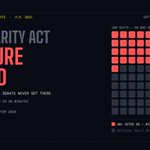
The CLARITY Act just failed in the Senate.
More than 40 senators voted against cloture, well short of the 60 needed to advance. Crypto market structure legislation is effectively dead for 2026.
The market reacted instantly: $300M in longs liquidated within 20 minutes, Bitcoin below $76,000, and Coinbase, Circle and Bullish all extending losses.
Here's what happened, and what comes next. 👇
WHY IT FAILED
The ethics provision never truly closed. Despite Trump accepting new ethics language covering federal officials, judges and their spouses, Democrats wanted more, including forcing officials to sell existing crypto holdings, not just restrict new ones.
Hours before the vote, Democrats delivered a counteroffer. Lummis rejected it, with her office saying Democrats "have not budged an inch." Warner's office fired back that these demands had been on the table for a year.
From that moment the math was gone: Republicans hold 53 seats, at least 7 Democrats had to cross over, and they never materialized. Add bank lobby pressure over stablecoin deposit flight and a few GOP defections, and 60 was never on the table.
WHAT IT MEANS
No statute means agencies keep writing the rules. The SEC's proposed "Regulation Crypto Assets" framework is already in the Federal Register, and the SEC and CFTC will keep shaping policy through rulemaking and enforcement.
The catch: agency rules can be unwound by any future administration. That's exactly the durability problem CLARITY was meant to solve. Galaxy CEO Mike Novogratz warned before the vote that failure could take comprehensive crypto regulation off the table for years and push more of the industry offshore.
One thing to keep in perspective: Galaxy had already cut passage odds to 10% before the vote. Much of this downside was priced in, and the Fed decision lands tomorrow, so expect volatility either way.
WHAT'S NEXT
Watch two things:
→ The final tally. A narrow miss in the high 50s keeps a 2027 revival realistic. A wide miss points much further out. Lummis has warned the next real window could be 2030.
→ Whether negotiations quietly continue. Both sides spent a year and 126 text changes getting here. The blame game started within minutes, but so did the talk of a next attempt.
The House passed this bill 294 to 134 with 78 Democrats. The demand for clear rules is bipartisan and it isn't going away. The Senate just couldn't get there today.
Builders will keep building. The next window will come. 🔔

4
212
Today at 2:15 PM ET, the US Senate votes on the CLARITY Act. It's arguably the most consequential vote in crypto's regulatory history.
Here's everything you need to know, and what's actually at stake. 👇
WHAT IS THE CLARITY ACT?
The Digital Asset Market Clarity Act (H.R. 3633) answers crypto's oldest question in the US: who regulates what, the SEC or the CFTC?
For years, the answer was "regulation by enforcement." No clear rules, just lawsuits. Ripple, Coinbase, Kraken. All sued while asking for guidance that never came.
CLARITY replaces courtroom battles with a statute:
→ Legal definitions for digital assets, network tokens & digital commodities
→ Digital commodities go to the CFTC (a lighter-touch regime)
→ Securities stay with the SEC
→ A framework for "mature blockchains"
One rulebook instead of turf wars.
HOW WE GOT HERE
• Jul 2025: House passes it 294 to 134, with 78 Democrats in favor
• May 2026: Senate Banking Committee advances it 15 to 9
• Aug 2026: Senate leaves for recess without a floor vote
• Sep 14: Final text released
• Today: cloture vote
A year of negotiations. 126 substantive changes made at Democrats' request.
TODAY'S MATH
Cloture needs 60 votes. Republicans hold 53 seats. At least 7 Democrats must cross over.
The sticking point all year? Ethics rules around politicians' crypto ventures, especially Trump's.
That's what makes yesterday's news big: Trump voluntarily agreed to the new ethics provisions in the final text, covering every federally elected official, judges, and their spouses. The single biggest Democratic objection just lost its teeth.
Also in the final text:
→ Stablecoin "circuit breaker" + new Treasury authority against deposit flight
→ Tailored rules for non-decentralized DeFi protocols
→ State AGs get an enforcement role
→ Narrowed BRCA liability protections
Real compromises, not cosmetics.
IF IT PASSES
→ Institutional capital gets the legal certainty it's demanded for years
→ Builders stop fleeing offshore
→ Altcoins escape the "is it a security?" limbo
→ A framework that survives election cycles
Think GENIUS Act momentum, but for the entire market.
IF IT FAILS
The House has already cancelled its late-September voting weeks, and midterms take over Washington.
Realistically: no market structure law until 2027 at the earliest, while courts and agencies keep writing the rules.
WHERE THE SMART MONEY SITS
Polymarket odds of CLARITY becoming law in 2026 jumped to around 34%, from just 16% in early September, after the ethics breakthrough. Still an underdog, but momentum has clearly flipped in 48 hours.
Whatever happens at 2:15 PM ET, one thing is certain: the demand for regulatory clarity isn't going away. Neither are the builders.
We'll break down the result and what it means for the market right here. 🔔

4
236
Retention is the stage almost every crypto project skips straight past.
Here's why: Reach and Resonance are visible in real time. You can watch the impressions climb, the replies come in, the chart move. Retention doesn't show up like that. It's invisible right up until the moment it isn't six quiet weeks later, when you look up and the Discord is dead and the token is drifting and nobody can point to the exact day it started.
Most teams treat retention as a marketing problem. It isn't. It's a product and community operations problem wearing a marketing costume. You don't retain people with more announcements. You retain them by giving them a reason to open the app, check the dashboard, or show up in the group chat on a random Tuesday when nothing is happening.
The real test isn't who's still following you. It's who's still showing up when the chart is red. A launch crowd shows up for green days. A retained community shows up regardless because they're there for something other than the price.
If you can't answer "why would someone check in on us next Tuesday, for no particular reason," you don't have a retention plan. You have a launch plan that hasn't ended yet.
That's the real work of closing the Mindshare Gap — not the exciting part, the unglamorous part that actually decides who's still standing in six months.

2
71
Three exchanges made headlines this week — BitMEX, AscendEX, BitMart. But zoom out and the picture is bigger: independent trackers have now logged 60+ crypto project shutdowns since early 2026, spanning exchanges, DeFi protocols, wallets, NFT marketplaces, gaming infrastructure, and DAO tooling.
This isn’t one sector having a bad quarter. It’s a culling across the entire stack the first real test of which categories, and which teams, were built to last.
The pattern holding across all of them: the projects still standing aren’t just the best-funded. They’re the ones that gave users a reason to stay once acquisition got expensive and the market stopped being fun.
Liquidity dries up for everyone in a bear market. Trust is the only thing that doesn’t if you actually built it.
#Crypto #Web3 #Bitcoin

Projects that shut down or disappeared in 2026
BitMEX - Exchange
BitMart - Exchange
Dango - DeFi
Odos Protocol - DEX Aggregator
Across Protocol - Bridge
Moonbeam - L1
Exchange Art - NFT Marketplace
Ctrl Wallet - Wallet
Cypher - Wallet
ICON Network - L1
NFTfi - NFT Lending
Loopring DEX - zkRollup DEX
Radiant Capital - Lending
Dmail - Web3 Mail
Tally - DAO Tooling
Step Finance - Solana Analytics
Swellchain - L2
Lattice - Gaming Infrastructure
Redstone Network - Gaming L2
JPG Store - NFT Marketplace
Comet - NFT Platform
Nifty Gateway - NFT Marketplace
ZeroLend - Lending
Forgotten Runiverse - GameFi
Colony - Ecosystem Fund
Entropy - Self Custody
Yupp - AI x Crypto
Syndicate Labs - DAO Infrastructure
MilkyWay - Restaking
Rage Trade - Perpetuals
Fantasytop - SocialFi
Bloktopia - Metaverse
Ventuals - Perpetuals
DL News - Crypto Media
Blocknative - Infrastructure
Balancer Labs - DeFi
Angle Protocol - Stablecoins
Polynomial - Derivatives
Slingshot - Trading
Magic Eden Wallet - Wallet
Magic Eden EVM - NFT Infrastructure
DappRadar - Analytics
Parsec - Analytics
DataHaven - Analytics
Bitcom - Exchange
BlockFills - Trading
Archblock - Stablecoin Infrastructure
NFN8 Group - Mining
BitRiver - Mining
Mercado Coin - Corporate Token
Goldfinch - Lending
Foundation - NFT Marketplace
Ionic - Lending
Botanix - Bitcoin L2
Over Protocol - L1
Zero Network - L2
Leap Wallet - Wallet
Blank Space - Lending
Everclear - Cross-chain
Pirate Nation - Web3 Gaming
Nyan Heroes - Web3 Gaming
Ember Sword - Web3 Gaming
Wildcard - Web3 Gaming
Arkham Exchange - Exchange
TapTools - Cardano Analytics
Pryzm - Cosmos L1
HaHa Wallet - Wallet
Polygon zkEVM - zkEVM Chain
1
7
196
Most agencies sell "engagement." We built the machine that does it.
Behind Co'inside is a small stack of in-house AI tools running quietly every day:
A Reply Engine that watches for qualified conversations in real time and drafts responses for human approval no bot spam, just faster, sharper engagement.
A FUD Radar that flags reputation threats within hours, not after they've already spread.
A Content Bot that ships original posts and visuals daily, so momentum never goes quiet between campaigns.
This is what closing the Mindshare Gap actually looks like day to day. Not more reach. A system that never stops working the room.

6
67
The IMF just said the quiet part out loud: tokenization “can reshape how the financial system operates.” Not a niche crypto experiment. A structural shift they’re now warning policymakers to prepare for.
That’s the tell. Institutions don’t write cautionary blog posts about things they think are irrelevant. When the IMF spends this much ink on tokenization risk, it’s because the capital is already moving and regulators are playing catch-up, not gatekeeping the door.
This tracks with what the onchain data has been showing for months: tokenized assets aren’t crypto’s advanced use case. They’re the front door institutions are actually walking through. The IMF’s warning is about managing that door, not closing it.
The next wave of finance isn’t asking permission to tokenize. It’s asking how to do it without breaking the plumbing.
#IMF #RWA #Tokenization

Tokenization is more than a technology upgrade. It can reshape how the financial system operates. New IMF analysis explains what changes and why policy choices will matter: imf.org/en/blogs/articles/20…

5
124

Everyone spent the last year writing Ethereum's obituary. "Too slow, too expensive, the L2s ate it, #Solana won."
Then look at where the money actually sits.
53% of all DeFi TVL is still on #Ethereum. More than every other chain on earth combined. solana:So11111111111111111111111111111111111111112 , #BSC, #Tron, #Base, #Bitcoin — the entire field fighting over the other half.
This is the gap between narrative and capital. The story of 2026 was "Ethereum is losing." The balance sheet says the opposite. Attention moved on. Trust didn't.
And that's the tell worth remembering: narrative moves fast and loud, but capital moves slow and quiet. The loudest chain in the conversation is rarely the one holding the most trust — and the two eventually reconcile.
Don't confuse who's winning the timeline with who's holding the deposits.
Data: @DefiLlama
#Ethereum #DeFi #Crypto

6
82
Grayscale just ranked the top crypto protocols by revenue, and the spread inside one column tells the whole story of this market.
Look at the revenue multiples — what the market pays per dollar of protocol revenue:
@Uniswap : 37x, on $49M of revenue.
@Pumpfun : 1x, on $459M of revenue.
@pancakefi : 1x, on $322M.
@HyperliquidX : 15x, on $871M.
@worldlibertyfi : 17x, on $105M.
Sit with that. @Pumpfun out-earned @Uniswap by nearly 10 to 1 over the last year — and the market values each dollar it makes at 1/37th of Uniswap's. Same sector. Same kind of cash flow. Wildly different price.
@Grayscale 's own thesis is that this whole cohort looks cheap ahead of regulatory clarity — because clarity unlocks fee switches, buybacks, and real value accrual to tokens. Agreed. But that just raises the sharper question: when the re-rating comes, who gets it?
Not whoever earns the most. Whoever is understood the best.
Uniswap spent years being framed as blue-chip infrastructure. @Pumpfun is still framed as a casino. Both print cash — but the market pays a premium for the frame, not the number. The multiple isn't a scoreboard for revenue. It's a scoreboard for belief.
This is what most protocols get backwards. Revenue is what you earn. Valuation is what people believe about what you earn. You can win the first and lose the second by a factor of 37.
And here's the part that matters right now: narrative isn't decoration you add after the product works. It's the thing that decides whether your product's success ever shows up in your price. When clarity hits and the market finally re-rates cash flow, the biggest moves won't go to the best builders. They'll go to the best understood.
Earn the revenue. But do not leave the story to chance.

Top 15 onchain apps by protocol revenue: $HYPE, $PUMP, $CAKE, $SKY, $JUP, $AAVE, $AERO, $WLFI, $LDO, $MET, $ETHFI, $LIT, $CARDS, $UNI, $RAY
Some of the top onchain apps by revenue have real cash flows, low overhead, and single-digit multiples, and with the CLARITY Act potentially weeks away, we believe investors are facing an attractive entry point today.
Read more from @LowBeta's latest Stack article here: grayscale.com/the-stack/reve…

2
8
250
For years the assumption was that real-world assets were crypto’s endgame — the sophisticated final step you reach after years in the space.
The on-chain data says the opposite. RWAs aren’t the destination. They’re the front door.
Analysis of wallet activity shows a wave of addresses created for one purpose: to hold a tokenized asset. After years of flat activity, that curve went vertical into 2026. These aren’t crypto veterans graduating to bonds. They’re institutions and newcomers arriving on-chain for the first time — and what brought them was a tokenized Treasury, a tokenized fund, a tokenized building. The RWA was the onboarding, not the reward.
That reframes the whole market. Tokenized RWAs have grown nearly 600% since 2025 while the broader crypto market struggled — not because it’s a better trade, but because it’s a different audience entirely. Capital that never wanted “crypto” wanted yield, ownership, and settlement that clears in seconds. Tokenization just happened to be the rail.
And the next wave is already visible: real estate. What started with Treasuries and money-market funds is moving into property — institutional-grade, with platforms like Goldman’s digital asset infrastructure now servicing tokenized real-estate funds. The most illiquid asset class on earth is being rebuilt into something you can hold, divide, and trade on-chain.
Here’s what matters for anyone building in this space: you’re not marketing to crypto. You’re marketing to the people crypto never reached. Different audience, different language, different proof.
The front door is open. Most projects are still talking to the people already inside.
#RWA #Tokenization #RealEstate

Looks like Solana is on its way to flipping Ethereum in total RWA value and becoming the #1 RWA network

4
92
Called it. Look what just happened.
Ansem just distributed ~$9.4M of $ANSEM to 700+ wallets, pushing it past a $140M market cap and a fresh high.
This is the part most people will misread as “generosity.” It isn’t. It’s distribution as an engine. One wallet holding the supply is a story you tell once. 700+ wallets is 700+ people now holding a reason to keep talking. He didn’t spread the tokens. He spread the incentive to spread the tokens.
That’s the whole mechanic from the original post, running live: discovery gets the first wave, distribution sustains it. Most projects do the loud launch and then go silent. The ones that last keep manufacturing reasons for the crowd to stay loud.
Attention isn’t captured once. It’s fed.

A case study every crypto project should study , solana:9cRCn9rGT8V2imeM2BaKs13yhMEais3ruM3rPvTGpump
It's a Solana memecoin named after the influencer Ansem. For a while it sat almost completely still — thin liquidity, barely any volume, the kind of token that usually dies quietly. Same contract, same supply, no movement.
Then it ran roughly 270X in days and hit five exchanges in under 24 hours.
What flipped it wasn't an ad campaign. It was discovery. Around 65% of the supply had been routed to Ansem's public wallet, with trading fees redirected there too — and that detail surfaced organically, in another context, not in a press release. People found it themselves. They connected the dots on-chain. And the moment they did, they didn't just buy — they shared it, because sharing it made them early.
That's the whole lesson. The most powerful marketing is the kind that doesn't look like marketing.
The second something feels like an ad, people brace against it. Nobody forwards a billboard. But the thing you discover on your own — the wallet you spotted, the alpha you caught before the crowd — you broadcast it for free, because being early is a flex. Discovery turns an audience into an army.
Paid reach rents attention for a day. Discovery compounds it. The dead token never changed. The story people told about it did — and they told it themselves.
The best campaigns aren't the ones people notice. They're the ones people think they found.
#Memecoin #Solana #CryptoMarketing
5
101
A case study every crypto project should study , solana:9cRCn9rGT8V2imeM2BaKs13yhMEais3ruM3rPvTGpump
It's a Solana memecoin named after the influencer Ansem. For a while it sat almost completely still — thin liquidity, barely any volume, the kind of token that usually dies quietly. Same contract, same supply, no movement.
Then it ran roughly 270X in days and hit five exchanges in under 24 hours.
What flipped it wasn't an ad campaign. It was discovery. Around 65% of the supply had been routed to Ansem's public wallet, with trading fees redirected there too — and that detail surfaced organically, in another context, not in a press release. People found it themselves. They connected the dots on-chain. And the moment they did, they didn't just buy — they shared it, because sharing it made them early.
That's the whole lesson. The most powerful marketing is the kind that doesn't look like marketing.
The second something feels like an ad, people brace against it. Nobody forwards a billboard. But the thing you discover on your own — the wallet you spotted, the alpha you caught before the crowd — you broadcast it for free, because being early is a flex. Discovery turns an audience into an army.
Paid reach rents attention for a day. Discovery compounds it. The dead token never changed. The story people told about it did — and they told it themselves.
The best campaigns aren't the ones people notice. They're the ones people think they found.
#Memecoin #Solana #CryptoMarketing
Bitcoin just hit a 20-month low. Down roughly 50% from its highs, a billion in leverage wiped out in a single weekend.
Now notice what nobody is saying this time.
No one is calling it a Ponzi. No one is writing its obituary. No one is asking if it goes to zero. In 2018, a drawdown this deep came with an “I told you so” from every corner of finance. In 2026, the same drop barely raises the question of whether bitcoin:native is real. That silence is the whole story.
Because the question changed. For a decade the debate was existential — is this legitimate, is it a scam, does it survive. That debate is over. What’s left is a different question: not “is it real,” but “what’s it worth.” Those are not the same conversation.
And the receipts are hard to argue with now. Bitcoin is classified as a commodity by the CFTC. Spot ETFs hold around 1.5 million BTC — roughly 7% of all the bitcoin that will ever exist. Institutions own an estimated 38% of those ETF assets, up from 24% a year earlier. CalPERS, the largest public pension in America, holds it. Fidelity offers it inside 401(k)s. Bank of America, Wells Fargo and Vanguard are opening it to their clients. In Nomura’s survey, 65% of institutions said they see crypto as a diversification tool on par with stocks, bonds, and commodities.
That isn’t a speculative bet anymore. That’s an asset class.
Here’s the tell: speculative assets get questioned in a crash. Commodities get repriced. Bitcoin now gets repriced.
The question mark is gone. What’s left is a number — and arguing over a number is what we do with every real asset on earth.
#Bitcoin #BTC #Crypto

Two things are true at once.
AI isn't a bubble waiting to pop — it's already rewiring the economy. The four hyperscalers are spending ~$725B on AI infrastructure this year, up 77% from $410B in 2025, and Goldman projects $7.6 trillion in AI capex through 2031. Nvidia just printed $75B in data-center revenue in a single quarter, up 92% year over year. This isn't hype money. It's the largest capital buildout in modern history, and it's compounding into real products, real revenue, real adoption.
But a real technology and an overheated trade are not the same thing.
When Micron runs 250% in a year and capital floods every ticker with "AI" attached, you're no longer pricing the technology — you're pricing the story about it. That's what Chinese funds are flagging: not that AI is fake, but that prices have run ahead of what's been built. The structural echo is Cisco in 1999 — the company was real, the internet was real, and the stock still got repriced hard.
So both can happen. The trade corrects. The technology keeps winning.
The mistake isn't believing in AI. It's confusing the chart with the thing the chart is supposed to represent.

3
101
Crypto had one of its worst weeks in two years. Bitcoin hit a 20-month low, billions in leverage got wiped out.
And tokenized real-world assets went up.
#RWA market cap is up 40% this year, past $51B, while the broader market fell around 20%. That gap is the whole story. The capital flowing into tokenized assets isn’t the money chasing green candles — it’s institutional money buying something price charts don’t show: access, value accrual, and exposure to assets that exist off-screen.
The first wave of crypto sold speculation. The wave actually onboarding institutions sells the opposite — real assets, real operations, real utility, wrapped in infrastructure that settles in seconds instead of weeks.
And it rewrites how these projects get marketed. You don’t win an RWA audience with hype and countdown timers. You win it with clarity: what backs the token, how value accrues, what holding it actually unlocks. The projects that treat tokenization as a financial product — not a meme — are the ones institutions trust with real money.
The bear market isn’t killing crypto’s best narrative. It’s revealing it.
#Tokenization #DeFi
1
4
93
The world’s biggest exchange has days left before it goes dark for millions of users in Europe. And it walked into this itself.
Here’s the bet Binance made. MiCA, Europe’s new crypto rulebook, has one mechanic that matters: get licensed in a single EU country, and you can passport that approval across all 27. One door, the whole continent. So the entire game was choosing the right door.
Binance chose Greece. One application, one country, everything riding on it. The problem: the Greek regulator had never approved a single crypto firm under MiCA. Not one. Binance staked access to all of Europe on a regulator with no track record of saying yes — while reportedly holding talks with Ireland and Latvia but never formally filing there.
When it became clear Greece was going to reject, Binance withdrew the application before the no could land, and reframed it as “pursuing authorization in another member state.” Days before the deadline. With no new jurisdiction named.
Now look at who’s already through. Kraken. Coinbase. Bitvavo. Ripple — cleared months ago, covering the full 30-country region. They didn’t gamble on one door. They did the unglamorous work early, in jurisdictions that actually issue licenses.
That’s the whole lesson. In a market this regulated, distribution isn’t about size anymore. It’s about sequencing — being early, being licensed, being boring before everyone else is forced to be. Binance had the biggest user base in Europe and still got caught flat-footed, because it played for leverage instead of position.
The biggest player in the room can still lose the seat. Not by being too small to comply — by betting it wouldn’t have to.
#Binance #MiCA


Two things happened in Ethereum this week.
The Ethereum Foundation cut 20% of its team and 40% of its budget. The day before, a new lab — Ethlabs — launched calling itself “one node in a larger network of stewards. This is the multi-node future.”
Same underlying shift: development is leaving one central org and spreading out. But one version reads as a foundation in decline, and the other reads as a movement being born.
The difference isn’t what happened. It’s who defined the story first.
And Ethlabs engineered it. They didn’t open with a product. They opened with a belief system, then stacked 50+ of Ethereum’s most recognizable names behind it. The vision post did 1.5M views in a day. The credentials list barely moved.
That’s the part most teams get backwards. Reach is coordinated. You can assemble the names, buy the amplification, time the drop. Resonance is earned. It comes from a story people actually want to repeat.
Most projects pay for the first and assume the second follows. It doesn’t.

Announcing Ethlabs: a non-profit R&D lab for Ethereum and ETH
Our mission is to make Ethereum the settlement layer of the global economy.
The internet became global because shared protocols created a common language between networks. Private systems remained useful, but bounded. Finance is approaching a similar moment. As value, assets, and markets become digital, the world needs shared settlement infrastructure.
Ethereum is uniquely positioned to become that shared base layer, the neutral foundation on which users, institutions, and agents can transact without intermediation.
What we believe:
• We believe credible neutrality matters. Ten years of uptime and the lowest counterparty risk. Ground that cannot be pulled away by any one country, institution, company, or person.
• We believe ETH matters. The most valuable, programmable store of value. A decade of broad distribution, deep liquidity in onchain markets, and maximally trustless asset on Ethereum.
• We believe DeFi matters. Markets, liquidity, credit, exchange, and coordination, open to anyone.
• We believe adoption matters. Principles do not change the world until people benefit from them.
We sit between two worlds: real usage from the builders at the frontier, and the protocol that has to support it. We work with users, applications, wallets, L2s, infrastructure teams, institutions, ETH holders, core devs and researchers, then turn what they actually need into protocol work, shared standards, infrastructure, and shipped products.
Ethlabs is independent but Ethereum is a shared project. We are one node in a much larger network of stewards. This is the multi-node future.
We have spent the better part of the past decade contributing to Ethereum core research and development.
We are opinionated and transparent. We move with urgency, learn in public, and course-correct when we’re wrong.
We are building a lean, talent-dense team for people who want to do the most important work of their careers: [email protected]
The US government just moved its post-quantum cryptography deadline to 2031 — 4 years ahead of schedule.
Two executive orders. Google + IBM in the room. $2B into 9 quantum firms.
For crypto, this isn’t a 2031 problem. It’s a narrative problem starting now.
Here’s why it matters: ~7M BTC (~$440B) sit in quantum-vulnerable addresses — Satoshi-era outputs and reused keys with public keys already exposed on-chain. Bitcoin’s ECDSA is the exact signature type these deadlines target. “Q-Day” estimates? As early as 2030.
BTC, ETH, XRP and Tron already have quantum-resistance efforts underway. But the part most teams miss: shipping PQC isn’t enough.
In a “harvest-now, decrypt-later” world, trust comes from how clearly you communicate your security roadmap — long before the threat lands.
Every cycle has its narrative. “Quantum-resistant” is about to become one of them.
The projects that turn a complex security story into a clear, credible message — across the right voices and markets — will own the conversation.
That’s the work. #BuildwithCoinside

1
3
88
Strategy sold Bitcoin today — and the reaction tells you more than the trade.
32 BTC. $2.5M. 0.0038% of a $61B treasury. By any treasury-management standard, a rounding error to cover a dividend.
Yet MSTR dropped ~6% and BTC slid under $72K. Why? Because the market wasn’t pricing the Bitcoin. It was pricing the promise.
Michael Saylor spent five years turning “never sell” into an identity — for the company, for the stock, arguably for the asset class. When the architect of a narrative makes the first exception, the exception becomes the headline.
This is the part most teams underestimate: in Web3, conviction isn’t messaging. It’s collateral. The moment it flexes, the whole structure gets repriced.
Strategy will be fine. The question is whether the “never” ever comes back.

7
113