

Investment Professional in UK Equities for 24 years, since retiring early have been working on living life, growing my net worth & income in real terms.
Joined April 2014
- Tweets7.9K
- Following789
- Followers3.2K
- Likes1.6K





Pinned Tweet
I have been Compounding with dividend growth stocks for 10 years now using the Compound Income Scores. Here's a review of how that has been & lessons from that. See here if that is of any interest: compoundincome.org/indexphp/…


2
6
2,202
Seems quite a plausible & not surprising.

The number of businesses in Britain has fallen by 104,000 since 2025, taking the total down to 5.6m, government figures have revealed.
The main contributor to the decline was the loss of 157,000 self-employed people. It's not surprising that the self-employed are quitting in droves. The mad "Making Tax Difficult" requirement to force them to file tax returns five times a year has pushed out many.
The upcoming requirement to pay tax early will make cash flow very challenging and force many more self-employed out of the market.

1
2
546
Jamie retweeted

Economic suicide in the name of meaningless virtue signalling.
What an embarrassing time to be British.


Jamie retweeted

So income tax for higher rate taxpayer is 40%, plus 2% for NI
Rental income and bank interest for higher rate taxpayers was 40%, and no NI
Then Rachael Reeves increased it to 42% starting in April.
With some logic, that income regardless of source is in effect taxed the same (leaving dividend taxation aside)
But now Healy is increasing it to 44%
Is this their attempt at a wealth tax?
We'll make landlords and the cash rich pay higher rates than workers?
Jamie retweeted

FYI, talking about Brexit yesterday, Angela Rayner claimed that...
“The evidence is really clear in terms of 20% down in exports to the EU, 16,000 businesses no longer exporting to the EU, it has been the red tape on the EU deal we got, has been damaging to the economy”.
But if this is indeed the evidence, it really is not clear!
Let's unpick it... 🧵
Some good stuff to remember & take note of in here & why I do what I do in investing. 👇

J.P. Morgan JUST released its 2026 principles to long term investing-
And it’s the ultimate case for long term compounding.
I pulled out 10 charts every investor should see, because these numbers are staggering: 🧵👇
436
I remember back in the 90's I think it was MP's arguing that lower funding would lead to less quality dramas & more low quality TV. I didn't really get it back then, but I do now!

2
523

I believe tickets for the Oasis tour went on sale today, if you have been stuck in a queue, had to pay over the odds or didn't get any - then maybe console yourself with this cover version it might make you smile hell laugh even: youtube.com/watch?v=t7F6Jnrq…
1
1,218

This works for me in the UK see here for more details: compoundincome.org/


Insane statistic no one ever talks about-
The ridiculous outperformance of the Dow Jones U.S. Dividend 100 Index versus the S&P 500 since 1998.
Most people see this data and assume it is “cherry-picked” because it starts immediately before the dot-com bubble burst.
However, that misses a very important point.
I recently interviewed David Bahnsen, a dividend growth investor who manages $10B+ about this very statistic.
The reality is investors who retired right before the dot com bubble ran out of money if relying on the 4% rule.
In early 2000, investors who refused to chase unprofitable technology companies were mocked.
Today, everyone dismisses that period as an obvious bubble, but it was only obvious in hindsight.
That is precisely why the starting date matters.
As David put it:
“No one knows what the timing is. Something that failed with one start date but doesn’t fail with another still failed.”
Investors don’t get to choose the market environment that follows the day they begin investing or retire.
Dividend growth investing’s success through that period wasn’t a flaw in the data.
It demonstrated exactly what the strategy was designed to do:
Avoid overpaying for speculation, emphasize profitable companies, and continue producing growing cash flow through brutal market environments.
A few important things to understand about this data:
1. This is official back-tested data from S&P Global
2. Again, some people have pointed out that the data starts immediately before the dot-com bubble burst.
But what happens if we adjust the starting date?
In another S&P Global study covering June 2001 through June 2023, the Dow Jones U.S. Dividend 100 Index produced an 11.7% annualized return, compared with 10.2% for the broader Dow Jones U.S. stock market benchmark.
The outperformance remained even after moving the starting date.
This also supports what Hartford Funds found when studying dividend stocks over approximately 50 years.
Dividend growers have outperformed over the long term, largely because their relative performance has been so strong during market downturns.
During the average bear market:
• Non-dividend payers declined 30.3%
• Dividend growers declined just 11.7%
Dividend growth stocks don’t need to outperform during every bull market to outperform over a full cycle.
Sometimes, the most important part of compounding is simply losing significantly less.

494
At least it should be the last lie & U-turn before we see the back of him, although he'll probably make some leaving speech saying what a great state he's left the Country in!

1
634

Funny how the mind works, with all the news around Bonnie Tyler's funeral made me think of Jim Steinman Songs. I remembered this one, but had never seen the video - which is so Bad it's good! youtube.com/watch?v=jujSbje7… As it's silly season can anyone top this?
1
3
779
Holy Cow Bat Man watch out below 👇

⚠️ WARNING
Every global crash starts with South Korea.
It sounds ridiculous.
Until you look at the history.
1997:
- The Korean won collapsed
- KOSPI crashed
- Foreign exchange reserves nearly ran out
- Then the Asian Financial Crisis spread across the world
2000:
- South Korean semiconductor stocks topped first
- Months later, Nasdaq dumped 78%
- The Dot Com Bubble popped
2008:
- Korean stocks started breaking down
- Just over a month later, Lehman Brothers collapsed
- The global financial system went with it
2021:
- Bill Hwang used extreme leverage through Archegos
- The fund exploded
- Global banks lost more than $10 billion
- Credit Suisse alone lost $5.5 billion
2022:
- Do Kwon launched LUNA and UST
- More than $40 billion vanished almost overnight
- Then came Three Arrows Capital, Celsius, and FTX
Now the warning is coming from KOSPI again.
Samsung and SK Hynix dominate the index.
More than $30 billion flowed into leveraged products tied to the two companies.
These products rebalance every day.
When prices rise, they buy more.
When prices fall, they are forced to sell.
The deeper the market falls, the more selling the products create.
KOSPI has already fallen 25% in just a month.
The leverage that created the boom is now creating the crash.
Forced selling is feeding more forced selling.
South Korea has warned the world before.
It's warning us again.
Pay attention.
648
Jamie retweeted

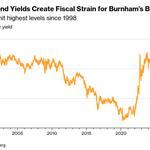
She didn’t ’crash the economy’. That’s a Labour propaganda meme. She did discombobulate the financial markets with a reckless budget, including unfunded tax cuts, which saw yields on UK debt spike. But she wasn’t in power long enough to crash the economy. GDP was untouched by her thankfully brief tenure. And, of course, yields on 10-year gilts are now even higher than when they peaked during the ClusterTruss.

Jamie retweeted

INCREDIBLE that any media commentators, let alone high profile ones, are still able to make this asinine, factually incorrect statement over and over again unchallenged.
“Liz Truss crashed the economy” is a strong (and banal) take for people who quite clearly never checked when the Bank of England actually announced anything.
The £40bn gilt sale wasn’t “sprung” on anyone “the night before” (as Liz herself has said and blamed on Blairite changes to the way comms happen between various bodies). The MPC publicly voted for QT back in February 2022 and said it again in August and September. The market had known for seven months - just to be really clear. It’s a choice to listen or not to listen to MPC remarks, dryer content than Gandhi’s flip flops - sure; but public and easy enough for anyone to check.
What actually wasn’t disclosed was the size of £45bn in tax cuts with no OBR forecast attached (and look, this is far from being any endorsement of the OBR - which I’d never make because they suck, it’s really much more to say that removing a routine, low cost, previously universal scrutiny step on the biggest unfunded package in a generation was read correctly by the market as the government choosing not to be checked). Which points to a Kwarteng process failure, not a Truss economy failure, and Bailey himself agreed with that - under oath. Worth noting here too, Kwarteng spent years at a hedge fund (JWM Associates, John Meriwether’s fund after LTCM) built on what happens when leveraged bets meet a liquidity shock, so the market reaction to an uncosted package shouldn’t have been the surprise it apparently was. At least not to Kwazi.
The real detonator, of course, was two decades of pension accounting rules forcing schemes into leveraged LDI hedges against gilts. When yields moved, funds had to sell gilts to cover margin, which pushed yields up further, which forced more selling. That loop was loaded years before the spark of September 2022 lit the tinderbox.
Cable hitting 1.0350 gets used as killer proof too. But the dollar was having its strongest year in two decades that same month, DXY was at a 20 year high, the Fed was hiking harder than anyone. Euro went sub-parity the same week for the same reason. Sterling wasn’t the only currency getting run over by the dollar that autumn, it just got run over hardest because it has gilt credibility fears stacked on top of it. And yet barely anyone talks about this longer dollar move. It was a massive contributor.
Gilts were already sliding before the mini budget too, on the back of the Fed and a UK inflation surprise landing on a market running on fumes for liquidity. Again - vanishingly few people comment on this.
An economy that *actually* “crashed” also definitively does NOT retrace in a month on a raft of policy measures that were merely mooted and never realised. It’s just a total nonsense. It is instructive that yields and the pound mostly did retrace once the plan got reversed. What really broke was confidence in the economy for two weeks, not the economy itself. So NOT a crash, by definition.
Truss is still fair game for one thing, as I have often said on here. She announced *that* scale of unfunded cuts with no independent check, which was an unforced error. But. That is not the same claim as the one everyone repeats parrot fashion like Kay has here.
Kay is a great journalist, I’ve often enjoyed her work, but she’s totally wrong here. It’s a tired and incorrect and market-illiterate take that deserves much more due care and attention because of what it suggests - that cuts are bad; any cuts to taxes or spending = bad. Not least because the medicine the British economy needs MOST OF ALL is massive cuts to nominal spending. We need to take our medicine, regardless of how bitter it tastes. It’s an immutable mathematical fact. And repeating this falsehood stifles us from having public conversations that would lead to this much needed reality check.

This is brilliant, made me smile any way.
This Post is from an account that no longer exists. Learn more
1
744
