

Welcome to The African History Channel, your daily source for curated African history content, and quality visual resources.
Joined November 2021
- Tweets68
- Following11
- Followers292
- Likes40
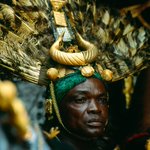





Selected watercolours of warriors and musicians from Nigeria and Cameroon, 1910-1911, by Carl Arriens.
Watercolours brought to life by Haiper, an AI video-generation tool.
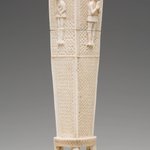
Ivory knife case and lid, dated between the 16th and 18th century, Kingdom of Kongo.
#Ivory #Carving #Sculpture #Case #Container #Art #Kongo #Africa #History #AfricanHistory #TheAfricanHistoryChannel


The necropolis of Zawyet el-Maiyitin, Place of the Dead, near the city of Minya, Egypt. Photographs by Yann Arthus-Bertrand and Jenny Singleton.
One of the largest cemeteries in Egypt, home to thousands of mud domed tombs used by both muslims and coptic Christians to this day.


7
347
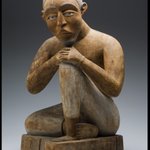
A masterpiece of Congolese sculpture work, dated c. 1850-1885, housed in the Tropenmuseum in Amsterdam.
This ancestral figure of a seated man from western DR Congo has been tentatively attributed to the Woyo people, based on stylistic grounds.

“The puff adder that cannot fly has caught the hornbill that flies.”
Ceremonial sword handles, Akan peoples, Ghana or Ivory Coast, 19th and 20th century.


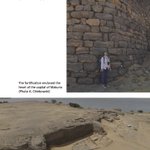
The massive early medieval fortification walls of the citadel of Old Dongola, capital of the Nubian kingdom of Makuria, have been unearthed in Sudan. 5th to 6th century AD.


Nana Asmaʼu (نانا أسماء بنت عثمان فودي), a Fulani princess, revered scholar, poet and teacher, 1793 –1864. She was a highly respected daughter of Usman dan Fodio, founder of the West African Sokoto Caliphate. Nana Asmaʼu is remembered for her poetry and women’s education programs

ልዕልት ፀሐይ / Princess Tsehai, 1930, Ethiopia.
Painting by Helene Kirschke (1892–1945).
“Princess Zahai”, more commonly rendered as “Princess Tsehai Haile Selassie”, was the third daughter of Emperor Haile Selassie I and Empress Menen Asfaw of Ethiopia.

Statue of princess-priestess Takushit, Ancient Egypt, 25th Dynasty, Third Intermediate Period, 8th - 7th century BC.

Toubou warrior, after a photograph by Maximilien Bruggmann, northeastern Niger, 1968.
Digital Art Quickies by The African History Channel.

Performers, horsemen and chief from Niamey and Maradi, Republic of the Niger, by Alexandre Yevgenievich Jacovleff, c. 1925 - 1927.
“Between 1924 and 1925 he took part in an expedition to the Sahara desert and Equatorial Africa organized by Citroën (Croisière Noire).”


Aerial photograph of the medieval town of Ngomi, on the banks of the Niger River, less than 10 km from Mopti, Mali, during the dry season.
Photograph by Yann Arthus-Bertrand.
#Ngomi #Aerial #Photography #Niger #River #InnerNigerDelta #Traditional #MoptiRegion #Mali

6
Hersi Boqor was the son and heir apparent of Boqor Osman of the Sultanate of Migiurtinia, also known as the Majeerteen Sultanate in Puntland, Somalia. He is remembered for leading a large scale rebellion against Italian colonial expansion into the sultanate between 1925 and 1927.

A copper alloy sceptre decorated with a finial of a royal horseman from the ancient city of Ilé Ifẹ̀, Nigeria, 12th-13th century.
Musée Barbier-Mueller, Photograph by Ferrazzini Bouchet.
#horse #rider #medieval #MiddleAges #IleIfe #Ife #Nigeria #Africa #history #AfricanHistory


Brass figure of a hornblower from Benin City, capital of the Kingdom of Edo, southern Nigeria. 16th to 17th century.
#horn #HornBlower #brass #CopperAlloy #metal #metallurgy #statue #figure #LostWax #art #Benin #Edo #Nigeria #Africa #history #AfricanHistory

Samburu man in traditional attire, Kenya. Photograph by Mario Gerth.
#Samburu #warrior #Kenya #Africa #tradition #culture #Africa #AfricanHistory

9
"A young Ouled Nail couple", Algeria, c. 1904.
Photograph by Rudolf Franz Lehnert and Ernst Heinrich Landrock.
#couple #OuledNail #Algeria #history #AfricanHistory #Lehnert #Landrock #orientalist #romanticized

8
Royal copper alloy head, found in the Wunmonije Compound in the medieval Yoruba city of Ilé-Ifẹ̀, Nigeria. 14th to 15th century.
#Ife #IleIfe #IfeBronze #head #copper #CopperAlloy #metal #Wunmonije #naturalims #art #sculpture #Nigeria #Yoruba #Africa #history #AfricanHistory
