

Certified Nutrition Coach | Breast Cancer Survivor | weight loss, muscle gain & strength for peri/menopause & post-cancer recovery DM for 1:1 coaching
Joined July 2025
- Tweets497
- Following14
- Followers27
- Likes532





Five randomized trials, 390 people.
Hibiscus tea, 3 cups a day, lowered the top blood pressure number by about 7.5 points on average.
Not a replacement for medication.
The cheapest thing in the tea aisle.
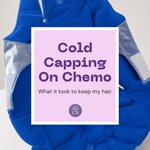
Keeping my hair mattered to me.
Here’s what it took.
Six rounds of chemo.
Cold caps.
Longer days.
Extra help.
This was my experience, plus what to know about the research, costs, and care before starting.

Cold capping helped me keep most of my hair during chemo for breast cancer.
I still lost 30 to 40%.
It was cold, expensive, and added hours but I would do it again.
If keeping your hair matters to you, ask your oncology team before your first infusion.
“Get more calcium.”
But what does that look like on your plate?
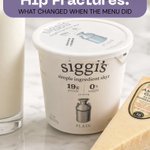
A trial in 60 care homes put dairy to the test. Hip fracture risk was 46% lower with the extra dairy.
What they changed, who it helped, and what it means for your meals. ↓


More dairy. Fewer broken bones.
A trial in 60 care homes, average age 86, added milk, yogurt and cheese to half the homes’ menus.
Over two years: 46% lower hip fracture risk than usual menus.
More calcium.
More protein.
Everyday food.
BMJ, 2021.
Breast cancer doesn't always start with a lump. And a lump doesn't have to hurt to matter.
I knew about mine for years before I spoke up. Cancer didn't run in my family. My OB didn't seem concerned. I was diagnosed at 33.
It's easy to find reasons to think it couldn't be you. I had plenty.
Here are changes the American Cancer Society and National Cancer Institute say to watch for:
• A lump in your breast or under your arm, even a small one
• Dimpling, puckering or skin that looks like an orange peel
• A change in breast size or shape
• Swelling, even without a lump
• Skin that becomes red, scaly or thick
• A nipple that starts turning inward
• Nipple discharge that isn't breast milk
Breast cancer usually doesn't cause pain, but it can. Mine didn't hurt. Don't wait for pain to take a change seriously.
Being young doesn't rule it out. Neither does being active, eating well or never drinking.
About 1 in 8 women in the U.S. will develop breast cancer in her lifetime, and rates have been rising in women under 50.
Most breast changes aren't cancer.
But a new or unusual change deserves to be checked, even if your last mammogram was normal.
If you've already spoken up and the change is still there, follow up.
You don't have to be certain something is wrong to ask for answers.
Sources: American Cancer Society, Breast Cancer Signs and Symptoms and Key Statistics for Breast Cancer; National Cancer Institute, Breast Cancer Signs and Symptoms.
It’s not how much salt you use.
It’s which salt.
21,000 people. Almost 5 years.
One change: the salt they cooked with.
A 75% salt/25% potassium blend → 14% fewer strokes.
You can buy it as “lite salt” for ~$3.
Kidney disease or certain meds?
Ask your doctor first.
Neal et al., NEJM 2021
Everything tasted like metal.
I was nauseous on top of it.
And I still had to eat something. Anything.
So I stopped trying to eat well and started eating whatever I could get down. For me it came down to three things. Crunchy, salty, drinkable.
Pretzels. Water crackers. Ginger biscuits. Ginger snaps. Chicken soup. Chicken dumplings. Watermelon. Acai bowls. Protein shakes. And most days, a banana and blueberry smoothie with protein powder.
That was the whole list.
Protein was the hardest thing for me to stomach and the thing I needed most, so I drank it instead of eating it. If you can't eat it right now, drink it.
Every treatment is different and every body is different, so I'm not telling you these will work for you. I'm telling you that a short list is not failing. Whatever you can get down is a win.
If you cannot keep food or fluids down, contact your treatment team.
Send this to someone who is struggling to eat during treatment. And if that's you, you're going to get through this. 🪷
Many people say seed oils cause inflammation because of a fat called linoleic acid.
But 30 controlled trials (1,377 people) found raising it did not increase main blood inflammation markers.
The common claim doesn’t hold up in real studies.
Same plate.
Same portion.
Three hours earlier.
Your body runs on a clock, and glucose tolerance tends to be worse later in the biological day.
In a 2022 trial of 845 adults, researchers gave participants the same glucose drink at two different times. When it was consumed close to bedtime, the glucose response was about 8% higher than when it was consumed earlier. Controlled studies overall point in the same direction: when you eat can influence how your body handles what you eat.
One important caveat: a small 2022 study following 24 people in their normal lives found their largest glucose rises in the morning. Real life is messier than a controlled lab, and individual responses vary.
So this isn't a rule that dinner has to happen at 6 p.m. And it definitely doesn't mean a late dinner is "bad."
But if you regularly eat close to bedtime, moving dinner a little earlier may be one simple experiment worth trying. No smaller portions. No cutting carbs. Just changing the clock.
Same dinner. Different response.
Send this to someone who eats dinner at nine.
Studies: Diabetes Care (2022); Chronobiology International (2020, 2022).
Same oats. Two very different blood sugar responses.
The oats aren't the variable. The flake is.
Beta-glucan is the soluble fiber behind the FDA-authorized claim that oats may reduce heart disease risk, and it's in there no matter what you do to them. Blending doesn't remove it. What blending removes is the structure around it.
A whole flake works like a barrier. Digestion has to get through it to reach the starch inside. Grind that flake into flour and the barrier is gone, so the starch is available much faster.
What the research shows: a 2021 meta-analysis in the American Journal of Clinical Nutrition pooled 12 trials and found that larger particle size lowered the blood sugar response, with almost no disagreement between the studies. A 2020 trial in Diabetes Care followed 31 people in their own kitchens for two weeks, average age 63, and found a 9% lower breakfast glucose response on less processed grains.
Worth saying plainly: these measure the blood sugar response to a meal, not long term health outcomes.
Hot, cold, overnight, steel cut. The goal isn't perfection. It's keeping more of the flake intact.
Raw tomatoes taste great but hand over barely any lycopene, a powerful antioxidant researchers study for heart health. A little heat plus a little fat changes that.
Cut a couple of tomatoes in half, add a few tbsp of olive oil, and let them soften on low for 15 to 30 minutes. The heat opens the cell walls and the oil carries the lycopene in.
In one study that pairing raised blood lycopene over 80 percent. Yes, heat lowers vitamin C, but lycopene is the opposite, it needs the warmth.
Same tomato. Way more benefit.
Send this to a tomato lover.
🪷 @Courage_Science
You added the fiber. So why does your gut still feel off?
Fiber is the foundation, but your microbiome wants more than one ingredient. Swipe for the 4 things it may still be missing
TLDR:
🌱 More plant variety (30+ different plants a week)
🥣 Fermented foods with live cultures
🫐 Polyphenol-rich foods your gut bacteria love
💜 A little support for hormone balance along the way
Small changes. Big impact over time. Start with one this week, your gut notices.
Save this for your next grocery run.
Which one are you adding first?
@Courage_Science
A 🧵:


