
I knew better. More informed about Arachnoiditis than my Consultants. 20+ years of denial, proven right, never gave up. Stand up to Gaslighting.
Joined December 2020
- Tweets1.6K
- Following104
- Followers89
- Likes4.5K





Badass Arachnoiditis Warrior retweeted

During making of #scapegoat for @channel5 I put it to Dr Dewi Evans how unlikely it was that #lucyletby could have ‘injected’ air into all her victims without being noticed. He showed me how easy it really was.


Badass Arachnoiditis Warrior retweeted

Exactly this. In the face of substantial quantities of new evidence and *international* expertise in favour of LL’s innocence, it seems that all the “she’s still guilty” crowd can come up with is the question-begging argument that, essentially, she’s guilty because she’s guilty.
Badass Arachnoiditis Warrior retweeted

"Do two babies poisoned with insulin die of natural causes"
Those two babies didn't die! That's why the insulin test results were most likely nonsense.
If you're gonna argue banging up a lady in a cage for the next half century the lead you can do is understand BASIC FACTS

Badass Arachnoiditis Warrior retweeted

Another shocking error of fact by Liz Hull and Caroline Cheetham.
They appear to have imagined a Prosecution argument that was never made, and completely missed contradictory witness evidence on the topic.
#LucyLetby
youtu.be/4tI2FW366Kc?si=cowI…

Badass Arachnoiditis Warrior retweeted
Hi Deb, apologies to disturb. My name is Rob, I’m Investigations Editor at The Sun. I’m keen to shed light on all corners of the Letby debate. I hoped you might agree to an interview with me please?
Badass Arachnoiditis Warrior retweeted

Some wonderful news this morning. It has been confirmed that the required funding for the police investigation into the post office scandal has been given. Now for accountability.
True to your word @andyburnham
Very much appreciated.
Badass Arachnoiditis Warrior retweeted

Retired paediatrician Dr Gibbs says a retrial could be “the most appropriate thing for everyone”.
thesun.co.uk/news/40451301/d…


Badass Arachnoiditis Warrior retweeted

And it's all gone quiet over there.
youtube.com/watch?v=_rZxl-dY…

Badass Arachnoiditis Warrior retweeted

Letby evidence is ‘flawed’ warns medical expert as new scapegoat claims emerge
Watch and Stream Lucy Letby: Scapegoat? on @channel5_tv tonight at 10pm
#channel5 #lucyletby #documentary
📽️Find all the latest videos from us on The Sun's video hub page
thesun.co.uk/video/40447871/…

Badass Arachnoiditis Warrior retweeted
One of the most important documentaries in British history will be released on @channel5_tv at 10pm this evening. It has been produced in collaboration with @TheSun newspaper, with @RPattTheSun centrally involved.
Lucy Letby: Scapegoat examines the crumbling conviction of Lucy Letby, uncovering critical new evidence which points to this being a wrongful conviction of an innocent woman.
Shocking new evidence points to a cover-up at the hospital where Lucy Letby worked.
Followers of mine will know that, often against the opinion of my viewers, I have always said that I must assume the consultants acted in good faith, and that there was no deliberate stitch-up.
I will be reviewing that opinion over the next 24 hours.
My review of this documentary will follow on my Lucy Letby Analysis YouTube channel on Tuesday morning.
#LucyLetby #LucyLetbyInnocent


Badass Arachnoiditis Warrior retweeted

"The single biggest investigation this case has ever had was carried out under an instruction not to ask the only question most people want answered."
This from @GuerrillaCarl takes about 5 minutes to read. It has a basic logic entirely absent from a 2 year, 800 page report.

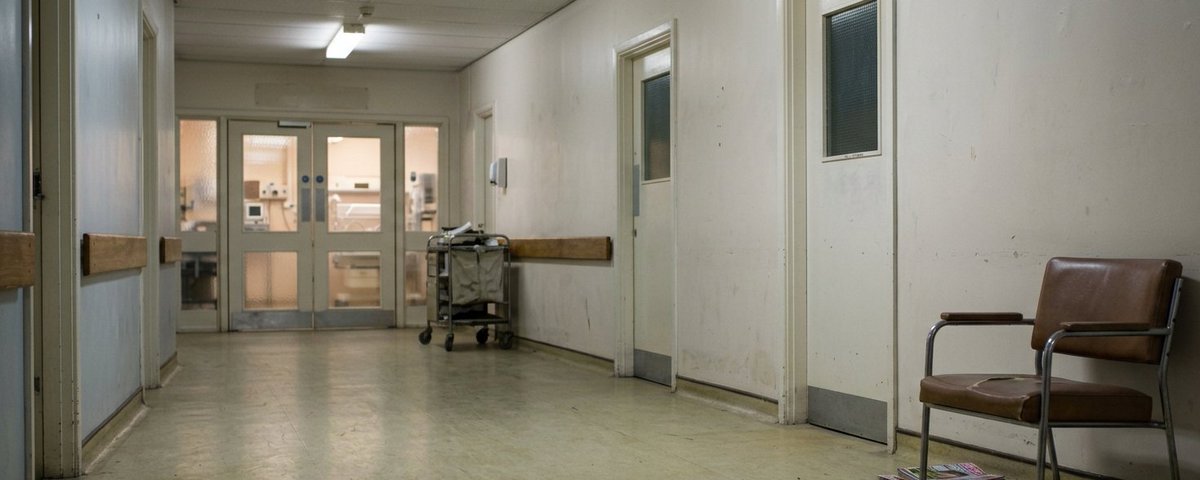
Today in the Telegraph.
Free to read
Arrogant doctors made Letby a scapegoat, claims senior NHS leader telegraph.co.uk/gift/eb45bc9…
Badass Arachnoiditis Warrior retweeted
Cot Cameras, Suspicion and the False-Positive Problem
The recommendations of the Thirlwall Inquiry are animated by an entirely understandable determination: never again should concern about the deliberate harming of babies be neutralised by professional disbelief, managerial defensiveness or institutional paralysis. Few would quarrel with that objective.
Yet recommendations made in the aftermath of catastrophe are especially vulnerable to solving the last disaster while creating the conditions for the next one. Two of the Inquiry’s proposals, the introduction of livestreaming cameras in every neonatal cot and an exceptionally low threshold for acting upon suspicions of deliberate harm, may interact in ways that the report has not adequately considered.
Taken separately, each recommendation has an intuitive logic. Cameras may allow parents to feel connected to babies from whom they are painfully separated. A safeguarding protocol may ensure that concerns are not ignored simply because a manager finds them difficult to believe. Put together, however, they may create a system that generates suspicion while simultaneously demanding immediate action upon it.
That is not an argument against listening to parents. Nor is it an argument for protecting professional reputations at the expense of children. It is an argument for recognising a basic principle of psychology and risk management: a system designed to detect every possible threat will also produce false alarms. If those false alarms concern allegations of deliberate harm to babies, their consequences will be anything but neutral.
The psychology of watching
Anxiety is fundamentally organised around threat. It directs attention towards possible danger, increases sensitivity to ambiguous cues and promotes precautionary interpretations of uncertain events. In evolutionary terms, that makes sense: when the consequences of overlooking danger are severe, it can be safer to mistake a shadow for a predator than a predator for a shadow.
Parents of babies admitted to neonatal care are not psychologically neutral observers. They are experiencing one of the most frightening situations imaginable. They may feel helpless, separated from their baby and guilty about not being constantly present, even though the circumstances are entirely beyond their control. A systematic review estimated that approximately 42 per cent of parents experience anxiety and 40 per cent experience symptoms of post-traumatic stress during the first month following admission to neonatal care.
Against that background, a livestream is not simply a reassuring window. For many parents it undoubtedly will be reassuring, but for some it may become an instrument of hypervigilance: something to check repeatedly in the hope of obtaining certainty that it cannot provide.
A camera shows an image. It does not necessarily show clinical context. It may show a nurse moving quickly, repositioning a baby, handling a line, temporarily moving equipment, carrying out an uncomfortable procedure or stepping away from the cot. It may not show what preceded the event, what is happening outside the frame, what the baby’s physiological monitors indicate or why a particular intervention is clinically necessary.
To a neonatal professional, a movement may be ordinary and purposeful. To a frightened parent watching remotely, perhaps at night and without anyone available to explain it, the same movement may appear rough, neglectful or dangerous.
This does not make the parent irrational. It means that the parent is being asked to interpret ambiguous and emotionally charged visual information without the knowledge or contextual information necessary to do so reliably.
The likely psychological sequence is important. It begins not with confirmation bias but with threat-biased attention and interpretation. The parent detects something that appears wrong and forms a tentative hypothesis: perhaps the baby is being neglected, perhaps a procedure was performed incorrectly, perhaps a member of staff caused harm.
Only then does confirmation bias become relevant. Once that hypothesis exists, subsequent ambiguous events may be interpreted in ways that support it. Ordinary actions acquire sinister significance. Reassurance may be experienced as dismissal. A camera temporarily being obscured or switched off may appear to indicate concealment. An unrelated deterioration in the baby’s condition may retrospectively transform an uncertain observation into apparent evidence.
The concern can therefore become progressively self-confirming—not because the parent is dishonest, but because this is how human cognition operates under conditions of fear, uncertainty and personal significance.
The report was warned about this
The Inquiry’s own discussion of cot cameras contains evidence of the problem. NHS England reported that a UK pilot had found no identifiable improvement in babies’ safety outcomes and that cameras generated additional work because parents believed they could see matters requiring a clinical response.
Lady Justice Thirlwall rejected this as an argument against cameras. She reasoned that parents physically present beside a cot would be entitled to raise the same concerns, that staff already respond to worried parents and that additional observation may prevent something from being missed.
That response is compassionate, but it answers the wrong question.
Of course a parent who believes something is wrong with their baby deserves an immediate response. The relevant question is what happens after that initial welfare check. When does “Something looks wrong with my baby” become “I suspect that nurse deliberately harmed my baby”?
These are not equivalent statements. The first requires prompt clinical attention and explanation. The second activates a safeguarding, employment and potentially criminal process. The Inquiry does not adequately describe the evidential bridge between them.
More remarkably, the report appears to infer that because the pilot did not demonstrate harm to babies, the cameras themselves are harmless. But the research was not designed to detect false accusations, repeated unsubstantiated concerns, compulsive parental checking, deterioration in relationships between families and staff, defensive practice, staff suspensions or police referrals. The absence of evidence on those outcomes is not evidence that they will not occur.
Research into neonatal webcams is broadly encouraging, with many parents reporting greater connection and reduced anxiety. That should be acknowledged. But average reductions in anxiety do not eliminate the possibility of substantial adverse effects in a vulnerable subgroup. A technology may reassure most parents while intensifying surveillance and threat-monitoring in others. Those tail-end effects become particularly important when the accompanying safeguarding system treats suspicion as a sufficient basis for immediate intervention.
What does “suspicion is enough” actually mean?
Recommendation 9 proposes a national Suspicion of Deliberate Harm Protocol. It states that when concerns are raised in good faith, they must be acted upon immediately. It is irrelevant whether the person receiving the concern believes it to be true, and equally irrelevant that the person raising it is uncertain. Only concerns judged to be “obviously irrational or malicious” may receive no further action. That decision must be recorded.
The protocol further states that moving the suspected employee is likely to be the first protective step, that this movement and the subsequent investigation should be regarded as neutral acts, and that safeguarding procedures must be followed, resulting in police involvement.
There is an essential distinction here. Suspicion may properly be enough to trigger a proportionate safeguarding response. It is not evidence that the suspicion is true, much less proof of guilt. Immediate protective action may sometimes be necessary while the facts are established.
However, calling removal and investigation “neutral acts” does not make them psychologically, professionally or reputationally neutral. A nurse removed following an allegation of intentionally harming a baby may experience severe distress, stigma, loss of professional confidence and damage to relationships with colleagues. Police involvement magnifies those consequences. Even complete exoneration may not remove the residue of suspicion.
Moreover, the threshold proposed by the Inquiry is strikingly asymmetrical. A concern does not need to be considered credible before action is taken; it must be “obviously irrational or malicious” before no action is justified. This design intentionally prioritises sensitivity, the detection of every possible case, over specificity, the ability to distinguish genuine danger from an innocent or misunderstood event.
That may be defensible where babies’ lives are at stake, but the inevitable consequence must be acknowledged: false-positive suspicions will increase.
The problem of extremely rare events
The report itself accepts that deliberate attacks upon babies by healthcare professionals are “very very rare”. That matters because rare events create a well-established problem in signal-detection theory.
When the underlying event is extremely uncommon, even a detection system that appears highly accurate can produce substantially more false alarms than true detections. Lowering the reporting threshold further reduces the likelihood of missing genuine harm, but it simultaneously increases the number of innocent behaviours classified as potentially suspicious.
That is not a criticism of the intentions behind the protocol. It is a mathematical and psychological consequence of its design.
The system therefore requires a sophisticated false-positive filter. Yet the proposed safeguarding guidance is to occupy no more than two pages. It will direct managers to guard against their own biases, loyalties and prejudices, but it does not establish a sufficiently robust process for differentiating an anxious observation, a clinical concern, unsafe practice and credible evidence of deliberate harm.
A warning to “be aware of bias” is not a debiasing procedure.
A livestream may create allegations without preserving evidence
There is a further problem. The recommendation is for livestreaming cot cameras, not necessarily recorded and securely retained footage.
The distinction is critical. Evidence presented to the Inquiry argued that cameras could confirm the occurrence of deliberate harm or exonerate an accused professional. A livestream that is not recorded can do neither.
A parent may witness a fleeting and disturbing image, but the footage may then disappear. The event cannot be replayed from different perspectives or reviewed alongside clinical records, observations and monitor data. The accused professional may have no objective evidence with which to demonstrate what occurred.
Investigators may consequently be left with the recollection of a profoundly distressed eyewitness who observed a brief, decontextualised event on a small screen. Once the allegation has been made, records, staffing patterns and subsequent events may be searched retrospectively for material that appears to confirm it.
The camera has then created the conditions for an allegation without preserving the evidence required to test that allegation fairly. Far from protecting innocent staff, it may produce an evidential asymmetry in which suspicion survives but the image upon which it was based does not.
Safeguarding needs stages, not a hair trigger
The answer is not to silence parents or abandon cameras. It is to construct a proportionate pathway that separates different categories of concern.
“Something looks wrong with my baby” should produce an immediate clinical welfare check.
“I saw a staff member perform an action that concerned me” should result in preservation of any available footage, a contemporaneous account and review by an experienced neonatal clinician.
Evidence suggesting unsafe practice should trigger an independent clinical investigation.
Evidence reasonably suggesting intentional harm should activate the deliberate-harm safeguarding protocol.
Where there is an immediate and credible risk, protective removal should occur without delay. But urgency should not erase discrimination between an unexplained observation and an allegation of attempted murder.
A safe system would require encrypted rolling retention of footage; linkage with clinical observations and monitor data; independent neonatal interpretation of ambiguous events; explicit documentation of alternative explanations and disconfirming evidence; and clear separation between the person conducting the immediate safety response and those determining whether deliberate harm is credibly suspected.
It should also audit false-positive referrals and their effects upon families, staff and services. Support and procedural protection for accused professionals should not be regarded as competing with patient safety. Fair investigation is itself a patient-safety mechanism because frightened, defensive and unjustly suspected staff do not constitute a psychologically safe workforce.
The danger of fighting the last war
The central lesson of the Letby case, as understood by the Inquiry, is that disbelief and institutional defensiveness can allow genuine concerns to remain unexamined. That lesson matters. But its mirror image also matters: once an institution becomes organised around the fear of failing to believe, suspicion can acquire a momentum of its own.
Cameras do not merely observe a system; they change the behaviour and psychology of everyone within it. They may comfort parents, inhibit malicious behaviour and occasionally reveal something important. They may also encourage compulsive checking, generate decontextualised concerns, alter relationships between staff and families and place professionals under continuous perceived surveillance.
Likewise, a low threshold for safeguarding action may prevent a catastrophic false negative. It may also produce numerous false positives with serious human consequences.
The interaction between these recommendations therefore creates a foreseeable risk-amplification system: highly anxious parents are given continuous but clinically incomplete visual access, while managers are instructed to act immediately upon good-faith suspicion regardless of uncertainty. What begins as a misunderstood movement on a screen may end with a professional removed from practice and referred to the police.
That possibility does not justify inaction. It demands better-designed action.
The proper objective is not to choose between protecting babies and protecting staff. It is to construct a system capable of doing both: one that listens rapidly, checks immediately, preserves evidence and investigates independently, while refusing to confuse suspicion with substantiation.
If the NHS implements cot cameras without those safeguards, it may discover too late that increasing surveillance does not simply reveal danger. Sometimes it manufactures certainty from ambiguity—and once that process begins, confirmation bias may ensure that every subsequent event appears to prove the suspicion with which it started. #LucyLetby
Badass Arachnoiditis Warrior retweeted

@ProfDavidWilson
You don't know me, but you mentioned me on your conversation with Christopher Morris. I'm Carl Bolton, I convene Countess of Chester Family Voices. Respect for engaging with this seriously rather than as a spectacle, genuinely, that's rarer than it should be.
A couple of corrections first. "Quite pro" is about as wrong as it gets: GMB was the first time I'd ever been on television in my life, live or otherwise. I've done one more appearance since, not several.
On the rest: Lucy Letby was the best nurse on that ward in our experience, and yes, she saved my daughter's life twice, according to the hospital and the unit lead, that's not something I've said lightly or built up. But I make no claim on her guilt or innocence over what she was convicted of, I question the fairness of the process, investigation, and trial.
The bit I actually want an answer on is "often used in these circumstances." Used by whom, for what? Reading between the lines it sounds like you're suggesting I'm being put forward to push a narrative. If that's the implication, I'd like to know where it comes from, because nobody puts me on television, I was asked, and the same producer asks me back, and someone on their first ever TV appearance a few months ago isn't anyone's seasoned operator.
What I'm actually chasing is a full independent review of maternity and neonatal care at the Countess going back about 25 years, Nottingham-style, since Thirlwall only covers one indictment and Amos skipped the Countess entirely. You chaired an independent commission yourself and got its findings to actually shape policy, that's the bit I'd value your take on. Open to a conversation if you're willing.
youtu.be/8n-62tZsFaw?si=UVKE…

Badass Arachnoiditis Warrior retweeted

It appears that the Thirlwall inquiry report can be legally challenged. Especially around the unfair and frankly snide character and factual inferences that she made about Lucy Letby. I hope the legal wizzes on X can say more!


Badass Arachnoiditis Warrior retweeted

Lady Thirlwall said there was a '"toxic negativity" that discouraged people within the NHS from speaking out'
And all evidence has it that Lucy Letby paid the justice system's highest price for doing so - though her claims of innocence ignored in report
bbc.co.uk/news/articles/c64g…
