

Quant Trader | Macro, Liquidity, Fed & ETF Flows | BTC Mining Economics & 5M Setups | Data-Led Market Intelligence. Independent Analysis. NFA.
London
Joined April 2021
- Tweets5.4K
- Following98
- Followers741
- Likes2.4K



Cryptocrat retweeted

🚨 Michael Saylor's Strategy just hit a RECORD 12% discount to its own bitcoin, and JPMorgan calls it CAPITULATION.
That means the whole company was valued at LESS than the bitcoin it holds.
JPMorgan says that signals capitulation, the point where investors give up on bitcoin and sell at almost any price.
Strategy holds 851,305 BTC, over 4% of all bitcoin that will ever exist, bought for $64.2 BILLION and now worth less than $52 BILLION.
That leaves it over $12 BILLION underwater on paper, just one quarter after a RECORD $20.9 BILLION operating profit.
Its stock has taken an even bigger hit, down 83% from its November 2024 peak and at its lowest close since February 2024 this week.
Strategy is still buying bitcoin, but less in each of its last three filings, from 1,036 BTC to 485 to 457.
In one recent week, it spent $228 MILLION buying back its own preferred stock and just $33 MILLION on bitcoin.
On Monday, MSCI drops it from its USA, World and ACWI indexes, so funds tracking them have to sell.
Saylor's message this week was "We don't need a ₿ailout."

Cryptocrat retweeted

JUST IN: 🇺🇸 Senator Schumer says Democrats will use their full power to investigate Nvidia CEO Jensen Huang, other executives, and the Trump administration.

Cryptocrat retweeted

NEAR AI Red is NEAR AI’s cybersecurity program.
⠀
@ilblackdragon goes into detail with @therollupco 👇

"There was actually a double mint in one of the blockchains that was found using our like abliterated models from NEAR AI."
Illia Polosukhin, Co-Founder & CEO, NEAR Protocol
"We've launched NEAR AI Red, which is our cybersecurity program effectively for using models and defensive capabilities for making sure everybody's protocols are secure."
@ilblackdragon @NEARProtocol @near_ai

Cryptocrat retweeted
JUST IN: $136,000,000 worth of shorts liquidated from the crypto market in the past 1 hour.

Cryptocrat retweeted
ripple:native | FROM THE SEC BATTLE TO INSTITUTIONAL FINANCE — WHY I SEE OPPORTUNITY BELOW $1
For years, the XRP community fought through regulatory uncertainty while much of the market questioned whether Ripple's vision would ever translate into real institutional adoption.
Today, the investment thesis looks materially different.
Ripple is expanding across payments, custody, stablecoins, prime brokerage and institutional finance. It is targeting a $900 million annualized product revenue run rate, its stablecoin has reached approximately $2.7 billion in circulation, and XRP is increasingly accessible through regulated financial infrastructure.
Yet XRP trades around $0.90, roughly 74% below its 2025 cycle high.
I believe this gap deserves a serious examination.
Not because XRP must return to its previous highs, but because the financial ecosystem developing around it is substantially more advanced than it was during earlier market cycles.
1. Ripple's Business Is Becoming Much Bigger
The company's expansion is no longer based entirely on future promises.
Ripple reports:
More than 1,700 institutional, corporate and enterprise customers.
A target of approximately $900 million in annualized product revenue by the end of 2026.
Roughly threefold growth in that revenue run rate compared with a year earlier.
A U.S. national trust bank charter.
Expanding institutional relationships involving major financial institutions, including BNY.
There is an important distinction here.
The $900 million figure represents Ripple's expected annualized revenue pace—not audited revenue already earned during the full year.
Ripple is privately held and does not publish a complete, comparable annual revenue history like a publicly listed company.
Nevertheless, the reported acceleration indicates that its financial infrastructure business is scaling.
For XRP investors, this creates an opportunity—but it is not the same as owning shares in Ripple.
XRP holders do not receive Ripple's corporate profits or dividends.
The potential return comes from increasing demand for XRP itself.
That is where the analysis becomes particularly interesting.
2. Real Payment Activity Is Growing
Ripple's reported payment volumes show how far its business has developed.
Reporting periodCumulative payment volumeEnd of 2022Approximately $30 billionEnd of 2024More than $70 billionMarch 2026More than $100 billionEnd of 2026 targetApproaching $150 billion
These figures are cumulative, not annual transaction volumes.
They also represent Ripple's payment infrastructure rather than exclusively XRP-settled transfers.
However, they establish something important: Ripple has moved beyond a purely conceptual financial network.
The next question is how that activity can create demand for XRP.
The payment-liquidity mechanism
XRP can function as a bridge asset between currencies.
If payment providers use XRP for settlement, they need access to XRP liquidity.
An individual transfer may be completed in seconds, meaning the same XRP can be reused repeatedly. Transaction volume alone therefore does not translate directly into equivalent XRP investment demand.
But a consistently expanding payment network can change the economics.
As activity grows, market makers and institutional liquidity providers may need larger inventories to support reliable execution, particularly across multiple currencies and markets.
The distinction is between XRP being briefly transferred and XRP being continuously held to support a financial operation.
The second mechanism is considerably more important for long-term valuation.
3. Institutional XRP Holdings Are Becoming Measurable
This is one of the strongest developments supporting the investment thesis.
According to its SEC filing, the Bitwise XRP ETF held:
131.2 million XRP at the end of 2025.
413.1 million XRP at the end of September 2026.
That represents an increase of approximately 282 million XRP held by a single investment product.
Unlike payment volume, these are actual underlying token holdings.
The distinction matters.
An institution can process payments without maintaining a substantial long-term XRP position. An investment vehicle holding physical XRP creates a different form of demand.
ETF holdings can decline when investors redeem shares, so growth is not guaranteed. Nevertheless, the reported accumulation is evidence of a developing investment channel.
Institutional utility is expanding in another direction.
Ripple Prime lists XRP among the assets eligible for use as collateral on its institutional brokerage platform.
That introduces a potential role beyond transfers: XRP can be held and deployed within financing and trading relationships.
As institutional custody and collateral infrastructure develops, XRP has more opportunities to become an asset that financial participants maintain on their balance sheets.
This is the kind of adoption that could strengthen long-term demand.
4. RLUSD Could Expand the Entire Ecosystem
Ripple's dollar-backed stablecoin, RLUSD, has also become a meaningful part of the company's strategy.
As of November 12, 2026, Ripple reported:
$2.69 billion of RLUSD in circulation.
$2.83 billion in reserve assets.
RLUSD is backed by dollar-denominated reserves and is subject to independent reserve attestations. It does not rely on the algorithmic stabilization structure associated with TerraUSD.
Why does this matter for XRP?
A regulated stablecoin can bring more financial institutions, payment providers and tokenized assets into Ripple's infrastructure.
On the XRP Ledger, XRP can facilitate liquidity and certain asset conversions through its native trading mechanisms.
As those markets deepen, opportunities for XRP to serve as a bridge asset or collateral may expand.
RLUSD does not automatically create XRP buying pressure: stablecoin payments can occur without using XRP as the bridge asset.
But I see RLUSD as complementary infrastructure rather than a necessary competitor to XRP.
A larger ecosystem creates more opportunities for XRP utility to become economically significant.
5. XRP's Supply Structure Matters
XRP has a maximum native supply of approximately 100 billion tokens.
Unlike Bitcoin, its original supply was created at the beginning. The XRP Ledger does not continually issue newly mined tokens.
Transaction fees destroy small amounts of XRP, gradually reducing total supply.
However, fixed total supply does not mean circulating supply cannot increase.
Approximately 63.5 billion XRP is currently circulating, while a substantial portion of Ripple's holdings remains subject to escrow arrangements.
Escrow releases can increase available supply, although unused tokens are frequently returned to escrow.
For investors, the important relationship is straightforward:
Sustained demand growth must exceed additional XRP entering the circulating market for supply dynamics to become a meaningful price advantage.
I regard the fixed maximum supply as a positive structural characteristic, particularly if institutional demand expands over time.
6. The Market Has Valued XRP Much Higher Before
At approximately $0.90, XRP's circulating market capitalization is around $57 billion.
In July 2025, XRP traded around $3.50 with a circulating market capitalization of approximately $207 billion.
Circulating supply has increased since then.
At today's supply, reaching that previous market capitalization would imply a token price of approximately $3.26, rather than the historical $3.50 price.
That is a comparison—not a forecast.
It demonstrates how supply changes affect the valuation required to revisit previous price levels.
The central investment argument is not that XRP is inexpensive simply because its price has fallen.
It is that the market previously assigned XRP a substantially higher valuation when parts of today's institutional infrastructure were less developed.
If adoption continues expanding and more of that activity generates genuine XRP demand, a higher valuation becomes economically conceivable.
The scale and persistence of that demand will determine whether the opportunity is justified.
7. Bear Markets Can Hide Fundamental Progress
XRP does not trade independently of the broader cryptocurrency cycle.
In 2022, XRP declined approximately 59%, while Bitcoin fell around 64% and Ethereum approximately 68%.
In 2024, XRP gained roughly 239%, compared with about 121% for Bitcoin and 46% for Ethereum.
In 2026 so far, market weakness has returned:
bitcoin:native : approximately −36%.
ethereum:native : approximately −49%.
ripple:native : approximately −55%.
These comparisons show two things.
First, broader liquidity conditions remain extremely important for XRP's price.
Second, XRP has previously experienced periods of substantial outperformance when investors reassessed its prospects.
The asset is also showing a longer-term change in its trading characteristics.
Based on annualized realized volatility calculated from daily XRP trading data, volatility has declined from approximately 149% in 2021 to around 65% in 2026 year to date.
The reduction has not been consistent every year, and XRP remains volatile.
Nevertheless, lower volatility over time could make XRP more practical for institutional inventory management and collateral arrangements, where unpredictable price movements create additional costs.
A more mature market structure would be beneficial for the long-term investment case.
8. My Investment View: Why I See a Major Accumulation Opportunity at $0.90
We are operating in a cryptocurrency bear market, and I believe this is precisely when investors should examine the difference between temporary market weakness and long-term fundamental deterioration.
My outlook on XRP remains strongly positive.
At approximately $0.90, I consider XRP to be in a particularly attractive accumulation zone.
This is an area I have been watching closely, and the recent decline has strengthened my long-term interest rather than weakened it.
I favor gradually building a position below $1 instead of attempting to identify one perfect bottom.
My reasoning goes beyond the price chart.
Ripple's institutional infrastructure is expanding, regulated investment products are accumulating XRP, new collateral use cases are emerging, and the broader financial ecosystem surrounding the XRP Ledger is becoming more developed.
Yet XRP is trading substantially below the valuation investors assigned to it during previous market cycles.
I believe some of the most important wealth-building opportunities emerge during periods when high-quality projects are available at prices that reflect widespread fear rather than confidence in their long-term potential.
That is how I view the current environment.
The market is focused on falling prices, liquidity pressure and uncertainty.
I am focused on the infrastructure being built, the institutions entering the ecosystem, and the potential for XRP to play a larger role in global financial markets.
This does not mean XRP cannot fall further.
A severe market-wide liquidity contraction could create additional downside, regardless of the progress Ripple has made.
But long-term accumulation is not about predicting the exact lowest price.
It is about identifying assets with credible long-term potential and building exposure at valuations I consider attractive.
For me, XRP around $0.90 represents that kind of opportunity.
I believe the current bear market could provide a valuable period for building a long-term position, provided investors remain disciplined about risk and capital allocation.
My conviction is based on the combination of:
An expanding institutional financial ecosystem.
Growing payment, custody and collateral infrastructure.
Increasing opportunities for institutions to hold XRP.
A fixed maximum token supply.
A substantially lower valuation than during previous market peaks.
I do not see the current decline simply as a reason for concern. I see it as an opportunity to accumulate an asset whose long-term financial infrastructure is considerably more developed than its present market sentiment suggests.
9. The Next Chapter for XRP
For years, the XRP community remained engaged through an unusually prolonged legal dispute.
The SEC and Ripple dismissed their respective appeals in 2025, significantly reducing a major source of uncertainty, even though the underlying final judgment remained in place.
Today, XRP's investment case is increasingly about economics rather than courtroom headlines.
Ripple is building institutional infrastructure.
Regulated financial products are holding XRP.
Prime brokerage services are introducing new collateral applications.
Stablecoin and tokenization activity is expanding the financial network around the XRP Ledger.
The important next step is converting that progress into deeper, sustained demand for the token.
My conviction is that the opportunity lies in XRP becoming an asset institutions increasingly need to hold, not merely one they occasionally use to move money.
That transition is not guaranteed—but it is becoming more plausible as the infrastructure develops.
At a time when bearish sentiment dominates the market, I believe investors should pay attention to how much has changed beneath the price chart.
The strongest long-term opportunities often begin taking shape before market confidence returns.
And for XRP, the next chapter may be considerably more important than the last.





Cryptocrat retweeted

BREAKING: Leopold Aschenbrenner's hedge fund reports a 92% drop in 13F portfolio value in Q3.
From $20.2 BILLION to just $1.58 BILLION.
Situational Unawareness.


Cryptocrat retweeted

Trump Says Kim Jong Un "May Come" To China: "That's Up To President Xi" zerohedge.com/geopolitical/t…

Cryptocrat retweeted

Strategy has acquired 485 $BTC and repurchased $228M of $STRC. As of 11/15/26, we hold 850,849 BTC and $4.9B of USD Assets. $MSTR strategy.com/press/strategy-…

Cryptocrat retweeted

BREAKING: Binance has covered all $6.3 Billion in user assets lost in the biggest financial hack in history.


Cryptocrat retweeted
Indonesia’s banking sector is under ATTACK.
Indonesian banks and financial firms faced roughly 214,000 cyber threats in just 24 hours.
FortiGuard Labs recorded about 350,600 threat detections across Indonesia in the 24 hours to November 7, averaging four per second nationwide.
Banks, insurers and other financial firms accounted for 61% of the total, more than all other sectors combined.
The figures show how often attackers targeted the sector. No bank breach was confirmed by the data.
In neighbouring Malaysia, attackers defaced Bank Rakyat’s externally managed website on Friday night.
Officials said banking systems remained secure and reported no data theft.


Cryptocrat retweeted
bitcoin:native UPDATE — $76K IS A CRITICAL SUPPORT
Earlier today, I highlighted UKOIL finding buyers at its key $93 support level and moving toward $97.
At the same time, I believe the negative impact of the Democratic victory on AI-related Nasdaq stocks, which I expect to be temporary, has also hit Bitcoin hard.
$76,000 is a major support level.
BTC has attracted some buying interest around this area, but it remains a critical level to monitor.
If Bitcoin fails to hold above $76K, it may be wise to reassess existing positions and risk exposure.
We are still in the first two weeks following the US midterm elections. Until the political and market landscape settles, elevated volatility should not come as a surprise.
The key now is whether buyers can defend the $76K region.

Cryptocrat retweeted
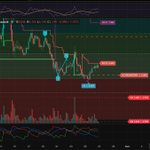
zcash:native UPDATE | STRONG STRUCTURE — $1,460 TARGET REMAINS INTACT
I still believe ZEC has another significant bullish move ahead, with $1,460 remaining my primary target.
Despite the broader market weakness, ZEC continues to be one of the strongest altcoins from a technical perspective.
The $1,180–$1,210 region remains my key demand zone.
Even if another correction occurs, this is the deepest pullback I'm currently anticipating.
A breakdown below $1,180 would invalidate my bullish formation.
However, my primary scenario remains a recovery toward higher resistance levels without losing this critical support.

Cryptocrat retweeted
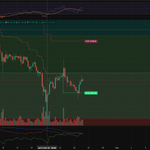
near:native UPDATE | SUPPORT HOLDS — ANOTHER PULLBACK POSSIBLE
NEAR continues to hold firmly above my key $4.35 support zone.
However, I believe another pullback before attempting to break above $4.70 would be a healthier technical scenario.
Such a correction could allow buyers to retest support, establish a stronger foundation, and build momentum for the next upward move.
As long as $4.35 holds, the recovery scenario remains valid. However, a sustained bullish trend still requires a confirmed breakout above $4.70.

