Husband & Dad. Problem Solver/Practicing Attorney/youth sports coach. State Assemblymember, 2016-2022. Partner @CMPublicAffairs
San Luis Obispo, CA
Joined June 2012
- Tweets6.2K
- Following3.1K
- Followers4.7K
- Likes10.8K




Jordan Cunningham retweeted

In 1992, current Milwaukee Brewers manager Pat Murphy found himself seated next to Muhammad Ali.
So he asked him: "Where did all the bragging come from? Were you always like that?"
Ali leaned over and said quietly:
"I was scared to death."
Three decades later, Murphy just led the Milwaukee Brewers to a World Series championship.
That Ali quote stuck with him, he realized:
"We all are (scared). Who we kidding. Fear is part of it. If you learn to use it like fire, it can do a lot of great things. If you don't, it can burn your house down."
Too often, we walk around with this idea that the best performers aren't scared. That they are relentless, alphas, who bulldoze through whatever they're feeling.
It's BS. The greatest of all time felt fear. We all do. The point is how do we navigate and channel it. Feeling fear and knowing what to do with it are different things.
For much of his early career he coached the other way entirely: hard, blunt, and, by his own account, driven by his focus on himself. He had real success with it, until he was forced to resign as a college coach in 2009.
Then he went through a litany of minor league jobs.
Along the way, with help from journaling and counseling he started to fundamentally change how he coached. One of the catalysts was becoming a parent.
"And I started thinking about it like, every kid I coach is somebody's Kai Joseph. You know what I mean? Every kid I coach, they have parents who love their kid the way I love my kid...
Wow, I've got to be a little mindful how I treat these guys."
He eventually landed on a different definition of success:
"This profession isn't about the wins and losses. This profession is about, how do I impact this person?"
You can see that switch in how he's guided the Brewers to become the best team in baseball. It was there when he didn't go to his closer in a save opportunity, as Trevor Megill said, "We’re not here for egos, we’re here to win a ring.”
It's there in his coaching philosophy for the team: He calls it love and discipline. In that order...not too dissimilar from how you parent...
The Brewers are the World Series Champions.
They did it with a closer who checked his ego, a first baseman nearly retired but returned for health insurance, and a manager who had to let go of the way that led him to early success and rebuild how he coached.
In the actual arena, performance is messy. It's not the cheap slogans we're sold online.
We're all afraid, even the greats. You have to figure out how to direct it. You have to care, but not so much that it feels life and death. You need discipline, but it's got to be founded on love.
And sometimes you need a 67 year old coach who was a tyrant, let go, and had to find a new path...to lead a small market team to the top of the MLB.

Inspirational!

Pat Murphy began his coaching career at DIII Maryville College.
After 6 years at the DIII level, he talked his way into the head coach job at Notre Dame, spending 7 years there before taking over at Arizona State, leading ASU to the college World Series 4 times in 15 years.
He then spent 5 years coaching in the minor leagues for the Padres before being named to the Brewers Major league staff, taking over as manager in 2024.
In his tenure as a big league manager, he’s twice (likely with a 3rd on the way) won manager of the year, became the first coach to lead a team to the CWS and MLB World Series, became the oldest manager to make his World Series debut and now is a World Series champion, bringing Milwaukee their first title.
What a journey for Pat Murphy

Jordan Cunningham retweeted

Alex Smith says he was ashamed of his leg and bitter toward football until rehabbing alongside wounded service members changed his life
“In my rehab process, I'm so thankful I got this thing called the Secretary of Defense designation, which is this deal for civilians that are deemed to have what's called a warlike injury. And so I got access to military medical care because there were no athletes for me to look to that had gone through something like this at that point. When I had half a leg and they're moving body parts down and it was like, hey, so and so did this and came back to play. There was nobody. The only examples of any positivity were people in the military through the decades of wars in the Middle East and roadside bombs and IEDs that there were a lot of servicemen and women that had severe lower leg injuries, severe tissue loss, severe breaks. Which through the infection and the hit was kind of like where I was at”
“So I got to go down and do my rehab at this military center. It doesn't matter what branch of the military you're in. If you have a severe limb injury, this is where you go. And it's in San Antonio, Texas. And it's called the Center for the Intrepid. And it changed my life. Again, I was super ashamed of my leg. It was grotesque looking and I kept it covered. I was ashamed of it. It represented everything that I had lost. I was really kind of struggling with my new normal. And I'll never forget going down there from day one. The military believes in this thing called group suck. Doing hard things, it's better to do them together. And so when you go down to this rehab center at the Center for the Intrepid, there are no private rooms. There's just one great big open room and it's surrounded by windows and everybody does their rehab together”
“I'll never forget my first trip there again. I couldn't even stand on my leg. I got it all wrapped up. I've got this steel cage bolted keeping it together. And there's double amputees, there's triple amputees, there's terrible burn victims. And nobody is hiding behind their scars. Everything's out in the open and people are moving forward with their life. And the physical therapist, Johnny Owens, walks behind the desk and gets a football and comes back to me and he has me get down on my good knee. And again, mind you, I'm very bitter towards football at this point, and I got three young kids, two boys that love to play catch with their dad, and I have not touched a football from the day of my injury. And now this is four months later”
“He brings out a football, throws it to me again. I'm on my one good knee on the ground, and he has me start playing catch. And this is from 10 feet away. And I'll never forget the light bulb going on of like, I can still play catch. Like, what else can I still go do. And it was the only place in the world where those guys were egging me on and goading me into you can do more… And that's the first day I said I wanted to play again was that day”
Jordan Cunningham retweeted

Mike Logan says Troy Polamalu was drafted to take his job but ended up saving his life just because of how good of a person he is
“Troy Polamalu is one of the greatest human beings I’ve ever met in my life. Every space he walks into, he makes it better, and he leaves it better. Troy Polamalu came in to take my position. He was drafted to take my position.”
“I got hurt in the ’03 playoff game, and they were like, ‘We’ve got to upgrade this position.’ Bill Cowher told me that. He said, ‘We moved up to draft a safety in the first round. What are you going to do, bro?’ I went to training camp coming off another knee injury. I injured my other knee. Posterior reconstruction, hamstring reattachment, meniscus tear, LCL. Man, I came back and was balling.”
“Watching Troy, I was like, ‘This dude, it’s coming. I might vote for him to play.’ After training camp, though, I ended up winning the starting job. Troy was just trying to get the concept. He was moving too fast. He had to slow down and learn the game. And we developed a great rapport.”
“I remember at training camp, they were talking about getting his contract done. He didn’t even want to hold out, but his agent was telling him to hold out. He came to training camp up in Latrobe, and they lost his bag. He came and knocked on my door and said, ‘Man, I don’t have anything.’ I was like, ‘Bro, whatever you want, you got it. You can have it, whatever.’ From that moment, it was just like, this dude is different. He walked into my dorm and made it better. When he left, he made it better. He was so gracious for me offering anything to him.”
“Then I started watching him. He was watching me, but I was watching him. This dude used to go during our breaks and just walk through the paths up at St. Vincent. He’s a real spiritual man. He was praying, and he would be walking. I just observed him. Meanwhile, he was observing me on the field, and we developed a great rapport.”
“I’ve never seen an individual take pride in everything that he does. Everything. The way he speaks to people, the way he greets people, the way he talks to his wife, the way he talks to his children, the way he talks to coaches, the way he talks to staff. I’ve never seen someone treat people the way he treats people.”
“Man, seeing how Troy dealt with adversity. When he first came, he was struggling and trying to find his way. Culturally, he was a little different. I used to sit and watch Troy meditate and eat dried fruit in the middle of our DB room.”
“Like I told y’all, I was dealing with some turbulence in my life at that time. It was falling apart, and money couldn’t save it. Football couldn’t save it. It was a dark time for me. Dark. I was like, ‘If I’m not happy being the most successful I’ve ever been, then what’s going to happen after this? What’s going to happen when it gets darker for me?’ I knew the writing was on the wall because Troy was there. I’m thinking, ‘This is going to be his position. I’m going to be out of the league. What am I going to do?’”
“Just having conversations with this dude, man. Sitting down and eating lunch with him, observing how he was and how he connected with his spirit. I used to watch him walking through the paths and trails. And guess who started walking those paths and trails afterward?”
“I was ashamed of it, though. I didn’t want anybody to see me. But I’m walking through them. I got so much serenity walking those paths. I saw how he was able to deal with those things. When I got into those dark times, I reflected on Troy. I found different paths to walk, and I just mimicked him. He never knew that. He never knew that until I put it out there.”
“Troy gave me a shout-out in his Hall of Fame speech. ‘Mike Logan, the starting safety my rookie year, shared his full knowledge of the game, wholeheartedly showing a level of humility that helped shape my career. Like many other teammates, his selflessness paved the greater opportunity for others at his own expense. It is unnatural in the most competitive environment to train your replacement. Yet this is our culture. Steeler culture.’”
“That’s big, bro. That moment is his. He didn’t have to talk about anybody. He could have talked about everything he wanted to do, what he did to get him to that podium. This dude called me out by name.”
“When me and my kids went up to Canton, Ohio, they’re playing this speech. ‘Did he say Logan? Did he say Logan?’ He didn’t have to do that, man. Like I said, that dude makes every space he walks into better, and he leaves it better than he found it.”
“It made me intentional about speaking out and calling people out who’ve helped me along the way. Sometimes we take for granted the small things. But how good that made me feel, in probably the most significant moment of his NFL career, to say what somebody did for him. He said Mike Logan shared his full wealth of knowledge with me. I didn’t even know I was doing that. And for him to remember it on that grand of a stage, to me, is the ultimate homage being paid to someone.”
“That dude is different, but I wish everybody was like him. If we had a world full of people who had his personality and carried themselves the way he does, what a beautiful thing, man. I got better after he said my name in the Hall of Fame speech. I got better after that.”
Jordan Cunningham retweeted

10 numbers every investor should know by heart:
6.9%
Real annualised return of stocks over 200 years. After inflation.
72
Divide by your return rate = years to double your money.
At 8%: 9 years. At 12%: 6 years.
40%
Of your total long-term stock return comes from reinvested dividends.
Spend them instead and you burn 40% of your compounding engine.
2%
Average annual inflation.
Over 30 years it cuts your cash’s purchasing power in half.
Over 50 years it destroys 73% of it.
10
The number of best trading days per year.
Miss them over 20 years and you lose half your returns.
Most fell during bear markets.
0.98
Correlation between S&P 500 and earnings growth over 30 years.
In the short term, sentiment rules.
In the long term, fundamentals always win.
4%
Safe withdrawal rate in retirement.
Historically lasts 30+ years without running out.
−14%
Average intra-year drawdown of the S&P 500.
Every year. Normal. Expected. Ignore it.
+36.4%
Average S&P 500 return in the 12 months after a midterm election year bottom.
The most reliable seasonal pattern in markets.
100%
Percentage of 20-year rolling periods that delivered positive real returns.
Every single one. In 150 years of data.
Save these.
They are worth more than most financial advice you will ever pay for.
Jordan Cunningham retweeted

Christian McCaffrey's grandpa was the fastest man on Earth, and at the 1960 Olympics he was quietly helping the CIA try to flip a Soviet athlete.
That's the family tree behind this jersey swap, and the rest of it is even better.
His name was Dave Sime. He showed up at Duke on a baseball scholarship as a premed kid, taught himself to sprint by reading every track book in the library, and in 1956 he tied the world record in the 100-yard dash. Sports Illustrated called him the world's fastest human and put him on the cover.
At the Rome Olympics he lost the 100 meters in a photo finish and took silver. On that same trip he was working on getting a Soviet long jumper to defect.
Pro baseball teams wanted him and the Detroit Lions drafted him, but he went to med school and spent his career in Miami doing more than 10,000 eye surgeries.
Then his youngest daughter Lisa went to Stanford to play soccer and fell for a wide receiver named Ed McCaffrey. Ed played 13 years in the NFL and won three Super Bowls, the first one with the 49ers.
Ed and Lisa had four boys, and all four played big-time college football. Max played receiver at Duke, the same school where his grandpa set records. Christian was the Heisman runner-up at Stanford. Dylan played QB at Michigan. Luke, the youngest, was a quarterback at Nebraska who transferred to Rice, switched to receiver, and got drafted 100th overall in 2024.
Three of them made the NFL. Christian had played with or against every brother except Luke, which is why he said going into Monday that this game would complete the cycle.
Luke has one thing on his famous brother too. He ran a 4.47 forty at the 2024 combine, and Christian ran a 4.48 back in 2017. So the fastest McCaffrey brother, by one hundredth of a second, is the kid who spent most of college playing quarterback.
The 49ers won 23-17 and Christian punched in two touchdowns. After the whistle Luke was already out of his Commanders jersey while Christian pulled off the one with the captain's C.
The man who said no to the Lions ended up grandpa to three NFL players. He died in January 2016, before any of them had played a down.

Jordan Cunningham retweeted

Dodgers Announce Purchase Of Milwaukee Brewers buff.ly/jsFEx7V

Jordan Cunningham retweeted

Parkinson’s Law – Why the State Bureaucracy Grows When the Work Shrinks
In 1955, a British naval historian wrote a joke for The Economist. Seventy years later, it remains one of the most accurate descriptions of the modern state ever written. Everyone knows the slogan: work expands to fill the time available. Almost no one knows the mechanism underneath it. That mechanism explains Europe.
1. The evidence. Between 1914 and 1928, the Royal Navy lost two thirds of its largest warships. Over the same years the Admiralty – the office that ran the ships – grew by three quarters. There were fewer ships and more men behind desks. Then there was the Colonial Office, which kept growing while the colonies left one by one. It was hiring while the empire was shrinking.
2. The first mechanism. An official who feels overworked has three choices. He can resign, he can share the work with a colleague, or he can ask for two subordinates. He never chooses the colleague, because a colleague is a rival. Two subordinates are a rank. So one tired man becomes three. Then each of the two subordinates feels tired.
3. The second mechanism. Seven people now do what one did, and they keep each other busy with drafts, approvals, and comments on the approvals. Everyone works hard, and nothing is produced. You have been in this meeting. You have been copied on this email. You have watched three people sign the form that one person filled in.
4. The law of triviality. Parkinson noticed that a committee will approve a nuclear reactor in minutes, because nobody understands it. The same committee will debate the bicycle shed for an hour, because everybody does. Bureaucracy does not avoid the important question by accident. It avoids it by design – the small question carries no risk, and on the big one, someone’s name goes on the decision.
5. The ratchet. A business that fails closes. A department that fails gets a bigger budget, because the problem is now bigger. Failure is the bureaucracy’s best argument for itself. This is why the state never shrinks on its own: every problem it does not solve becomes a new office for solving it.
6. The civilizational lesson. Burnham described the managers taking over. Parkinson showed how they breed. Put the two together and you get Brussels. You get France, where the state spends more than half of everything the country produces and still cannot fix a hospital. This is not because the people inside are wicked. It is because the machine works exactly as Parkinson said it would.
7. The vindication. Parkinson was dismissed as a humorist. Then Milei cut Argentina’s ministries in half – and the country did not collapse. It barely noticed, except on the bill. The lesson is simple: you cannot reform a bureaucracy by asking it what to cut. It will always propose to cut the ships – and hire someone to manage the cut.

Sucks for historical records but objectively, a 154 game season and longer playoffs would be better for the sport and TV revenue

MLB has proposed returning to a 154-game Regular Season, best-of-seven Division Series, and opponent selection in the Wild Card and Division Series
Starting in 2029, shortening the season to a 154-game schedule would create a standard weekly off day benefiting player health, and it would allow the addition of up to 8 more Postseason games by moving to a best-of-seven Division Series format
Beginning in 2027, higher-seeded clubs in the Wild Card and Division Series would select their opponents

ALT MLB Proposes Return To 154-Game Regular Season, 7-Game Division Series, And Opponent Selection
The UC and CSU system needs to change course. When the professors are telling you that a huge percentage of students are not even minimally prepared in math… and virtually every other university has gone back to SAT/ACT… time to wake up. apple.news/AlN3kwjAgTYqDQPUu…

This is the best thing I’ve read in a long time. Brought a grown man to tears. Thank you @Leah2Go


Jordan Cunningham retweeted

A tribute to a legend. 🕊️
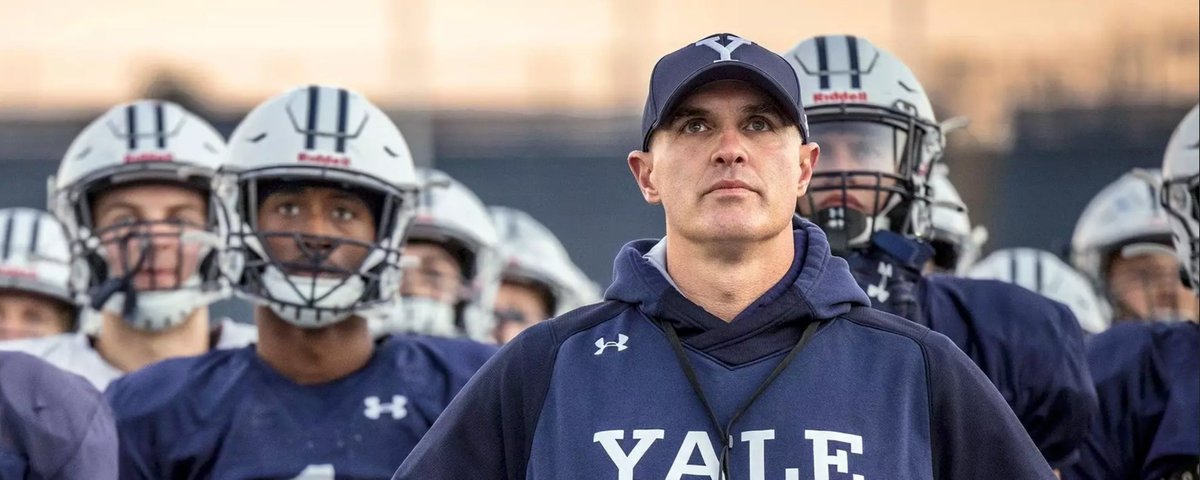
Prior to the start of today’s game, the Yale Athletics community honored Coach Tony Reno.
#ThisIsYale
Jordan Cunningham retweeted
In Memoriam: Former Football Head Coach Tony Reno
🔗 Release ➡️ bit.ly/4jBlxOP


Jordan Cunningham retweeted

Want purpose?
Fatherhood may help: 59% of men without kids say they understand their purpose in life, vs. 72% with one child, 79% with two & 83% with three+. Kids give life meaning.
Source: Dr. Stephen Cranney @FamStudies

Jordan Cunningham retweeted

Is there anything in the world cooler than hitting a homer in front of 45,000+ chanting your name?