

i show up wen there’s something worth writing
Joined October 2022
- Tweets6.9K
- Following1.6K
- Followers1.8K
- Likes20.5K


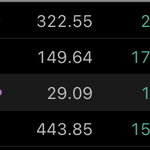

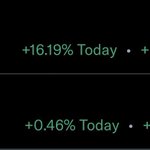



one pattern I’ve increasingly noticed among exceptional businesses is their willingness to make fewer decisions, take their time understanding an opportunity, and commit only when the conviction is there.
Berkshire Hathaway, Apple and Copart are interesting examples, each in their own way.
take Apple. It’s been criticised for not being at the forefront of the AI race, particularly during what could be one of the most consequential periods in technological history.
but there’s another way to look at it. Apple has historically been deliberate about what it integrates into its ecosystem and how. It doesn’t necessarily need to be first. It needs to get the implementation right, at a scale that matters to its users.
that doesn’t mean its approach is infallible, or that it should be immune to criticism. But there’s a distinction between missing an opportunity and refusing to chase one before you understand its economics and implications.
Berkshire operates on a similar principle in capital allocation. Buffett and Munger never needed to make hundreds of brilliant decisions. They needed to avoid the bad ones and recognise a handful of exceptional opportunities.
Copart, too, has spoken about making investment decisions on a 10, 20 and even 30-year horizon.
what’s interesting is that these businesses aren’t necessarily short on ambition. They’re selective about where they deploy it.
at their scale, a poorly understood bet can cost years of accumulated advantage. The pressure to participate in every major opportunity can be just as dangerous as the fear of missing out.
i think there’s a lesson here beyond business.
every individual is, in some sense, running a startup called themselves. We allocate our time, attention, money and energy, constantly making decisions with incomplete information. More often than not, emotions, impatience and the pressure to keep up get in the way of sound judgement.
studying businesses and people who’ve compounded success over decades can teach us something that conventional productivity advice rarely does: how to think before acting, recognise what we don’t know, and become more comfortable with not participating in everything.
there’s probably a lot to learn from people who've spent decades getting this right. Not just how they make decisions, but how they resist the temptation to make the wrong ones.
3
129


$BMI is up 20% from my buying alongside $VEEV $CPRT on avg up by 30-40%
Wait, before you say that’s rookie numbers, let me tell you they’re all mid cap-high cap companies from US.
20-25% CAGR is ridiculously difficult to achieve consistently. You’ve to pick decade worth of winners in a short time of window, that comes once in a while, and hold it indefinitely until something changes.
All debt free, CF positive, adding vertical products, enlarging their MOATs in respective industries, smart allocators, etc
They were all trading at a fair-low valuation, caused by AI trade.
When prices misalign with underlying business state, they usually fill the gap quickly, but AI trade was much more violent that it let other companies slide below the mean trading valuation.
I bet those who bought $MU $SNDK $AVGO at peak prices would underperform S&P500 by magnitudes.

2
173

Sujal retweeted

To every man in his 20s.
I strongly recommend studying Great Man Theory.
In a world that wants you to feel powerless this is the best thing that you can study. The theory was developed by a guy named Thomas Carlyle who said that "history is the biography of great men." In other words: singular individuals are the drivers of history. It's not the masses who make the most change, but it is singular people. This means that one singular person can alter the course of humanity. Now days you are told that you don't matter. That the democracy decides your fate. The previous generation has forgotten about the larger cycles of history. And those cycles are coming for us. Fast. The only solution is to believe you can alter history. Study Napoleon, Alexander, Caesar, Edison, Tesla, and any other Great Man who has changed history for the better (Or for the worse). The Great Man theory goes both ways. Either way, you realize how much of a difference you can actually make. It is proof you and you alone has the power to change the world.
Great Man Theory. Trust me, it will change your life.


Anthropic & OpenAI is desperate to move away from just an model operating business.
I'm seeing a larger future with them operating 100's of companies in application layer across Robotics, Space research & mining, branch of Medical Science, Quantum computing, etc.
Next decade is definitely going to be very fun.

Over the past few months, Anthropic scientists have engaged in deep research partnerships with six organizations developing new medicines. We've also begun drug discovery efforts of our own.
In doing so, we’ve learned much more about how Claude can support the many stages of drug development.
In this blog post, we share some early results from these efforts, and describe how this work fits in with our wider ambitions in the life sciences.
anthropic.com/research/early…

1
3
173
Sujal retweeted

I wanted to write a post this morning offering some honest thoughts on the whole "Pump fun is the enemy" discourse I've been seeing across the timeline.
As someone who has been here full-time since late 2020, this isn't my first rodeo when it comes to watching CT collectively turn against the very infrastructure that defined a previous market cycle.
In fact, I'd argue this is an almost predictable phenomenon that occurs at every major paradigm shift in crypto, particularly when we transition away from a dominant speculative asset class and towards whatever comes next.
The platform that facilitated the previous meta inevitably becomes the focal point of frustration when the economics underpinning that meta begin to deteriorate.
Most of you probably haven't been around long enough to remember, but we witnessed an almost identical situation with OpenSea during the transition away from NFTs in 2022–23.
At that point, there was virtually nothing OpenSea could have done to satiate its existing user base.
The NFT boom that it had largely facilitated was over, liquidity was evaporating, and the core participants who had previously made substantial amounts of money trading NFTs were suddenly finding it increasingly difficult to generate returns.
Predictably, people started to get pissed off.
OpenSea was suddenly extractive. OpenSea wasn't innovating. OpenSea wasn't doing enough for its users. OpenSea was responsible for the deterioration of the very market it had helped popularise.
And while there were certainly legitimate criticisms to be made regarding its business model the broader reality was that NFTs were simply no longer the dominant speculative asset class.
With the benefit of hindsight, it's difficult to imagine any realistic set of decisions OpenSea could have made that would have fundamentally reversed that trajectory.
The writing was already on the wall.
Yet, to this day, you'll still encounter people who genuinely believe OpenSea somehow "killed NFTs".
Which, to me, is an absurd interpretation of how speculative markets function.
No emerging asset class gets to enjoy an indefinite period of extraordinary returns, particularly once the opportunities that initially made it attractive become widely understood, commoditised and increasingly competitive.
And I believe we're now witnessing an almost identical phenomenon with pump fun.
Call it the OpenSea-ification of the trenches.
We're experiencing the gradual exhaustion of capital-M memecoins as the de facto speculative asset class of this cycle, and the platform most closely associated with their proliferation has become the natural target for everyone's frustration.
The uncomfortable reality is that most people, outside of a relatively small subset of sophisticated participants, simply aren't making meaningful money trading memes anymore.
There are numerous reasons for this, but without getting lost in the weeds, the underlying dynamics are relatively straightforward.
Liquidity is considerably more fragmented, the number of competing tokens and narratives has expanded dramatically, and the capital required to sustain the valuations we witnessed during the height of the mania simply isn't circulating through the market in the same way.
At the same time, the average participant is competing against an increasingly sophisticated group of traders who have spent years refining their strategies, infrastructure and understanding of the trenches.
This is an important point that I don't think gets nearly enough attention.
Every speculative asset class eventually becomes a more solved game.
The inefficiencies that initially created extraordinary opportunities are gradually arbitraged away. As more participants figure out how to play the game, the edge that once existed begins to disappear, and making money becomes increasingly difficult for the average trader.
Consequently, the risk/reward profile deteriorates for the average participant.
What was once an environment where relatively unsophisticated traders could generate extraordinary returns becomes one where those same participants are effectively competing against professionals.
This isn't a unique failure of memecoins.
It's how financial markets function.
It happened with NFTs, and it's happening with memes.
Which brings me to what I consider the fundamental misconception underpinning much of the current anti-pump discourse.
There's this persistent belief that if only pump fun had implemented different incentives, distributed fees differently, worked with different KOLs, or simply never existed in the first place, we'd somehow be living in a memecoin utopia where everyone continued making money indefinitely.
I find that argument deeply unconvincing.
For one, it assumes pump fun exists in a vacuum, rather than within an intensely competitive market where alternative platforms would inevitably emerge to service the same underlying demand.
Remove pump fun from the equation, and you don't magically remove the economic incentives that gave rise to it.
You simply create an opportunity for another platform to occupy the same position.
More importantly, it assumes that the structural deterioration in memecoin profitability is primarily a consequence of platform-level decisions rather than the natural maturation and saturation of the asset class itself.
I don't believe that's the case.
And to be clear, none of this is intended as an unconditional defence of pump fun.
There are absolutely decisions worth criticising.
But IMO the distinction I think people are missing is that...
A platform can make suboptimal decisions without being responsible for the structural decline of the market it operates within.
Even if pump fun had executed perfectly, two fundamental realities would remain unchanged.
First, crypto has largely failed to attract sufficient new capital and participants to sustain the increasingly large speculative ecosystems we've built across successive cycles.
Second, memecoin trading has become an increasingly competitive activity, where the average participant is now competing against a much more sophisticated and experienced subset of the market.
Neither of these problems disappears because pump fun changes its fee structure or starts working with different influencers.
And neither would disappear if pump fun ceased to exist tomorrow.
Simply put, people are looking for a platform-level solution to what is fundamentally a market-level problem.
I think that's the real source of the disconnect.
When an asset class stops generating the returns people have become accustomed to, it's psychologically much easier to identify a villain than to accept that the opportunity itself has fundamentally changed.
OpenSea became that villain for NFTs.
Pump fun is becoming that villain for memecoins.
And I suspect that when the next dominant speculative asset class eventually emerges, we'll watch this exact same cycle play out again.
None of this means platforms should be immune from criticism or that participants shouldn't demand better incentives, transparency and alignment.
They absolutely should.
But there's a meaningful difference between holding a company accountable for its decisions and attributing the inevitable maturation of an entire speculative market to that company's existence.
Until we start distinguishing between those two things, I think we're going to keep having the wrong conversation.
And sure, call me a pump fun shill if you want, but many of you made life-changing gains during peak memecoin mania precisely because pump democratised launches.
It's worth acknowledging that, just as it's worth recognising that the decline in liquidity and profitability isn't solely the fault of the launchpad that helped facilitate the boom.
Ultimately, I think it's worth asking whether any single platform could have fundamentally changed where we find ourselves today, or whether this was always the natural trajectory of the market.
Food for thought.

I remember when ICOs had pretty much lost all credibility, and most people had written off the model altogether. MetaDAO was interesting because it brought the model back, but tried to address the very things that made ICOs such a mess in the first place.
I'm getting a similar feeling with @umia_finance on EVM.
Could be too early to draw that parallel, but there are a few things I genuinely like about what they're building.
> They did their own raise without the usual special deals or side letters. The treasury is governed through decision markets that can actually execute, and they've put thought into the legal structure too, tying the token, IP and team together rather than leaving convenient gaps between them.
> The project selection side is interesting as well. There's a curated route for teams with some traction, and another where the community gets a say in what makes it through. They've also gone beyond the usual yes/no markets into multi-outcome ones.
Think they've had a few hundred applications already, with @SlopCash being one of the names announced publicly.
I'm not saying this makes Umia the next MetaDAO. A good design is one thing, how it behaves when things go wrong is another. And the EVM crowd isn't exactly the same as Solana, so there's no guarantee it'll play out the same way.
But I do think people were a bit too quick to write off ICOs as a model, when a lot of the problem was the way they were structured and the incentives around them.
They seem to be addressing the right problems, which is what got me interested in the first place. Still early days, but I’m curious to see how this plays out.
S/O to the founders... @nftboi_ @fra_mosterts

2
8
382
This is the beginning for Indian perps volume to pick up and surge in the next coming months.
Not from existing perps users, but those that deal with only equities. They pay numerous taxes on a single trade execution, aside from normal taxes on income generated from trading FnO.
I believe we’ll see many individual companies with good volume gets listed on perps in the near future.
And i know many aren’t fully realising the impact it would create on govt revenue comes from capital markets.
But perps are seeding dents for them and they would hate it.
To the point that they would scrutinise crypto even more and start taking rough actions on perp’s platform owners based in India.
Nothing can stop ppl from dealing in perps/tokenised assets in the future. It’s just the matter of time and realisation to make it as popular as Zerodha in the land of India.


Sujal retweeted

The biggest unmonetized media asset in India is the Big Fat Indian Wedding.
You have 200 to 5,000 high net worth individuals locked in a resort for three days. It is a completely captive and hyper targeted audience. Yet there is zero ad inventory.
Brands will happily burn ₹5 Crores for a 10 second IPL ad where people are looking at their phones but they completely ignore the most concentrated luxury demographic sitting right in front of them.
Even in a Tier 3 village, a local tractor company, a regional jewelry brand or a hyper local FMCG distributor would gladly pay to sponsor an event with 1000 guaranteed local consumers in one tent.
This can completely flip the unit economics of the Indian wedding. Instead of a family going into debt to host an event, this can turn it into a sponsored marketplace.
Why are families burning ₹2 Crores on a wedding and extracting ₹0 in corporate sponsorships?
Imagine a premium beverage sponsor taking over the sangeet bar or a luxury auto brand placing a flagship car at the venue entrance to offset the event cost.
This is the greatest attention arbitrage in the country. In Gujarat, Navratri events have lot of sponsorships.
I am looking for a co-founder to build this marketplace with an appetite for execution. This market is a multi billion dollar white space.
Guess who just pivoted from "crypto only" to "everything" fund.
I believe this will create exodus effects in Crypto-only VC's circle.
In co-relation with mass layoffs across the sphere of Mag7 and Fortune 500 tech companies, this is a such a great time in history, where we'll see rapid experimentation globally, and more startups who'll land fundraising stage led by solo-prenuers or lean teams.
Most of them are definitely not going to create a Crypto company.
As much ppl in Crypto will hate this direction, but that was bound to happen. Crypto failed numerous times proving it's place in application/infra ground, besides RWA's & remittances issues, nothing has been useful at scale.
Future looks great for the world, as most credible VC's invest across way small & different niches now.
@a16zfrontier @cdixon @pmarca @bhorowitz


4
142
Albeit of hating BJP for years, I also acknowledge there's a massive anti-govt narrative is being pushed in alliance with foreign entities, who'll greatly benefit from tearing India apart.
No way, all together and sudden we're seeing everything is emerging so well against the govt.
Same way, they'd setup everything against Congress govt led by Manmohan ji's in 2014, they're trying hard.
If it'd been natural, i'd continue to bash Godi ji for his deed for India.
3
97
Real problem with Indian Markets are the participants and the timing.
After 2021 we'd seen a surge of 6x of total demats in India.
So about 1/6th of the total participants expects equities to always deliver a RFR + premium each year. Otherwise, anything less produces massive sentiment flip and ppl will start screaming "Indian equities are weak"
This had also pushed overall market to dangerous valuation zone, and that never sustains.
Everything revert backs to mean eventually. And that is what is been happening since after 2024, investors are plagued whether the risk vs. substantial domestic risks are worth it, in emerging market sense, there are multitudinal risks involved investing in India rn.
We might see a 2-3 year of range bound on Index (Nifty 50) before earnings push the P/E's more lower for the market to equate better R:R
While everything is happening, there's so much noise and sentimental push that great companies, after a long time are again coming back to highly attractive valuation.
I'm taking that bet, because markets eventually punishes bad business and equally rewards the good business with great pleasure.
7
130
Sujal retweeted

The Jords Podcast EP5
-
Doomerism
0:00 So back or so over
1:02 I was once a doomer
3:01 Why being long is more profitable
4:25 The pleasure of being the last one standing
6:33 Your secret knowledge is already priced in
7:58 Negativity and recency bias
10:21 The fading affect bias
13:15 How to deal with scammer fatigue and burnout
15:38 Log off and zoom out
17:35 When the music starts
19:16 It's never over forever
21:06 A stupid optimist outperforms a smart pessimist
25:26 Why doomers only hurt themselves
26:45 Build instead of narrating from the sidelines
28:01 A builder or a wrecker
28:57 There was no golden era
Almost every new chain is flowing through ETH as a supportive infrastructure for security and liquidity.
Right now, it's the only chain that qualifies for having the unified substance a new team would need to launch their own chain.
I'm bullish on the ecosystem.
Albeit the prices for the $ETH might suck for a long enough time.
1
2
153
Sujal retweeted

i don’t know who needs to hear this, but people who can’t sit through boring price action will never hit a big win.
and i’m saying this as someone who caught numerous 100x plays last cycle, publicly proven on my X.
the biggest moves often come after weeks of nothing. no hype, no validation, no green candles to reassure you that you’re right.
that’s when most people lose patience, sell their bags, and move on to chase something that’s already running.
if you want to catch a real 50x or 100x, you need to be comfortable looking stupid, being bored, and sitting through uncertainty while your thesis plays out.
everyone wants big 6-7-8 fig win. very few can tolerate the process required to get there.

