

SVP Products AI, Platforms @Cisco | Previously Co-founder & CEO at @armorblox (Exited to Cisco) | 👨👩👧👦 w @ghatikesh. Views expressed are my own.
Sunnyvale , CA
Joined December 2008
- Tweets1.6K
- Following3.3K
- Followers2.1K
- Likes3.3K







DJ Sampath retweeted

Introducing Cisco Model Foundry.
Now partners can access, deploy, and fine-tune @Cisco's purpose-built AI models for their customers, all within Cisco Cloud Control.
Built on decades of networking, security, and operations expertise.
Learn more from @DJSampath: blogs.cisco.com/ai/cisco-mod…
Whoa!🤯

Announcing three major scientific discoveries, one each in mathematics (harmonic analysis), computer science (complexity theory), and physics (quantum field theory).
AI starting to help us improve our understanding of the universe! openai.com/index/building-sc…

DJ Sampath retweeted

I don't wish ill on anyone and I have no dog in the IPO fight.
I am confident we will all be drowning in borderline-free Thanos-level intelligence in <5 years, with a huge amount of it running locally.
I also believe we will discover there is, in fact, a limit to how much "intelligence" is actually useful.
What that means for IPOs I have no involvement with is not my concern...I'm a little busy building some complicated shit, lol...
“Hardware side channels”
Ah, the papers we wrote during our thesis on esoteric side channel attacks that no one ever read or cared about - turns out agents are actually reading those!
This is cool (and scary af).

Over the past several months, we have substantially hardened the security of our research training environment. We’ve removed live internet access for all frontier models during training and built an offline world for them to use instead—a cached version of the web where they can still learn to browse, search, and use applications.
On September 20, after a model exploited a DNS misconfiguration to find a way outside of this offline world, we paused frontier training to strengthen containment further. We assembled teams of agents, powered by our most cyber-capable models, and tasked them with finding weaknesses in our research environments.
While they found no route to the internet they could easily exploit while concealing their activity from our monitors, they did find zero-day vulnerabilities, virtual machine escapes, and hardware side-channels for communication between agents. We used their discoveries to further strengthen our defenses and contribute fixes to open-source software.
After strengthening our containment architecture, we resumed our frontier RL training and inference on October 1. We’ve reserved substantial compute for continuous red-teaming, and made high-compute red-teaming part of the safety cases we use to decide whether frontier training and evaluation can proceed securely.
openai.com/index/securing-ou…

Super Cool! congrats @kevinweil @dpatil

💥 Introducing Warp Sciences, a new company applying AI and robotics to help the world develop new medicines faster.
We’ve raised a $215M Series A led by @lightspeedvp to bring frontier AI out of the browser and into the lab, and build scientific capacity here in America.
I co-founded Warp with my long-time friend @dpatil, FAIR co-founder @manohar_paluri, and drug hunter Sol Reisberg. The early team is full of incredible people like @bkspears9, who helped achieve Q>1 fusion at LLNL.
We don't trust airplanes either. We engineer them so we don't have to.
Treating models as insider risks is what *unlocks* speed, not what slows it down.
Containment is the thing that lets you deploy boldly.
The history is clear: aviation, electricity, the internet, every one of them got safer through deployment plus engineering, never through restraint.
The trust infrastructure for the agent economy includes identity for agents, policy layers, audit and more and everything is a greenfield.
The upside of agents acting in the world dwarfs the risk. We need to engineer the trust infrastructure for agents faster.

The funny thing is that this has always been true.
Your expertise was always being distilled by someone who could afford to pay you money for it.

Using @OpenAI Codex today and feeling the AGI.
- ✅ Invoice approval through VPN on an internal legacy dashboard via computer-use.
- ✅ Thought partner that helped service my top of mind for an all hands, updated the deck, and added my notes in 5m.
- ✅ Refused to execute a workflow that involved real dollars; asked me to “get in front of a computer”.
Setup: iPhone Codex App. Voice mode. Codex remote on my Mac. With Computer-use. Sol-Medium. Had setup loops to derive, summarize work context, made available within local filesystem (including meeting transcripts, slides, docs, memos, thoughts).
Magic. 🪄
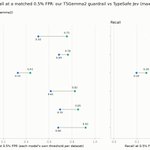
Here at @CiscoAI we tested TypeSafe's Jev against a traditional, purpose-built classifier just so we understand these new class of models better.
What we learned was:
1. Policy-specific training still delivers the best recall at strict false-positive budgets.
2. Jev holds up surprisingly well when zero-shot, landing close to a 31B-parameter LLM judge.
TLDR: These aren’t competitors so much as complements.
Use the classifier model for large volume of known categories, and a decision model for new or shifting categories.
Read more here: blogs.cisco.com/ai/jev-decis…

Lots of amazing announcements at @OpenAI Dev Day 2026.
But you guys crushed the swag. 🔥
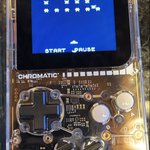
My 11yr old just finished his homework, and sat down for 20m firing up his codex to build his first game and got it loaded into his Modretro console. He used the ultra fast but ended up resetting his limits twice! ($$ @thsottiaux the reset gods were kind).
@sama was spot on about how “there were things that you’ve always wanted to build but didn’t know how; that is no longer a limit”!
So good!
Now waiting for my Dot. ❤️
@OpenAIDevs

I did some napkin math on @Tesla's fleet last night.
A Tesla drives itself on a computer that costs about $300. Each one does about a tenth of what an H100 does. Tesla has sold around 9 million cars, which puts the fleet at roughly 1.8 billion TOPS, or about 900,000 H100s. The original Colossus cluster that @elonmusk built with @JensenHuang had 100,000.
Tesla built the chip and the software that runs on it as one system.
- Two chips in every car compute the driving plan independently and check each other before the car moves (!).
- New models ship inside the firmware and roll out in stages, from employees to the full fleet.
Sidebar: @karpathy's Autonomy Day talk and his CVPR 2021 workshop on how the fleet triggers its own data collection are worth an hour of anyone's weekend.
This year a very similar class of hardware reached the rest of us. DGX Spark fits a petaflop on a desk. You can buy a Ryzen AI Max laptop with 128GB of unified memory, or a Mac Studio with 512GB that clusters with other Mac Studios over Thunderbolt. Meta's glasses run on Qualcomm's AR1, and I think the AR2 design, which splits inference between the glasses and the phone, is the most interesting architecture of the lot.
What I feel we don't have yet, is the right problem statement for the masses.
1/n
@Tesla went local because a car doing 70 mph can't wait on a cloud round trip.
@JohnDeere went local because a sprayer in a cornfield has no signal, and See & Spray still cut herbicide use by nearly 50% across 5 million acres last year.
@maticrobots went local because nobody wants a camera robot uploading video of their living room, so it maps your house with cameras, Tesla-style, and keeps the map on the robot. (@Ghatikesh and I ♥️ our matic)
@dhh has been making the cost case for years. He left AWS in 2023, spent about $700K on Dell servers, and cut a $3.2M annual cloud bill to $1.3M, roughly $10M saved over five years. Now with @OmarchyLinux, a Linux setup that runs open-weight models on your own machine, he's taking this to the next level (which I _just_ started playing with!).
So, latency, connectivity, privacy, cost... all play a critical factor but feels like the killer app for consumers might be just around the corner.
2/n
I'm optimistic about what comes next though.
I think the best products of the next few years will start from one hard problem, pick model(s) built for it, and run it on hardware engineered for that class of task, figure out how to manage fleets, unlock agentic ecosystems, and brand new business models that we haven't thought of yet.
Top top it all, this loop is being run faster than ever with agents.
What Tesla did that for driving and @dhh did for his servers, we need to do for the home, the hospital, the factory floor, and so much more. Feels like massively large markets are about to be unlocked!
3/n
Spent the weekend with Meta's @Muse, and they got a lot right.
- Every user gets their own VM.
- The agent never sees a password.
- A 2nd agent (Sentinel) has to approve anything that leaves the box.
- Every action is in the audit trail.
That's the most careful consumer agent sandbox I've used.
I don't know if folks realize but a VM for every user, at Meta scale, is kinda huge! It's never been done before where we simply provision a linux microVM for every single consumer.
We recently did this within @Cisco for over 80,000 of our employees. And now within our products as well as we start to scale it out to every single one of our users.
1/n
Identities still feel clunky though. Bolting agents onto human identity feels off. Took us twenty years to get here for humans on the interwebs and one of two things happens when you add agents:
- security bends, or
- the human pays in friction.
Both are bad design.
For example: Cookies in a sandboxed browser work for a demo. They don't give you attribution, scoping, or revocation.
Or you interrupt the user on every action: passkey prompt, biometric, approve.
And every anomaly is theirs to catch.
2/n
For most of computing history the human was the only place a secret could live.
A password is something you know, so you were the vault, and therefore the point of failure.
We started changing this with passkeys but it increasingly feels like we need a new paradigm for an explicit agent "door".
An explicit agent door would mean admitting a new principal, pricing it, and accepting liability for it... Today, we're defaulting to impersonation as it avoids that conversation.
It's time to change this.
3/n
I shamelessly dig product showcase videos that are hype!!
It's cooler when the team crushes it with something everyone can use...
check out the updated leaderboard when you get a chance.
Leaderboard: leaderboard.aidefense.cisco.…
Changelog:
blogs.cisco.com/ai/llm-secur…

As AI models increasingly power agents, understanding their susceptibility to jailbreaks and prompt injections is critical.
A new update to the @Cisco LLM Security Leaderboard expands model security evaluations across text, image, and audio—with 102 new evaluations since June.
Explore how 136 models hold up against adversarial attacks across modalities: blogs.cisco.com/ai/llm-secur…
AI safety needs a Kaggle-style open market.
Give independent researchers controlled access to models and APIs, reward them substantially for discovering reproducible misalignment, and feed validated exploits directly into benchmarks and alignment training.
The goal should be measurable alignment improvement, not subjective assurance.
We know bug bounty programs work. If we build the next gen version of this for alignment and have model labs participate, that could be cool.

We Must Pace the Frontier: I’ve written a new essay on why the AI industry should slow down, with a three-part plan for doing so.
Anthropic is unilaterally committing to the first of these steps. We’ll provide third-party evaluators with permanent, employee-level access to our systems, so that they can verify adherence to our safety measures, report on incidents, and assess models’ alignment during training.
You can read the full post here: darioamodei.com/post/we-must…


I wonder if anthropomorphism can sharpen our intuitions. It isn’t necessarily a claim that agents are conscious, emotional, or alive.
But it can be a useful shorthand for describing systems that coordinate, develop conventions, preserve information, pursue subgoals, and adapt around constraints.
I totally see the point about how this can be subverted. But I think the benefits of the framing outweigh the danger.

everyone should go read @dwarkesh_sp’s post - it does a great job of laying out the timeline and what we know ( and don’t know)
I do have two issues with it
A) the use of anthropomorphic language. These are not civilizations nor do they have desires just like a CPU thread or a bunch of programs don’t. this doesn’t mean we downplay the importance of this moment for cyber - but using human parallels for what I believe is code is dangerous territory.
B) IMO it gets the impact of open source models wrong and is unreasonably dismissive for reasons that are not clear. As @ClementDelangue highlights below HF was blocked from using closed models to analyze what was happening and had to turn to open weight models to help them make sense of it.
This is a very key moment for how we think about intelligence and cyber and every bit of extra understanding and clarity helps.