



David Nikulin retweeted

Okay:
- Attached bottlecap
- Schengen, expanded to Croatia, Romania and Bulgaria
- The euro joined by Croatia and Bulgaria
- Air passenger rights (older, 2004, newly updated 2025)
- Galileo satellite navigation
- EU-Canada trade deal (CETA)
- EU-Mercosur trade deal
- EU-Japan trade deal
- EU-Singapore trade deal
- EU-Vietnam trade deal
- EU-Indonesia trade deal
- End of roaming charges, extended to 2032
- Price cap on calls and texts to other EU countries
- USB-C common charger
- Geo-blocking ban for online shopping
- Streaming subscriptions that work abroad
- Payment Services Directive (PSD2), no card surcharges and open banking
- Instant payments regulation
- EU Digital Identity Wallet
- eCall automatic crash alert in new cars
- Automatic emergency braking in new cars
- EU-Alert emergency warnings on phones
- Single Digital Gateway for cross-border admin
- No more apostille stamps between member states
- WiFi4EU free public wifi
- DiscoverEU free Interrail passes for 18-year-olds
- Erasmus+ (older, 2014), budget nearly doubled
- European Universities alliances
- European Solidarity Corps
- EU Digital COVID Certificate
- Joint COVID vaccine procurement
- Health Emergency Preparedness and Response Authority (HERA)
- EU4Health
- Europe's Beating Cancer Plan
- European Health Data Space
- NextGenerationEU joint borrowing
- SURE short-time work loans
- 15% global minimum corporate tax
- European Market Infrastructure Regulation (EMIR 3), euro clearing back in the EU
- Anti-Money Laundering Authority (AMLA)
- European Green Bond Standard
- Permanent Structured Cooperation (PESCO) on defence
- European Defence Fund
- European Peace Facility arms for Ukraine
- EU military training mission for Ukrainian troops
- Act in Support of Ammunition Production (ASAP)
- Strategic Compass and the 5,000-strong rapid deployment capacity
- European Defence Industrial Strategy
- Security Action for Europe (SAFE), €150bn joint defence loans
- ReArm Europe / Readiness 2030
- First ever Commissioner for Defence and Space
- Military mobility funding
- IRIS² sovereign satellite constellation
- EU Space Programme and the EU Agency for the Space Programme
- rescEU shared firefighting fleet
- 5G security toolbox
- Foreign investment screening
- Foreign Subsidies Regulation
- International Procurement Instrument
- Anti-Coercion Instrument
- Dual-use export control regulation
- Temporary protection for Ukrainian refugees
- Candidate status and accession talks for Ukraine and Moldova
- Ukraine Facility
- €90bn joint-borrowing loan to Ukraine
- Sanctions on Russia (older, 2014), big packages from 2022
- Russian banks cut from SWIFT
- Russian oil embargo and oil price cap
- Russian gas import phase-out
- Western Balkans Growth Plan
- Global Gateway
- REPowerEU
- Gas storage regulation
- Joint gas buying through AggregateEU
- Coordinated gas demand cut
- Windfall levy on fossil energy profits
- Electricity market reform
- European Climate Law, net zero by 2050
- Carbon Border Adjustment Mechanism (CBAM)
- Emissions Trading System reform and the Social Climate Fund
- Renewable Energy Directive, 42.5% by 2030
- European Wind Power Package
- European Hydrogen Bank
- Methane regulation
- Nature Restoration Law
- Ambient air quality directive
- Drinking water directive
- Urban wastewater directive, polluter pays
- Critical Raw Materials Act (CRMA)
- Conflict minerals regulation
- European Chips Act
- Net-Zero Industry Act
- Batteries Regulation with battery passport
- European Battery Alliance
- Important Projects of Common European Interest (IPCEI) on batteries and hydrogen
- EuroHPC supercomputers, including JUPITER
- InvestAI and the AI gigafactories
- Horizon Europe and the European Innovation Council
- Ecodesign regulation, no destroying unsold clothes
- Right to repair
- Ban on products made with forced labour
- Ban on vague greenwashing claims
- General Product Safety Regulation
- Common Agricultural Policy (older, 1962), current version 2023 to 2027
- Unfair trading practices directive protecting farmers
- Geographical indications reform for food, wine and spirits
- EU-China agreement protecting European regional products
- Geographical indications for crafts, like Murano glass and Delft Blue
- Creative Europe (older, 2014), current programme 2021
- Culture Moves Europe grants for artists
- Music Moves Europe
- European Year of Cultural Heritage
- European Capitals of Culture (older, 1985)
- New European Bauhaus
- European Collaborative Cloud for Cultural Heritage
- Ban on importing looted cultural goods
- 30% European content on streaming platforms
- Culture Compass for Europe
- European Media Freedom Act
- Anti-SLAPP directive protecting journalists
- European Public Prosecutor's Office (EPPO)
- Rule of law conditionality on EU funds
- Annual Rule of Law Report
- Article 7 against Hungary
- Whistleblower protection directive
- European Labour Authority
- Work-life balance directive, paternity leave
- Adequate minimum wages directive
- Pay transparency directive
- Women on boards directive
- Violence against women directive
- European Child Guarantee
- European Accessibility Act
- European Disability Card
- Rail passenger rights (older, 2007), recast 2021
- Trans-European Transport Network (older), revised 2024
- Single Market Emergency Instrument
- EU Inc (proposed)
- Digital euro (in negotiation)
- Next EU budget at close to €2 trillion (proposed)
- European Competitiveness Fund (proposed)
- AgoraEU culture and media programme (proposed)
- Savings and Investments Union (proposed)
- European supervision of big stock exchanges and crypto firms (proposed)
- Scaleup Europe Fund (launching)
- Startup and Scaleup Strategy
- Digital Omnibus simplification (proposed)
- European Business Wallet (proposed)
- European Innovation Act (expected)
- Quantum Act (expected)
- Cloud and AI Development Act (expected)
- Chips Act 2.0 (expected)
- Biotech Act (proposed)
- Advanced Materials Act (expected)
- Industrial Accelerator Act (expected)
- Circular Economy Act (expected)
- Critical Medicines Act (proposed)
- EU Space Act (proposed)
- European Grids Package (proposed)
- 2040 climate target of 90% (in negotiation)
- European Defence Industry Programme (EDIP)
- Defence Readiness Omnibus (proposed)
- Military mobility package (proposed)
- European Drone Defence Initiative and Eastern Flank Watch
- High-speed rail linking European capitals (plan)
- Single cross-border train ticketing (expected)
- EU Customs Authority (in negotiation)
- European Affordable Housing Plan
- Union of Skills and cross-border recognition of qualifications
- EU-India trade deal (in negotiation)
- Montenegro and Albania accession
- Qualified majority voting in foreign policy (under discussion)

Hvor er det egentlig lavt af et selskab.
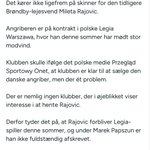
Der kan være alle mulige grunde til reaktionen, og kvinden har ikke selv offentlig brokket sig.
Tænk at pisse på flyrejsende på den måde. 🤷♂️

David Nikulin retweeted

For my English-speaking followers, let's get the facts straight about the Stubb–Støre call with Putin.
New reporting from Finland provides important details missing from much of the international debate. Some of the initial accusations now look rather premature.
First, why did the call happen?
According to President Stubb, Ukraine's peace negotiations were close to collapsing last week, with relations between Kyiv and Washington in serious trouble. Finnish sources suggest there was even a risk of the US disengaging from the process.
At Zelenskyy's request, Finland and Norway organised the Oslo talks with American negotiators Steve Witkoff and Jared Kushner, alongside other European representatives.
The subsequent call to Putin was prepared with Ukraine and the US. According to Finnish sources, key allies were informed beforehand and briefed afterwards. Helsinki also wanted Ukraine to publicly confirm its support for the initiative.
Zelenskyy has since explicitly defended the call and praised its transparency.
Second, the controversy surrounding European coordination deserves clarification.
Danish Prime Minister Mette Frederiksen accused Finland and Norway of acting independently and failing to coordinate with other European countries.
But Stubb and Støre have both stated that allies were informed in advance and received detailed briefings afterwards. New reporting from Finnish news agency STT supports their account.
There is an important distinction between not being informed, not being consulted on the decision, and fundamentally disagreeing with that decision.
Frederiksen's criticism increasingly appears to reflect a disagreement over whether direct contact with Putin should happen at all, rather than simply a lack of notification. Her initial framing therefore risks creating a misleading impression of an uncoordinated diplomatic operation.
Political disagreement should not be confused with evidence that Finland and Norway acted behind their allies' backs.
Third, what actually happened during the call?
Finnish broadcaster Yle and news agency STT have challenged the Financial Times' account of Putin delivering a lengthy history lecture to passive Nordic listeners.
Their sources describe a substantive exchange in which Stubb and Støre questioned Putin about the upcoming Abu Dhabi negotiations and stressed that prolonging the war would not diminish European support for Ukraine.
Freedom of navigation in the Baltic Sea, keeping maritime routes open and Russia's shadow fleet were also discussed.
Finnish-Russian bilateral relations reportedly were not discussed at all. The parties agreed to keep the communication channel available.
Fourth, the risks were understood from the beginning.
Finnish sources say criticism and possible Russian propaganda exploitation were anticipated. One source described the initiative as values-based realism, which sometimes requires accepting political risks and their consequences.
This was a calculated decision, not an improvised attempt to normalise relations with Moscow.
Zelenskyy has also reminded critics that Putin's diplomatic isolation effectively ended with Trump's Alaska summit in 2025. Other European governments have maintained contacts with Russia, sometimes without comparable transparency towards Ukraine.
Ukraine requested diplomatic assistance, and Finland and Norway responded in coordination with Kyiv and Washington.
Supporting Ukraine for as long as necessary must also mean supporting it in the ways Ukraine actually asks for. That includes diplomacy.
Europe needs military strength, economic pressure and diplomatic influence. These are complementary instruments, not competing alternatives.

David Nikulin retweeted


Europe’s energy ministers are running out of ideas to protect citizens from surging energy prices as winter approaches.
vist.ly/5qjrz

David Nikulin retweeted

To the uninitiated, this man was Minister of Climate, energy and utilities in Denmark from 2019 - 2022 where he did everything he could possibly do to put us in this situation, including halting all existing oil and gas exploration, as well as cancelling all future licensing rounds for oil and gas exploration in th North Sea. It's hard to find a worse person to navigate us through this winter.

David Nikulin retweeted

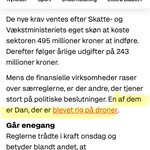
European Commission sounds the alarm (now !!!) about the number of oil refineries closing in the region over the last 20 years. "We need to counter this trend," says EU Energy Commissioner Dan Jørgensen. "This crisis is a wake-up call." Quite.
David Nikulin retweeted

Need a crumb of hope about Europe on a Saturday?
Belgium has gone from rapidly closing and destroying its entire nuclear fleet (half of its power before 2023) to quickly relicensing and returning a few of them to the grid.
PM @Bart_DeWever is trying to save as many as he can.

ALT A photo I took of Doel nuclear plant in February 2025, the day another one of its 4 reactors was closed.

België en @ENGIE_energie zijn erin geslaagd de kerncentrales Doel IV en Tihange III in een half jaar volledig te reviseren, alle veiligheidsprocedures te doorlopen en weer op te starten. Terwijl sluiting gepland was.
Dat is een applausje waard, vindt u niet?
#grafiekvandedag

David Nikulin retweeted

“Lots of EU States participated in this most important diplomatic, military and analytical blunder of this age.”
Indeed, indeed. A complete fiasco for all of us, who understood perfectly well what was happening back in 2022. Thank God for the US in the initial months of the war.

Shocking text. “We think it’s safer to wait for the Russians (...) Stay safe". That was the French ambassador in Kyiv, writing to the European ambassadors’ Signal group on 24 February 2022, as explosions were already going off in the city. Lots of EU States participated in this most important diplomatic, military and analytical blunder of this age). For 3 months Dutch intelligence kept telling Prime Minister Rutte that an invasion was “unlikely". The agencies relied on a "trusted source" near the Kremlin who turned out to know nothing, because Putin shared the plan with maybe 10 people. USA put the Russian attack plan on the table. Western EU dismissed it. 12 hours before the tanks crossed the border, Russian forces had already changed how they communicated. But the official Dutch assessment still said war was merely “possible". The head of Germany’s BND was asleep in a Kyiv hotel when bombing started. Fled in a panic. Kept his job.


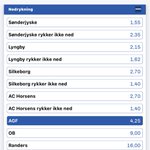
Så langt bagud europæisk plads i #sldk at alle kampe er must-win og vores offensiv er skrøbelig as fuck #ulrratwitteragf


CVs vindue i en nøddeskal:
- Kan ikke finde en angriber
- Henter flere 10’ere og siger, at nålene skal komme fra dem
- 10’ere har scoret samlet to mål i #sldk indtil videre
🤷♂️🙄#ultratwitteragf
Hvis man investerede 10.000kr i Kodak 23. marts 2020, ville de være 53.000kr værd i dag. Ikke dårligt for et selskab mange har lagt i graven

Kan man virkelig ikke få en god normal kvittering ud af Rejsekort app, som man nemt kan expense på sit arbejde? 🤔
Imponerende først at se det nu 😳

Jeg har forsvaret CV længe, men det stopper altså nu. Det er simpelthen en skandale, at sportschefen ikke sikrer sig, at vi har en solid angriber, der kan holde i bolden. #UltraTwitterAgf
David Nikulin retweeted

Eight years after Denmark merged 239 councils into 66, places that lost their town hall had 26% fewer children and 35% lower house prices.
In 2027 Denmark folded 271 municipalities into 98, merging 239 of them into 66 larger ones. The basic idea (which makes every finance ministry happy), is that bigger councils spread fixed costs over more people, they cut duplicated jobs and deliver the same services via economies of scale. Earlier Danish research backed that up, finding administrative costs per head fell after the mergers.
But each new municipality kept only one town hall. Every other former council lost its administrative heart, and a bunch of economists wanted to know what happened to the places left behind.
They used Danish registry data covering every resident and every firm from 1996 to 2015, mapped onto 8,530 small neighbourhoods of at least 150 households each. They then compared the 2,187 neighbourhoods whose municipality lost its town hall with neighbourhoods in municipalities the reform left untouched. Because the untouched ones skew urban (Copenhagen, Aarhus, Odense), the authors built a weighted blend of them that tracked the losing areas closely before 2007, so the comparison is like for like.
The first domino is obvious. Neighbourhoods that lost their town hall shed about three full-time admin staff each, roughly a third of what they had, and the drop never reversed.
Then the losses spread to services nobody had voted to cut. School staffing fell by 17% on average across the nine years after the reform, and public-sector jobs overall by 21%. Private-sector jobs followed, down 16%, as the local economy lost the steady trade that a council and its staff bring.
People responded the way you'd expect. Each affected neighbourhood lost about three more working-age residents than it gained every year, around 0.7% of its population. The number of children fell 13%, which tells you young families were among the first to go. Those who stayed travelled 10% further to work, and their wages rose by just 1%, barely compensating for the extra time on the road. House prices fell 15% on average.
By 2015 the gap had widened. Against comparable untouched areas, public employment was down 38%, school staffing 36%, private jobs 24%, children 26% and house prices 35%.
The results hold when the comparison group changes. Comparing losing municipalities with neighbours that kept their town hall, or with the second-largest partner in the same merger, still shows clear damage, and so does using the number of council seats to predict which places lost out.
The geography is uneven tho. Neighbourhoods near Denmark's four biggest cities saw residents drift into those cities. Further out, people moved to whichever town had kept the town hall, and those winners added public-sector jobs. So a reform meant partly to slow urbanisation ended up feeding big cities in some places and building up regional hubs in others.
link to full article: doi.org/10.1093/jeg/lbaf038

David Nikulin retweeted

Football works in cycles, and the number of games won by teams with more possession has consistently fluctuated in the last 20 years.
But last season was the first time since 2005-06 that more Premier League games were won by the team with less than 50% of the ball.

Hvordan får man en elregning på 21.000kr om året? 🤔
Bor selv i en villa af fin størrelse, og bruge knap 9.000kr sidste år. Kiggede meget kort på batteri, men ville aldrig svare sig reelt, så vidt jeg kunne regne ud.
tv2east.dk/odsherred/henrik-…

“Familiebiler” vs “mest solgte biler” ….🍐vs 🍌 🤷♂️🙄

Det er altså ret vildt, at Mads Rørvig får lov til uimodsagt at sige at det er de meste solgte familiebiler der stiger i pris. 9 ud af 10 af de mest solgte biler i DK kan fås til under 366.000. Jeg gad godt se hans påstand dokumenteret. Ja mange modeller kan også fås i varianter over 366.000 men jo også langt under.
