

All those tweets will be lost in time, like tears in rain.
Murcia (Pale blue dot)
Joined May 2010
- Tweets97.5K
- Following3.2K
- Followers15.8K
- Likes105K


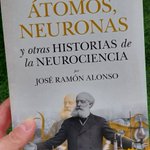


Pinned Tweet
Ya está a la venta mi proyecto más íntimo y personal. Se trata de una recopilación de mis columnas de ##MesaParaCinco para la @laverdad_es con @prólogo de @manuelmadrid_lv
Lo podéis pedir en vuestra librería favorita o aquí: share.google/53Zrm8vwS3h7Lzl… Mil gracias, @Raspabook

Daniel Torregrosa retweeted

Desde de 2021 he seguido todo el tema de Pérgamo y os voy a decir lo que pienso que ha pasado y seguro que no me equivoco mucho.
1. Pérgamo era una librería muy famosa mucho antes de que entraran estos chavales (con el apoyo de un inversor). elconfidencial.com/espana/ma…

Daniel Torregrosa retweeted

Esta noche tenemos cita en el Palacio. Tercera jornada de la fase de grupos de la BCL y recibimos al Peristeri con el liderato en juego.
Al que no pueda venir al Palacio le espero en @PopularTvMurcia

🇪🇺ⒼⒶⓂⒺⒹⒶⓎ🇪🇺
🏆 J3 | @BasketballCL
🆚 @peristeribc
🕣 20:30
🏠 Palacio de los Deortes
📺 @PopularTvMurcia
🎟️ ucamcb.compralaentrada.com
#Astros

Daniel Torregrosa retweeted

Se cumplen 160 años del nacimiento de Ramón María del Valle-Inclán.
El autor gallego fue dramaturgo, novelista, poeta y, también, corresponsal de guerra en la Primera Guerra Mundial. En 1916 viajó a los frentes franceses como enviado especial de la agencia Prensa Latina y el diario «El Imparcial».

Daniel Torregrosa retweeted

One of the biggest mysteries of the Wow! Signal is its exact location, with two possible positions in the sky. Our #AreciboWow team has solved this mystery using three independent methods. We’ll present our findings in 2027.
We know! 😉

Daniel Torregrosa retweeted

Back in the 1980s, Francis Halzen presented a radical idea for a new kind of space observatory.
He realised that the Antarctic ice could be ideal for discovering more about the universe. In 1988, he presented his idea in a paper titled ‘High Energy Neutrino Detection in Polar Ice', along with co-author, John G. Learned. Instead of looking up at the sky with traditional glass lenses, he proposed looking down into the Antarctic ice to detect high-energy cosmic neutrinos.
‘Fig 1’ pictured here is the first diagram that was presented to illustrate how the telescope would function.
1. The earth as a giant filter (top): Neutrinos are ghost-like cosmic particles that pass right through almost anything. They travel from distant cosmic sources, enter the Earth, and shoot toward the South Pole. By looking downward, the telescope uses our entire planet to block out messy background radiation. This ensures that any particle traveling straight up from underground must be a neutrino.
2. The ice telescope (bottom): Buried deep beneath the South Pole is the actual detector. While the surface ice is bubbly, the extreme pressure deep down makes the ice crystal clear. When a rare neutrino finally crashes into an atom in this deep ice, it creates a secondary particle called a muon. As this muon shoots upward, it creates a faint flash of light (which is called the Cerenkov radiation). Scientists drill deep holes into this clear ice and fill them with highly sensitive light sensors to capture these flashes and trace exactly where the neutrino came from.
Halzen quickly convinced many others of his idea’s potential and, in 1992, a group of tenacious researchers and engineers made the first attempts to lower light sensors into the glacier at the South Pole.
This later developed to what is now called the IceCube Neutrino Observatory. It detects high energy neutrinos from deep space, giving insight into the extreme environments from which they originate to unravel new secrets of the universe. Francis Halzen was awarded the Nobel Prize in Physics in 2026.
Read the paper here: bit.ly/47rflly
Diagram: Francis Halzen and John G. Learned

ALT This diagram illustrates the detection of neutrinos with photomultipliers buried in very clear ice beneath the South Pole. A neutrino source is shown at the top, with arrows indicating its path through the Earth. The lower section depicts photomultiplier tubes beneath the surface, detected through electronics. Diagram by Francis Halzen and John G. Learned.
Daniel Torregrosa retweeted

Este pasado domingo, Manuel Seara y yo charlamos sobre una misteriosas partículas subcelulares, de función desconocida, pero con prometedoras aplicaciones biotecnológicas, las nanocápsulas. Si te lo perdiste, todavía puedes escucharlo: rneaudio.rtve.es/a/17278404

Prefiero que lo hagáis en una librería de barrio o en la web de @Raspabook, pero si alguien quiere comprar 'El olvido de un triunfo' en @amazon ya puede hacerlo (preventa). 👇
amzn.eu/d/0c6uZ7G6

Daniel Torregrosa retweeted

💥 La mejor versión de Dylan Ennis está de vuelta
Con 2⃣4⃣ puntos, 4⃣ rebotes, 4⃣ asistencias y 2⃣3⃣ de valoración, @canadiankidDJE vuelve a sonreír en una victoria de @UCAMMurcia 😃
Además, se ha convertido en el 3º MÁXIMO ANOTADOR de los universitarios en #LigaEndesa con un total de 1.507 pts.
Daniel Torregrosa retweeted

Buenos días a todos excepto a 𝗥𝘂𝗯é𝗻 𝗟ó𝗽𝗲𝘇 𝗗𝗲 𝗟𝗮 𝗧𝗼𝗿𝗿𝗲 que es un ABUSÓN ⛔️
#Astros

Muy recomendables.

🚀 Si todavía no has entrado en el universo de Frontera Estelar, en esta web tienes toda la información de los dos volúmenes ya publicados de esta trilogía. #cienciaficción
fronteraestelar.netlify.app/


Daniel Torregrosa retweeted
Difícil resumir todo lo que se vivió este miércoles en la triple celebración en la BRMU: 30 aniversario + Premio Liber + Día de las bibliotecas. Mil gracias a quienes vinieron a celebrarlo y a quienes, a lo largo de estos 30 años, han disfrutado de la BRMU.


Daniel Torregrosa retweeted

📚🎭 #Mañana, Machado llega al @MUDEMMUSEO.
A las 20:00 h, espectáculo poético-musical "Ligero de equipaje". Y la Semana Cultural sigue con música, talleres, cómic y más sorpresas. 👀
#MolinaDeSegura @Cultura_Molina @lolagracia2
📲#Programacompleto 👇
infomolina.es/cultura/activi…

Presentaré mi último libro 'El olvido de un triunfo' (@Raspabook) el jueves 5 de noviembre a las 18:00. Y el viernes 6, a las 19:00, moderaré una mesa redonda sobre CF e IA con los geniales Elena Turro (@DroidsAndDruids), @radicalshocker y @JaviMGomez

📚 Carmen Mola, Blue Jeans y más de 20 actos en la Feria del Libro de Molina (2-8 noviembre).
#MolinaDeSegura #FeriaDelLibro @FranciscodPaula @Cultura_Molina
🗓️ ¿Quién viene y cuándo? Todas las fechas, horarios y actividades en #InfoMolina 👇
infomolina.es/cultura/feria-…

Daniel Torregrosa retweeted

Estoy nerviosa, emocionada. Machado me vigila, lloramos juntos. Amamos la vida, lamentamos la fugacidad de las horas. Un grande, Antonio.

Daniel Torregrosa retweeted

Spectacular Nature piece on why AI is not conscious and probably will never be.
Three arguments:
1) Intelligence is not consciousness.
Intelligence is about solving problems. Consciousness is about having subjective experiences.
AlphaFold can solve super difficult problems. By contrast, our brains performs complex operations entirely outside awareness.
Problem-solving and consciousness are two separate things.
2. Biology is essential.
Our brains are alive, down to every cell. Their activity is inseparable from the living tissue that produces it.
The idea that consciousness can be reproduced simply by running the right computations on silicon components who do not fight for their life is a very far fetching and, I would add, almost religious, assumption.
3) The physical organization may matter more than the computation.
According to integrated information theory, consciousness requires specific causal relationships between a system’s physical components.
The computer architectures running today’s AI lack this organization.
The comparison with AlphaFold is particularly revealing:
Almost nobody things AlphaFold is conscious, despite its inner working is very similar to an LLM
Why?
Because it does not speak.
LLMs do speak like us and therefore we fall into an illusion:
Since they speak like us, they must be like us.
But this inference is wrong.
LLMs are just a series of matrix multiplications.
They are not conscious, and they will never be.
*
Paper in the first reply

Daniel Torregrosa retweeted

¿Cuán grande puede hacerse una galaxia? ¿Es la Vía Láctea grande o pequeña en el gran esquema de las cosas? Hablamos sobre ello en @masdeuno con Nacho Trujillo fijándonos en la galaxia más grande conocida: IC 1101, cuyo tamaño se ha medido este verano.
ivoox.com/aparici-orbita-s09…


