

Professional training in Supply Chain, Procurement, Logistics, Operations, Data & Financial Analytics. Explore our programmes below.
Nigeria
Joined July 2026
- Tweets145
- Following0
- Followers80
- Likes447




DataChain Analytics Academy retweeted

DataChain Analytics Academy has a new website!
Explore our six professional programmes in Supply Chain, Procurement, Logistics, Operations, Data and Financial Analytics.
Discover the curriculum and find your learning path.
Visit: datachainanalyticsacademy.lo…
@DataChainAnalyt
🤖 Made with AI
DataChain Analytics Academy retweeted
We are restructuring everything at our academy with our founder @_VictorUgwu as head of the team.
We will be announcing soon new website,curriculums,course badges etc
Stay tuned
Stay data focused
DataChain Analytics Academy retweeted
Nvidia: $550B gone in 11 days, +31% in one session when the CEO came back.
But math doesn't forgive: a 33% fall needs ~49% to recover.
What's your governance risk worth in your dashboards?
Inspired by @iksly2 recent video.
Claude made it
#BusinessIntelligence #DataAnalytics
DataChain Analytics Academy retweeted
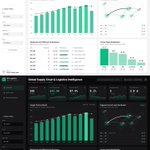
Your logistics data should do more than sit in spreadsheets.
I build dashboards that show late deliveries, exceptions and cost per route in one view. I also train ops teams in data analytics and AI.
Comment "REPORT" or DM me.
#DataAnalytics #Logistics #AIAutomation
DataChain Analytics Academy retweeted
Update on the WhatsApp invoice agent I built.
It can now send PDF to customers through WhatsApp.
Steps to generate the invoice:
Get the customer/clients details, feed it to the agent & it generates the invoice 🧾.
Then click send to WhatsApp & bump DONE ✔️.


DataChain Analytics Academy retweeted
What can you actually do with data analytics?
You can turn employee records into a workforce intelligence dashboard.
This HR Analytics dashboard brings together:
Employee headcount
Attendance and absenteeism
Recruitment and new hires
Employee turnover
Workforce performance


DataChain Analytics Academy retweeted
Supply chain analytics starts with understanding the data behind everyday operations.
Deliveries, inventory, delays and costs all tell a story.
In Week 1 of DataChain Cohort 3, we’re learning to turn that data into useful business insights using Excel.
DataChain Analytics Academy retweeted
Week 1 of DataChain Analytics Academy’s Excel & AI for Supply Chain Analytics Bootcamp — DONE.
We started with the fundamentals: understanding how supply chains work and, more importantly, how data helps businesses make better operational decisions.


DataChain Analytics Academy retweeted

The important part of a Data analysts... Ai makes mistakes and doesn't understand the core aspect of your business, is just a tool for crying out loud 😭 and it needs an expert to make good use of it
#DataAnalytics
DataChain Analytics Academy retweeted
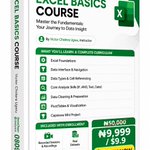
Learn Microsoft Excel!!!
Don’t end 2026 without learning how to use Microsoft Excel. This course is for both students, teachers,workers & professionals.
It has everything including videos to learn effectively.
Buy now: selar.com/1g1c14te66
Also bonus of AI & Analytics
🤖 Made with AI

DataChain Analytics Academy retweeted
Instalment payment is available.
International students who need to pay in their local currency can DM me.
Register here:
selar.com/87c357s24r
Send me a dm if you have questions

DataChain Analytics Academy retweeted
Register here:
selar.com/87c357s24r
If you want to move beyond learning Excel formulas and start building practical supply chain reporting systems, join Cohort 3.
DM me if you have questions
DataChain Analytics Academy retweeted
You can learn Excel for months and still struggle to build a reporting system that solves a real business problem.
That’s why the Excel & AI for Supply Chain Analytics Bootcamp is around practical projects, not just watching tutorials.
Here’s what previous students have built.


DataChain Analytics Academy retweeted
4 AI prompts for data analysts and supply chain professionals. Swipe and save. 👇
Cohort 3 starts 7th November. Register here:
chat.whatsapp.com/GwfvpKjAMU…


DataChain Analytics Academy retweeted
Over the weekend, our founder & lead instructor @_VictorUgwu wrapped up cohort 2 with teaching the students how to build their portfolio and this morning students are sending in their portfolio for review & also job hunting tips.
Cohort 3 registration has started, check comment


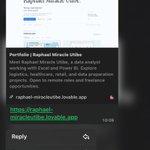
Just wrapped off Cohort 2 officially by teaching them how to build a portfolio with tools like GPT plugins , base44,Vercel etc.
This is the portfolio we’ve built :
victorfinancialportfolio.lov…
Certificates would be issued out tonight. I’m proud of this cohort.
We built lots of systems and report to help logistics businesses,however cohort 3 has registration has started.
Check the link in the attached post below to register for your slots.


DataChain Analytics Academy retweeted
Your supply chain data is not the problem.
Your reporting is.
Learn Excel, Sheets automation, Macros, ChatGPT, Gemini and Claude in 5 weeks.
30 slots. Starts 7 Nov.
selar.com/87c357s24r
DataChain Analytics Academy retweeted
Three questions every delivery report should answer.
1. What has been delivered?
Your team should be able to see completed deliveries without manually checking every record.
2. What is delayed or at risk?
Outstanding shipments need visibility, especially when they have exceeded their expected transit time.
3. What needs attention next?
A useful report should help the team identify which exceptions require follow-up.
Notice something?
None of these questions requires a dashboard with 20 charts.
It requires reliable data, clear rules, and a reporting process that supports action.
That is how I approach supply chain reporting: start with the operational problem, then build the report around it.
Which of these three questions is hardest for your team to answer quickly?
Excel is still one of the most useful tools you can learn for supply chain analytics.
You can use it to track inventory, monitor shipments, calculate KPIs, organize purchasing records, and prepare management reports.
But knowing formulas is only one part of the skill.
The bigger opportunity is learning how to combine formulas, structured data, automation, and reporting to solve actual business problems.
That is what inspired my Excel and AI for Supply Chain Analytics Bootcamp.
We start on November 7, with five weeks of live online, project-based learning.
Participants will work on practical tools such as inventory trackers, logistics reports, KPI trackers, AI-assisted reporting, and executive dashboards.
If you want to join the November cohort, join the waitlist
chat.whatsapp.com/GwfvpKjAMU…
What would you most like to learn to build in Excel?

DataChain Analytics Academy retweeted
I don’t want you to spend another five weeks watching Excel tutorials without building something you can actually use at work.
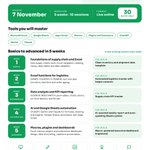
That’s why I’m preparing for the next cohort of my Excel and AI for Supply Chain Analytics Bootcamp, starting November 7.
Over five weeks, we’ll move from learning concepts to building practical tools for real supply chain and operations problems.
Here’s what we’ll work on:
Week 1: Inventory and shipment tracking tools
Week 2: Automated logistics tracking systems
Week 3: Supply chain KPI reporting tools
Week 4: AI-assisted weekly reporting with Sheets automation
Week 5: Macro-powered executive dashboards
You’ll learn to combine Excel, Google Sheets, Apps Script, macros, and AI tools to build solutions you can apply to real work.
This bootcamp is for you if you’re a:
Supply chain professional
Operations or inventory officer
Logistics professional
Business or aspiring data analyst
Professional looking to improve your reporting and automation skills
Bootcamp fee: ₦50,000 / $50.
Part-time instalment payments are also available, so you can spread your payments rather than pay everything at once.
Want to get the November cohort discount?
Join the waitlist to be among those who receive access to the discount.
Join the November waitlist:
chat.whatsapp.com/GwfvpKjAMU…
Register for the bootcamp:
selar.com/87c357s24r
My goal is simple: to help you move beyond watching tutorials and start building practical analytics tools that solve real problems.
Let me ask you something.
If you could build one tool to make your work easier, what would it be?
An inventory tracker? A logistics dashboard? An automated weekly report? Or something else?
Tell me in the comments.

Three questions every delivery report should answer.
1. What has been delivered?
Your team should be able to see completed deliveries without manually checking every record.
2. What is delayed or at risk?
Outstanding shipments need visibility, especially when they have exceeded their expected transit time.
3. What needs attention next?
A useful report should help the team identify which exceptions require follow-up.
Notice something?
None of these questions requires a dashboard with 20 charts.
It requires reliable data, clear rules, and a reporting process that supports action.
That is how I approach supply chain reporting: start with the operational problem, then build the report around it.
Which of these three questions is hardest for your team to answer quickly?