

Life is great but too short! Don't waste your time plodding thru it - go out and explore this beautiful world, even if only next door - it's worth it! Cheers!
British Columbia, Canada
Joined March 2009
- Tweets7.4K
- Following1.2K
- Followers278
- Likes22.7K







Diana Fournier retweeted
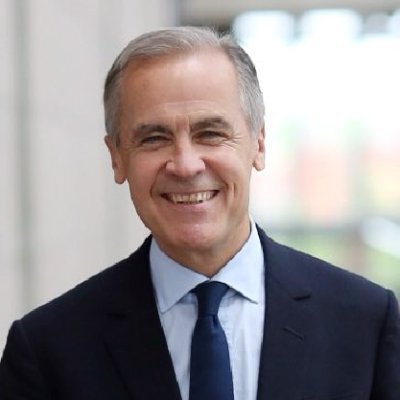
Canada is building big — and we need more skilled trades workers to get it done.
Through Team Canada Strong, apprentices who get their certification in a Red Seal trade can now get a $5,000 completion bonus.
If you recently got your Red Seal, you can apply for your bonus today:
canada.ca/en/employment-soci…
Diana Fournier retweeted

Imagine if people said don't use seatbelts, there is no proof they work, are actually more harmful than car crashes, and the occasional car smash is actually good for your kids
That's how anti vaxxers sound about measles and measles vaccine
Ridiculous
Diana Fournier retweeted
Measles vs the vaccine
I did my own research
🏥 Hospitalisation: 1 in 9 vs ~1 in 10,000
🫁 Pneumonia: 1 in 20 vs ~0
🧠 Encephalitis: 1 in 1,000 vs <1 in 3 million
💀 SSPE: 1 in 1,400 (under 5s) vs 0
⚰️ Death: 1–3 in 1,000 vs ~0
Research done. Get the shot.
Diana Fournier retweeted
How do we stop measles?
Here's data from the US
Vaccines go down 📉
Cases go up 📈
It's not complicated!


Diana Fournier retweeted

A lie can go viral overnight.
A correction might reach 200 people.
A scientific paper might reach 20.
And then we wonder why misinformation wins.
Diana Fournier retweeted

Every person has equal worth. Honoring that worth means recognizing the different barriers people face.
Equity requires us to listen, respond to people’s needs and change the conditions that limit opportunity.
Let’s examine our schools, workplaces and communities. Who is being left out? What must change so everyone can participate and thrive?
#Equity #BeLove #BelovedCommunity


Everyone watches women’s sports. It’s high time we started funding them from the grassroots on up. Equity, Diversity, and Inclusion are NOT dirty words.
ctvnews.ca/sports/article/we…

7


Diana Fournier retweeted

Health Canada says it found dangerous bacteria in tests done on more than 11,000 vials of unauthorized peptides seized from online retailers. vancouver.citynews.ca/2026/1…

Diana Fournier retweeted

Housing is healthcare.
Housing is a human right.
How can we expect people to recover from addiction, mental illness, or any serious health condition while sleeping on the streets?
Ending homelessness will take all levels of government working together to build affordable housing with the supports people need.
We know what needs to be done. Now let's stop talking about ending homelessness and start making it happen.

Budget 2026 sets Canada on a path to end homelessness within 10 years by bringing help, housing, and health together.
Today in Winnipeg, we put that plan into action in partnership with Manitoba.
Read more on our plan to end homelessness: pm.gc.ca/en/news/news-releas…

Diana Fournier retweeted

See my Joint Statement with @LenaMetlegeDiab and @vankayak on the participation of Russian and Belarusian athletes in international sport.


Diana Fournier retweeted

2026 WNBA Champs, Golden State Valkyries 🏆
The @valkyries capture a title in just their second season, becoming the fastest expansion team in league history to win a Championship!
#WNBASeason30

Diana Fournier retweeted

Russia’s deadly strikes on civilians and civilian infrastructure must stop. Canada condemns in the strongest terms Russia’s strike on Dnipro railway station. We mourn those killed and wish a swift recovery to those injured.
Diana Fournier retweeted
For the first time in a dozen years, a leading OB-GYN group has updated its guidance on managing hot flashes, night sweats, sleep changes and other disruptive symptoms that often come with menopause. vancouver.citynews.ca/2026/1…

Diana Fournier retweeted

Patient-blaming rhetoric is baked into alternative medicine.
The idea is that if you could just...
“Change your mindset”
“Live naturally”
“Eliminate toxins” (with supplements)
“Resolve trauma”
...then you can avoid serious health conditions such as cancer.
Diana Fournier retweeted

New Icelandic cultural festival coming to Vancouver vancouverisawesome.com:443/l…


Diana Fournier retweeted
I did an event in Kelowna on Saturday and there was a lot of talk about involuntary care so I wrote this last night
Here's my question to every politician pushing involuntary treatment:
If you genuinely want people to recover, why are you more focused on forcing them into treatment than addressing the conditions that make recovery so difficult in the first place?
I'm not speaking from a textbook or a political talking point. I'm speaking from lived experience.
I've lived through homelessness, poverty, trauma, mental health struggles, addiction and systems that were supposed to help but too often failed.
I know firsthand that you cannot simply force someone to want a different life, and I know how difficult it is to move forward when you're struggling just to survive.
You cannot force someone into stability. You have to create the conditions that make stability possible.
Where are your guarantees of safe, affordable housing?
Where are the meaningful employment opportunities?
Where is the accessible counselling, mental health care and long-term support?
Treatment doesn't erase poverty, It doesn't put a roof over someone's head, it doesn't magically create employment, heal trauma or give someone a sense of purpose.
And sending someone back into the same circumstances that contributed to their struggles isn't a plan for lasting recovery, it's actually insanity.
So here's my challenge to every politician advocating involuntary treatment:
Before you tell the public how many people you want to force into treatment, tell us how many people you're willing to help build a future for.
How many homes will you provide? How many employment opportunities will you create? What long-term support will you guarantee?
And most importantly, have you actually listened to the people who have lived through what you're making policies about? Because the DATA doesn't support success from forcing people.
They need dignity, they need choices, they need stability, they need hope, and they need a genuine opportunity to build a better life.
Stop asking how to force people into recovery. Start asking what you're doing to make recovery possible.
Are you trying to change people's lives, or just remove the visible evidence of the problems you've failed to address?