

🏛 🏺🌿 Hellenic Culture | Hellenic Open University 🎥 Graphic Design 📰 Reporting @GreekReporter @GreeceHighDef @TheArchaeologist @ConservaCrew
Θεσσαλονίκη, Ελλάς
Joined July 2020
- Tweets508
- Following1.5K
- Followers615
- Likes3.4K




Fresh controversy has been sparked by claims made by Turkish amateur historian and author Altan Altın, who attempts to place Homer within a broader “Anatolian tradition of epic storytelling,” going so far as to present him as a representative, 2,800 years ago, of a tradition he associates with dengbêjî, the Kurdish oral tradition of singers and storytellers.
This represents an enormous historical leap, since no chain of transmission is presented that could connect Homeric poetry with the much later documented Kurdish dengbêjî tradition. Comparing different oral traditions is scientifically legitimate and can help us understand how oral poetry functions. It does not, however, demonstrate historical continuity or a shared cultural tradition.
The picture becomes even more problematic when these claims are combined with the vague characterization of Homer as “Anatolian.” Ionia was part of the ancient Greek world, and the Homeric epics belong to a long Greek-language oral poetic tradition with a strong Ionic core. Genuine Anatolian and Near Eastern influences on Greek epic poetry constitute an important field of scholarly research, but cultural influence should not be confused with cultural identity.
As for the so-called “Homer Caves” at Bornova, there is indeed an ancient tradition associating the poet with Smyrna and the River Meles, but there is no evidence that Homer was born there or composed the epics at that location. Homer’s possible connection with Greek Ionia is therefore one matter, Anatolian influences on the Greek epic tradition are another, and presenting him as a representative of a tradition associated with Kurdish dengbêjî is something entirely different.

1
195
“Orthodoxy is spreading across the West like wildfire through dry grassland.”
Fr. Nikolaos Loudovikos
🤖 Made with AI

2
134
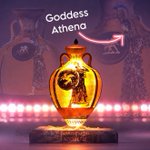
The Panathenaic Amphora Featuring the Goddess Athena at the Taranto Opening Ceremony and Its Ancient Archaeological Counterpart
Among the striking references to ancient Greek heritage during the Opening Ceremony of the Mediterranean Games in Taranto, a monumental Panathenaic amphora featuring the characteristic figure of the armed Athena particularly stood out. The choice of this type of vessel carries special significance in the context of an athletic event, since Panathenaic amphorae were genuine prizes in antiquity. They were awarded to victorious athletes at the Great Panathenaic Games in Athens and were filled with valuable olive oil.
A remarkable archaeological parallel is preserved today in the British Museum and dates to approximately 425 to 400 BC. It is an Attic black-figure Panathenaic amphora, approximately 74 centimetres high, discovered at Taucheira in ancient Cyrenaica, modern-day Libya. On one side stands Athena, fully armed between two Doric columns surmounted by cocks. The goddess wears a high-crested helmet and the aegis, brandishes a spear and carries a shield. Remarkably, the shield bears a representation of the famous Tyrannicides, Harmodius and Aristogeiton.
The opposite side of the ancient amphora reveals its direct connection with athletics. Two nude athletes are depicted exercising alongside a paidotribes, their trainer, who holds a palm branch, a traditional symbol of athletic victory. Even more revealing is the Greek inscription, «ΤΟΝ ΑΘΕΝΕΘΕΝ ΑΘΛΟΝ», essentially identifying the vessel as “one of the prizes from Athens.”
The appearance of a Panathenaic amphora in the modern ceremony therefore carried powerful symbolism. An object that accompanied athletic victory and honour in Classical Greece reappeared, in monumental theatrical form, at a major contemporary Mediterranean sporting event.

2
195
The British newspaper has corrected a clearly problematic headline following criticism over its coverage of an archaeological discovery from ancient Aspendos. The original version described a roughly 2,400-year-old tomb as likely belonging to a “Turkish wrestler.” The description was historically anachronistic, since the tomb dates from the last quarter of the 5th to the 4th century BC, more than a millennium before Turkic populations established themselves in Anatolia. The wording consequently drew criticism as a striking example of projecting a modern national identity onto the ancient past.
The Independent has now removed the controversial ethnic designation. The headline was changed from “Grave with 2,400-year-old silver coins featuring naked men likely belonged to Turkish wrestler” to “Grave unearthed in Turkey with silver coins featuring naked men likely belonged to ancient wrestler.” Replacing “Turkish wrestler” with “ancient wrestler” corrects the fundamental historical problem. Elsewhere, the deceased has also been described more appropriately as a possible “wrestler from Aspendos,” a formulation that respects the geographical and chronological context.
Importantly, the original error did not come from the official Turkish announcement. Turkey’s Ministry of Culture and Tourism described the deceased as a possible “Aspendoslu bir güreşçi,” meaning simply “a wrestler from Aspendos.” The ministry clearly dated the cist-type tomb to the Classical period and explained that silver coins of Aspendos depicting wrestlers, together with other grave goods, led researchers to suggest that the deceased may have been associated with athletics. The word “Turkish,” therefore, appears to have been a journalistic addition rather than a description used by the Turkish archaeologists or the ministry itself.
The episode may seem like a relatively minor editorial mistake, but it illustrates a serious problem in the popular presentation of archaeology. The fact that an ancient site lies within the borders of modern Turkey does not automatically make people who lived there 2,400 years ago “Turkish,” just as modern political geography cannot simply be projected backwards onto Greeks, Romans, Lydians, Phrygians or other ancient populations. The Independent’s correction was therefore necessary and serves as a useful reminder for historical journalism. Headlines may simplify complex stories, but they should never distort chronology or historical context.

3
154
A “Turkish wrestler” in the 5th century BC. The Independent has just invented historical time travel
The British Independent managed to squeeze a rather remarkable anachronism into a single headline. Reporting on the new archaeological discovery at Aspendos, it stated that a roughly 2,400-year-old tomb likely belonged to a “Turkish wrestler.” There is, of course, …one small detail. The tomb dates from the last quarter of the 5th century to the 4th century BC, roughly two millennia before Turkish populations settled in Anatolia. By that logic, Socrates may soon be presented as a citizen of the European Union simply because ancient Athens is located in present-day Greece, an EU member state.
The actual discovery is far more interesting than the headline itself. In the Eastern Necropolis of ancient Aspendos, an important city of Pamphylia, archaeologists discovered a cist-type tomb dating from the late 5th to the 4th century BC. Among the objects found inside were silver coins of Aspendos depicting wrestlers. The finds led to the hypothesis that the deceased was associated with athletics and may even have been a wrestler himself. Even this identification remains a hypothesis requiring further evidence, since the presence of coins depicting wrestlers does not, by itself, prove the profession or status of the deceased.
And here, dear friends of the page, we must give credit where credit is due. The Turkish Ministry of Culture and Tourism NEVER announced the discovery of a “Turkish wrestler.” The ministry’s official statement carefully says that the finds suggest the deceased may have been an “Aspendoslu bir güreşçi,” simply meaning “a wrestler from Aspendos.” The national designation “Turkish” was added entirely arbitrarily and unscientifically to The Independent’s headline. The official Turkish announcement, by contrast, preserves the archaeological and chronological context of the find.
The incident may be amusing, but it highlights a much more serious problem in the popularization of archaeology. Modern state borders cannot simply be projected back onto antiquity. When a headline replaces the historical context of a person who lived in the 5th or 4th century BC with a modern nationality, readers unfamiliar with the history of the region can easily form a completely distorted picture of the past. The correct wording would be “a wrestler from ancient Aspendos,” “an Aspendian wrestler,” or, more cautiously, “a possible wrestler buried at ancient Aspendos.” Present-day geography tells us where an archaeological find was discovered. It does not automatically tell us the ethnicity of a person who lived there 2,400 years ago.
✍️ Dimosthenis Vasiloudis

The worldwide attention surrounding Christopher Nolan’s The Odyssey has unexpectedly revived an old debate in Turkey concerning Homer’s connection with ancient Smyrna, modern Izmir. Recent reports have focused on the so called “Homer Caves” near Bornova, traditionally associated with the poet. There is indeed an ancient basis for the tradition. In the second century AD, Pausanias recorded that the Smyrnaeans showed visitors a cave near the springs of the River Meles where, they said, Homer had composed his poems. But the wording matters. Pausanias was recording a local tradition many centuries after Homer’s presumed lifetime, not documenting a historical event. Modern reports themselves acknowledge that there is no definitive evidence that Homer composed the Iliad or the Odyssey in this particular cave.
The more interesting issue is the language now being used around this story. Turkish researcher Altan Altın argues that Homer came from Ionia and believes the cultural references contained in the Iliad support an Anatolian background. Yet his actual position is considerably more nuanced than the impression produced by some headlines. Altın explicitly states, “Homer is Greek. Homer is Anatolian.” He also rejects turning Homer into another source of Greek Turkish rivalry. Türkiye Today itself acknowledges that Bornova belonged to historical Ionia, an ancient Greek region of the Aegean coast, and archaeologist Mehmet Akif Erdem notes that the Homeric poems employ Ionic and Aeolic forms of Ancient Greek.
There is nothing objectionable about calling Homer “Anatolian” if the term is being used strictly geographically. Ancient Ionia was located in western Anatolia, and Greek civilization there developed through centuries of interaction with the older cultures of Asia Minor and the eastern Mediterranean. Anatolian and Near Eastern influences upon early Greek religion, mythology, art and epic poetry constitute an important field of modern scholarship. Greeks did not develop in cultural isolation, and acknowledging these interactions makes our understanding of Greek civilization richer and historically more accurate.
But cultural influence and geographical location should not be confused with cultural identity.
Ionia was part of the ancient Greek world, its cities participated in Greek religious and intellectual networks, and Homeric poetry belongs linguistically and poetically to the Greek tradition.
This is precisely where we should be critical of the framing adopted by parts of the Turkish media. The problem is not the legitimate study of Homer’s possible Smyrnaean background, nor Turkey’s right to preserve and promote the archaeological heritage located within its modern borders. The problem emerges when “Anatolian” gradually replaces “Greek” or “Ionian Greek” in popular presentation. A subtle shift in terminology can create a very different historical impression for an international audience unfamiliar with the complexities of ancient Asia Minor.
“Homer lived in Anatolia” can easily become “Homer was Anatolian”, and from there, particularly in popular media, ancient Ionia risks being presented as part of an undifferentiated cultural continuum leading naturally to modern Turkey. Significantly, Altın’s own explicit acknowledgement that “Homer is Greek” makes such selective framing even more questionable.
For Greeks, the Greek Diaspora and international admirers of Hellenic culture, the appropriate response should therefore be historical accuracy. Homer does not need to be detached from Anatolia in order to remain Greek. Quite the opposite. The Greek cities of Asia Minor demonstrate how deeply rooted Hellenic civilization was on both shores of the Aegean and how creatively it interacted with Anatolian peoples and traditions.

Despite the efforts of the Greek YouTuber Konstantinos, known as The Mythologist, to distance himself from Christopher Nolan’s casting choices for The Odyssey, I find the criticism expressed by the Italian YouTuber @pureMetatron regarding the casting of Black actress Lupita Nyong’o as Helen far more convincing.
For me, the issue is neither an actress’s skin color nor her merit as an artist. The real issue concerns the deliberate reconstruction of the visual representation of a specific cultural world. Metatron’s criticism places this choice within a broader philosophical and aesthetic framework of deconstruction and postmodern reinterpretation of the Western cultural canon. When such practices are presented simply as “cinematic choices,” they can easily become vehicles for contemporary ideological narratives, including extreme Afrocentric and woke interpretations of Greek antiquity.
For this reason, we consider criticism of so-called “blackwashing” legitimate. Cinema certainly possesses creative freedom. Creative freedom, however, does not make an aesthetic choice immune to historical, philosophical, or cultural criticism.
We cannot invoke historical and mythological ambiguity in order to present every contemporary representation as equally compatible with the cultural context of antiquity.
We can therefore disagree with Konstantinos without questioning either his intentions or his knowledge, and we wish him every success with his new English-language channel. In this particular debate, however, we believe that Metatron raises a more substantive question.
When does an artistic reinterpretation constitute creative freedom, and when does it become an ideological reconstruction of the past?

1
119
Christopher Nolan’s The Odyssey has sparked widespread discussion among historians and archaeologists over its portrayal of the Mycenaean world. While many of the film’s costumes, armor, and weapons have been criticized for drawing inspiration from different historical periods, one artifact appears to stand apart: a Mycenaean Type G sword.
This distinctive bronze sword is a well-documented weapon of the Late Bronze Age and is closely associated with the Mycenaean civilization, the cultural setting traditionally linked to the Homeric epics. Archaeological discoveries from sites such as Mycenae, Tiryns, and Pylos have revealed numerous examples of this sword type, making it one of the most recognizable weapons of the period.
Its appearance in the film suggests that the production did incorporate at least one artifact based on genuine archaeological evidence. However, critics argue that it remains an isolated example within a broader visual design that departs considerably from what is currently known about Mycenaean material culture. As a result, the Type G sword has become an unexpected focal point in the ongoing debate over the historical authenticity of Nolan’s cinematic interpretation of Homer’s epic.

‼️ Excellent remarks by Eugenia Sarigiannidi on Christopher Nolan’s The Odyssey and today’s cultural conflict during the Review program on Naftemporiki TV, hosted by Irena Argyri.
💥 “The attack on Homer and ancient Greek civilization did not begin with Nolan. For years, there has been an effort to dismantle Classical Greek studies because they are viewed as representatives of ‘whiteness’ and ‘patriarchy.’”
💥 “The real issue is not the limits of art. It is the abolition of art, knowledge, history, and aesthetics themselves.”
💥 “The debate over artistic freedom is largely a pretext used to conceal what is actually taking place.”
💥 “When art becomes ideologically driven, it slides into propaganda.”
💥 “Hollywood functions as a mechanism of propaganda, shaping new mindsets, new values, and new ways of thinking.”
💥 “Through art, there is an attempt to impose lessons in political correctness, inclusion, diversity, oikophobia, and what she describes as reverse racism.”
💥 “This particular film appears to be aimed more at teaching political correctness than at artistic creation.”
💥 “The real question is whether we can develop the psychological and intellectual resilience needed to recognize and resist propaganda.”
💥 “The true impact of public reactions will be measured by the film’s commercial success or failure, not by likes and dislikes.”
💥 “Those who object are defending their connection to history and refusing to become people without a past or a future.”
💥 “Cancel culture acts as an eraser that wipes away the past and as a pen that seeks to rewrite history.”
💥 “We are witnessing the decline of Western civilization, which appears to have lost its instinct for collective self-preservation.”
💥 “Globalized capitalism and ruling elites promote this condition through mechanisms of propaganda.”
💥 “Severing Western civilization from its ancient Greek roots serves both political and economic interests.”
💥 “The only hope for Western civilization to achieve genuine democracy and a truly human-centered future is to preserve its living connection to its Greek roots.”
💥 “A segment of Western civilization has long maintained a hostile attitude toward Greek civilization, despite the fact that it is its own foundational source.”
💥 “The answer is not to abandon tradition, but to assimilate it and creatively modernize it so that it remains alive in the present.”
🤖 Made with AI

Faithful representation of Polynesians, Japanese people, Native Americans, and other cultures is considered important and essential in modern film productions.
But when Greeks and other Westerners ask for accurate representation of our own culture, appearance, and historical identity, we’re labeled supremacists, racists, or people manipulated by Elon Musk.
Respect your own heritage first, then respect everyone else’s.


Nikolaidou argued that Lupita Nyong’o’s remarks criticizing Homer amounted to an anachronistic interpretation of the epic, one that reshapes one of the greatest works of world literature to fit a contemporary neo-feminist and identity-based ideological narrative instead of respecting its historical and literary context.
According to the professor, ancient Greek literature, and especially the deliberative spirit reflected in the Homeric epics, laid the intellectual foundations of Western civilization, universalism, racial colorblindness, and democratic thought. For this reason, she argued that interpreting the epics through modern racial and political frameworks fundamentally alters their original meaning.
She further claimed that Afrocentrism has become the spearhead of a broader ideological movement that portrays white people collectively as historical oppressors. In her view, replacing the Homeric archetype of the “white-armed” Helen (“leukōlenos Helen”) is part of an effort to impose a new ideology of racial identity politics, which she described as hostile toward the concept of “whiteness.”
Concluding her remarks, Nikolaidou argued that this artistic choice shows no respect for Homer’s original work, maintaining that the ideas expressed in the Homeric epics became one of the principal intellectual pillars upon which Western civilization was built.
🤖 Made with AI

Her response disappointed many Greeks, especially members of the Greek diaspora and those who believe the controversy is not about censorship, but about the representation of Greece’s historical and cultural heritage in a major international production. Critics argue that by framing the issue as one of artistic freedom versus state censorship, the minister avoided engaging with the broader discussion over historical authenticity, identity politics, and the film’s reinterpretation of one of the foundational works of Greek civilization.
Many observers also point out what they see as a striking contrast. While journalists, scholars, and audiences across the Western world have publicly defended the importance of respecting the cultural roots of Homer’s epic, Greece’s own Ministry of Culture has chosen to remain largely detached from the global conversation. According to these critics, the expectation is not for the government to censor Christopher Nolan, but for Greece’s official cultural institutions to articulate and defend the significance of the country’s literary and historical heritage, especially when the production has also benefited from Greek public support.
🤖 Made with AI

One of the biggest attractions at the Mumbai premiere of The #Odyssey was the imposing helmet created for #Agamemnon, the legendary king of #Mycenae and commander of the Greek coalition during the Trojan War.
The striking prop, designed for Christopher #Nolan’s epic, immediately drew attention not only for its craftsmanship but also because its appearance has already sparked debate among historians and archaeology enthusiasts, many of whom argue that it differs significantly from what a Late Bronze Age #Mycenaean royal helmet would likely have looked like. Despite the controversy over its historical accuracy, the helmet has become one of the film’s most recognizable visual symbols, giving fans a rare opportunity to see a centerpiece of the production up close while showcasing the remarkable artistry behind Nolan’s ambitious adaptation of #Homer’s epic.
🤖 Made with AI

9
6
1,478
Recent comments by Lupita Nyong'o, suggesting that the new film adaptation of The Odyssey will be presented through a strongly "female perspective," reinforce the view that the ideological reshaping of art has become firmly embedded at the core of modern Hollywood.
Rather than approaching classical masterpieces with respect for their historical, philosophical, and cultural context, they are increasingly being turned into vehicles for promoting contemporary political narratives. Homer's Odyssey is no longer treated as one of the foundational works of Western civilization but as a text that must be "corrected," redefined, and adapted to fit today's prevailing ideological agenda.
Many critics associate this trend with the growing influence of neo-Marxist, radical feminist, and woke perspectives within the entertainment industry, where nearly every historical work is interpreted primarily through the lenses of oppression, gender, race, and identity. They argue that the result is not "creative renewal," but rather the dismantling of cultural heritage, the separation of these works from their original meaning, and their replacement with contemporary ideological filters.
For the overwhelming majority of the public, and for us as well, this systematic reinterpretation is not an artistic choice but a clear indication of a broader cultural conflict, in which ancient Greek heritage and Western civilization more broadly are increasingly treated as objects to be deconstructed rather than as cultural achievements deserving to be presented with historical fidelity.
🤖 Made with AI

242
#Slavery was an integral part of ancient Greek society, and most Athenian households owned at least one slave. Slaves came from many backgrounds, including prisoners of war and people who had fallen into debt, and although they lacked political rights, their living conditions in #Athens were often better than those of slaves elsewhere in the ancient world. Their labor played a significant role in the city's economy and daily life.
The #Parthenon was built between 447 and 432 BC during the ambitious building program of Pericles, funded largely through the Delian League. Constructing such a monumental temple required highly skilled architects, quarrymen, sculptors, carpenters, blacksmiths, and stonemasons from across the Greek world. Citizens, metics (resident foreigners), and slaves all contributed to the project.
Historical records indicate that slaves did help build the Parthenon, but they did not form a separate, unpaid labor force. Instead, they worked alongside free Athenians and metics, often performing the same specialized tasks for the same wages. Unlike the harsh conditions in the Laurion silver mines, public building projects on the Acropolis operated under state supervision and relied on a mixed workforce of skilled and unskilled laborers.
Evidence from surviving construction accounts, including those of the Erechtheion, reveals a complex labor system in which social status did not necessarily determine the type of work performed. While enslaved workers often passed part of their wages to their owners, the Parthenon ultimately emerged from the combined efforts of citizens, foreigners, and slaves alike, reflecting both the remarkable achievements and the social contradictions of #Classical Athens.

6
271
It is truly remarkable that, nearly three millennia later, the Homeric epics continue to inspire modern global pop culture. Despite the inevitable cuts and bad changes required for a major #Hollywood production, it is hard not to be struck by the sight of some of Hollywood’s biggest stars wearing jerseys bearing the #Greek names of heroes and figures from the #Odyssey. It is yet another reminder that the stories born in the ancient Greek world continue to shape international art and entertainment, proving that Homer remains very much alive in humanity’s collective imagination.
Several of the names featured on the jerseys belong to the most iconic characters of the Odyssey. Agamemnon was the supreme commander of the Achaean forces during the Trojan War and the brother of Menelaus. Eurylochus was one of Odysseus’ most important companions and often voiced the concerns and fears of the crew. Eumaeus was Odysseus’ devoted swineherd, who remained loyal to his master until his return. Antinous was the most arrogant and violent of Penelope’s suitors, becoming the first to be struck down by Odysseus upon his return to Ithaca.


120
Maritime archaeologists have discovered the remains of the only known #Nabataean temple outside the ancient Nabataean homeland in the Bay of #Naples, near the #Roman port of Puteoli. The find includes marble altars, plastered rooms, and a Latin inscription reading Dusari sacrum ("Dedicated to Dushara"), confirming the presence of a sanctuary devoted to the Nabataean chief deity.
The discovery highlights the important Nabataean merchant community that flourished in Puteoli between the 1st century BC and the 2nd century AD, where traders brought not only luxury goods but also their religious traditions. At the same time, the Roman-style altars and Latin inscription demonstrate how the Nabataeans preserved their identity while adapting to the cultural environment of the Roman Empire.
@MStefanile


Zendaya’s Earrings Are Not Exactly “Ancient Greek” in Style
Several reports claimed that the earrings Zendaya wore as the goddess Athena were “inspired by ancient Greece.” However, their creator, the house of Glenn Spiro (Barron London), clearly states that they were inspired by the gold plaques of Ziwiye, a famous 8th to 7th century BC treasure from northwestern Iran. Therefore, linking them exclusively to ancient Greece is a historical leap that is not supported by their stated origin.
The Ziwiye Treasure is considered one of the most important metalwork assemblages of the Iron Age and reflects the artistic tradition of the ancient Near East. Its characteristic motif, with a circular disk, central boss, and radiating points, appears in Assyrian, Urartian, Iranian, and Scythian art as the result of centuries of cultural interaction.
This does not mean that ancient Greek goldsmiths were unfamiliar with similar disks or rosettes. It means that this specific jewel has a clearly stated Iranian origin, according to its own creator. Historical accuracy requires us to recognize the real origin of objects and avoid easy attributions of motifs that belong to the shared cultural heritage of the ancient Near East.
#nolan #odyssey #homer #troy

One of the most fascinating details in Game of Thrones is the scene in which Tyrion #Lannister drinks from a cup modeled after the famous Vapheio Cup, one of the masterpieces of #Mycenaean goldsmithing. The original dates to around 1500–1450 BC, was discovered in a tholos tomb at Vapheio in Laconia, #Greece, and is now housed in the National Archaeological Museum of Athens. Its appearance in the series is a wonderful example of how the artistic legacy of ancient Greece continues to inspire modern film and television productions.
The celebrated Vapheio Cups belong to the “gold-rich” Mycenaean civilization, famously described by #Homer as “polychrysos” (“rich in gold”). This Bronze Age #civilization was renowned for its wealth, extraordinary craftsmanship, monumental architecture, and extensive trade networks that stretched across the eastern Mediterranean. Decorated with exquisitely repoussé scenes of bull capture hammered into thin sheets of gold, the cups rank among the finest surviving masterpieces of prehistoric European metalwork and stand as enduring symbols of Mycenaean artistic excellence.
🤖 Made with AI

3
111
🦴 Small Brain, Complex Minds? New Study Reshapes the Story of Human Evolution
A groundbreaking new #study published in Cell has revealed that none of the 20 #Homo naledi individuals analyzed carried the male enamel protein marker (AMELY), raising the possibility that all belonged to females. If confirmed, this extraordinary finding would provide the oldest known evidence of selective #burial practices, dating to approximately 335,000–241,000 years ago, pushing complex mortuary behavior back by more than 200,000 years.
Such a discovery challenges the long-held assumption that sophisticated social and symbolic behaviors required large brains, suggesting instead that Homo naledi, despite possessing a brain only about one-third the size of modern humans, may have intentionally treated their dead in remarkably complex ways. While alternative explanations, including an unusual biological feature of the species, are still being investigated, the study is already regarded as one of the most provocative and potentially paradigm-shifting discoveries in human evolution in recent decades.
🤖 Made with AI

91