

Turned in dope trafficking ring in N.Y state. Let DEA use my yard. To bust meth next door. Hacked everything in the house using the yard. On ARCGIS ESRI ips.
Western Newyork State
Joined March 2021
- Tweets35.9K
- Following4.4K
- Followers3.4K
- Likes77.6K




Pinned Tweet
xitter.gq/DogAtmosphere/status/2… Right here. #havanasyndrome

Car hackers using multiple beam forms of 5g electronic warfare. Hitting my engine components. America has a real war going on against their own people. Automotive sabotage. This hit reduces yiyr new cars power in half. #havanasyndrome #geoengineering


DARPA funded the development of sensors small enough to resemble grains of dust. Years later, researchers at UC Berkeley demonstrated tiny electronic implants powered by ultrasound that could communicate with nerves inside the body.
Then they developed StimDust, a device capable of stimulating a rat's nervous system and producing controlled movement in its hind leg.
These aren't concepts pulled from science fiction. The research, technology and experimental results are documented by DARPA and the University of California, Berkeley.
And they raise serious questions about where this technology is heading.
THE ORIGINAL SMART DUST PROJECT
In the late 1990s, UC Berkeley professor Kristofer Pister led research into miniature wireless sensors under DARPA funding.
The objective was to develop tiny electronic devices capable of sensing environmental conditions, processing information and communicating wirelessly.
Military applications included battlefield surveillance, equipment monitoring and distributed sensor networks.
Researchers even explored winged designs resembling falling maple seeds.
Imagine thousands of miniature sensors distributed across an area, gathering information and transmitting it to a monitoring network.
The research wasn't limited to military applications. Scientists also envisioned environmental monitoring, industrial automation and commercial sensor systems.
Read UC Berkeley's original Smart Dust project documentation: www2-bsac.eecs.berkeley.edu/…
THEN CAME NEURAL DUST.
On August 3, 2016, DARPA announced that researchers at UC Berkeley had developed implantable wireless sensors capable of recording electrical activity from nerves and muscles.
The devices were approximately a few millimeters in size and used ultrasound to receive power and transmit information.
Instead of relying on traditional batteries or radio communications, these tiny sensors used piezoelectric crystals to convert externally transmitted ultrasound into electrical energy.
DARPA described potential applications involving chronic nerve monitoring, biosensing and neuromodulation.
The initial experiments were performed in rodents.
DARPA'S OFFICIAL ANNOUNCEMENT: darpa.mil/news/2016/implanta…
THEN, IN 2018, RESEARCHERS WENT FURTHER.
UC Berkeley announced StimDust, a wireless peripheral nerve stimulator measuring just 6.5 cubic millimeters.
It weighed approximately 10 milligrams and operated using ultrasound transmitted from an external device.
Researchers surgically implanted StimDust around the sciatic nerve of a rodent.
By controlling the electrical stimulation delivered through the implant, they produced measurable movement in the animal's hind leg.
The researchers could measure stimulation activity, muscle response and the amount of force generated.
The implant demonstrated that extremely small electronic devices could receive power wirelessly and deliver controlled electrical stimulation to nerves inside a living organism.
UC BERKELEY'S 2018 ANNOUNCEMENT: news.berkeley.edu/2018/04/10…
READ THE PUBLISHED STIMDUST RESEARCH: escholarship.org/uc/item/8px…
Now think about the implications.
The documented experiment involved an implanted device, an external ultrasound transmitter and a specific peripheral nerve.
But it established an important technical capability: electrical stimulation could be delivered to a nerve through a miniature device powered and controlled wirelessly.
What happens as these devices become smaller, more sophisticated and capable of communicating with larger networks?
What protections prevent their use without informed consent?
And what happens when biosensors, neural interfaces, artificial intelligence and continuous physiological monitoring become increasingly interconnected?
There are legitimate medical applications for these technologies, including treating neurological disorders, restoring lost function and improving medical monitoring.
But the ability to interact electronically with the nervous system also demands serious discussion about privacy, cybersecurity, ownership of physiological data and individual autonomy.
At Mind Nexus, we've scanned thousands of people around the world who report unexplained frequencies, pressure, vibrations, perceived electronic interference and other unusual experiences.
We use specialized RF analysis and Non-Linear Junction Detection equipment to document anomalous frequencies around individuals, possible emissions within their environments and nonlinear harmonic responses.
Our focus is on documenting what can actually be measured and pursuing evidence-based investigation.
The public deserves to understand the technologies being developed to interact with the human body.
When electronics can communicate with the nervous system, shouldn't the right to refuse that technology be just as important as the ability to develop it?
EXPLORE THE MIND NEXUS DOCUMENT ARCHIVE
Government research, DARPA programs, patents, biosensors, neurotechnology and scientific publications: MindNexusLive.com/documents
JOIN THE MIND NEXUS EMAIL LIST
Stay informed about emerging technologies, investigations, scientific research and newly released documents.
MindNexusLive.com
PRIVATE ONE-ON-ONE SCANNING — RENO, NEVADA
Phase 1 — Scanning & Documentation
RF analysis documents anomalous frequencies around a person and possible emissions within the surrounding environment.
EDD-24XT NLJD scanning documents nonlinear harmonic responses associated with possible semiconductor-type electronic anomalies, including components that may not actively transmit.
Phase 2 — Coaching & Next Steps
May include coaching, frequency research, controlled verification, additional technical analysis, expert review and identifying qualified outside professionals.
Learn more and register: MindNexusLive.com/scans
Scanning is NOT a medical diagnosis. Our scans detect anomalous frequencies around a person and within the environment, not inside the body. Findings are for informational purposes only and can support personal investigations.
MASTERPEACE — THE PUBLISHED GHOST STUDY
Published October 5, 2026, the GHOST study followed 22 participants over 63 days of MasterPeace use with standardized EDD-24XT NLJD scanning.
At baseline, all 22 participants showed second-harmonic-dominant responses classified as "Probability Silicon."
After 63 days, researchers reported:
79% reduction in Mean Signal Intensity Score.
67% reduction in Active Signal Spots.
38% reduction in Mean Signal Intensity per Detection Site.
These are measurable changes in nonlinear harmonic responses documented before and after the 63-day period, providing additional data for continued investigation.
READ THE GHOST STUDY: actascientific.com/ASMS/pdf/…
CREATE YOUR FREE MASTERPEACE ACCOUNT:
MindNexusLive.com/masterpeac…
PETITION — STOP NON-CONSENSUAL HUMAN TESTING
Our goal is 1,000,000 signatures demanding transparency, accountability and protection of informed consent.
Stop3024.com
FOLLOW MIND NEXUS
Facebook: @MindNexusLive
Instagram: @MindNexusEvents
X: @MindNexusLive
YouTube: @MindNexusLive
Rumble: @MindNexusLive
#MindNexus #SmartDust #NeuralDust #StimDust #DARPA #UCBerkeley #Neurotechnology #Biosensors #InternetOfBodies #BrainComputerInterface #Neuromodulation #HumanRights #InformedConsent #MasterPeace #GHOSTStudy #NLJD
1
45
#havanasyndrome is real and heres how its done. Why the lies and cover ups? 11 years with no criminal history. xitter.gq/i/broadcasts/2JQebKepQ…

doc.arcgis.com/en/indoors/mo… So I have a 10 second refresh rate. On arcgis indoor positioning system. From phone hackers. I have the maps icon showing next to my android battery icon even 10 seconds. Whats the matter scared? Default refresh! #havanasyndrome

3
47
I could see if if I had any criminal history whatsoever. But nothing! I turned in a huge Meth trafficking ring my local area. I am hacked to f*ck around here. Because of idiots dope! King pin #havanasyndrome attacker. Is a hit man service. Hired by traffickers. 2Keep victim away.
13

xitter.gq/DogAtmosphere/status/2… Again attacks in California of #havanasyndrome in 2015 before havana Cuba. 5g pencil beam tracking. Test bedding. Any questions?
cbsnews.com/sanfrancisco/new… WOW BEFORE #HAVANASYNDROME IN THE USA. BEFORE HAVANA CUBA ARE WE STILL GOING TO TRY TO COVER UP. THIS HUMAN TRAFFICKING HERE? 2015

24
xitter.gq/MarkSZaidEsq/status/21… #havanasyndrome wanna know where they are?


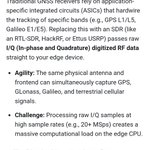
Embodied Artificial Intelligence (AI) on edge devices (smartphones, laptops, etc.)
Combining biological protein nanowires, memristors, and microelectrical mechanical systems (MEMS) sensors in edge chips allows AI to process physical signals at biological voltages (40–100 mV). This compute-in-memory architecture eliminates cloud latency, enabling edge devices to locally sense, learn, and adapt in real time to achieve true embodied artificial intelligence.
Recent advances in intelligent nano-micro-scale sensors and actuators integrate on-chip energy harvesting, high-speed photonic edge computing, and real-time machine learning inference. These breakthroughs merge perception, processing, and power into ultra-compact, battery-free systems designed for perpetual autonomous operation at the physical sensor interface.
advanced.onlinelibrary.wiley…
KEY TECHNOLOGIES
🔸Energy-Autonomous Nanogenerators
Energy-autonomous nanogenerators serve as the foundational power plants for next-generation Edge AI microsystems, converting raw environmental stimuli directly into regulated electrical energy.
cordis.europa.eu/project/id/…
Skin-conformal triboelectric fabrics and nanogenerators harvest ambient mechanical energy to power wearable and implantable nodes without external batteries.
pubs.aip.org/aip/apm/article…
🔸Flexible & Implantable AI-Enhanced BioMEMS Sensors
Advanced substrates like graphene and MXenes improve biocompatibility for continuous, real-time physiological tracking.
mdpi.com/2072-666X/16/8/902
🔸Photonic Integrated Circuits (PICs)
Mid-infrared and terahertz metasurfaces enable ultrafast in-sensor computation and real-time Bayesian photonic neural inference with minimal latency.
link.springer.com/article/10…
🔸Heterogeneous Sensor-Actuator Co-Design
Monolithic integration of micro-actuators with smart materials creates dynamic feedback loops for soft robotics and adaptive optics.
sciencedirect.com/science/ar…

29
google.com/search?q=examples… #havanasyndrome studies using multiple cell sites as a phased array. Setting up distributed 5g pencil beam form to track target for a hit. Using nodes and A.I closed loops.

1
117
#havanasyndrome and surveillance abuses from live highway geo fencing #CARINT #SIGINT Cell tower 5g distributed dynamic electronic warfare. Since 2016 airport upgrades. Autotonomous highway fleet tracking. Engine kill,engine block with geo fencing pre selected spots on the road.
23

xitter.gq/DogAtmosphere/status/2… Come get your surveillance idiots here. You have a section 8 amongst your best. #havanasyndrome
30
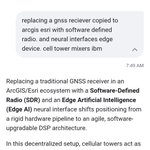
Autotonomous live mapping in 2016 upgraded here. Enforcer style software integrations with Arcgis esri with live highway mapping can be used like police enforcer software. As they can lock onto a car and tell the year make model. Color engine size. Track them to a campus door Pt1
1
10
Part2 As soon as the victim gets to the spot where they enter a building the victims phones take over for an indoor positioning system takes place with the smartphone tracking and Rooting is used. They then can use the victims phone for intelligence sniffing. #havanasyndrome
11
#havanasyndrome victims GPS SMARTPHONE SPOOFING. Rooted smartphone. Edge device computing. The GPS blue maps dot location is put demographically where the victim phone isn't. Body assaulting. As the device is used through Arcgis esri and ibm. Elevation sensor during car commutes.
23
ONSTAR SPOOFING in your car can be heard. Through your dash speakers. Where they onstar rep. Speaks "welcome to onstar". You can hear the static in the speakers. As the havana syndrome victim location is hidden. Jamming the cellular signal. Hide victim for vehicular attacks.
7
Colosseum
Open RAN (Radio Access Network) Digital Twin
World’s most powerful wireless network emulator
colosseum.sites.northeastern…
Colosseum Software
colosseum.sites.northeastern…
SCOPE
Open & Softwarized Prototyping Platform for NextG Systems
github.com/wineslab/colosseu…
SCOPE is a dev environment for softwarized & virtualized NextG cellular networks based on srsRAN.
SCOPE has been prototyped & benchmarked on the Colosseum wireless network emulator, where an LXC container of SCOPE has been made available, & it is portable to LXC-enabled testbeds.
ece.northeastern.edu/winesla…
srsRAN Project
The srsRAN Project is a complete 5G RAN solution, featuring an ORAN-native CU/DU developed by Software Radio Systems (SRS).
github.com/srsran/srsRAN_Pro…
srsRAN Project Docs
docs.srsran.com/projects/pro…
4/5G Network Software
4G/5G Cellular Networking srsLTE is a free & open-source LTE software suite developed by SRS.
srs.io
Open source Software Defined Radio (SDR) 4G software suite from SRS
docs.srsran.com/projects/4g/…
MATLAB to Build Colosseum RF Scenarios
Docs on how to use MATLAB ray tracing to create RF scenarios for the Colosseum wireless network emulator, & relevant examples of available Colosseum scenarios created w/ this tool.
colosseum.sites.northeastern…
ColORAN
The first publicly-available large-scale O-RAN testing framework w/ software-defined radios-in-the-loop. Building on the scale & computational capabilities of the Colosseum wireless network emulator, ColO-RAN enables ML research at scale using O-RAN components, programmable base stations, & a “wireless data factory”.
arxiv.org/pdf/2112.09559.pdf
The RAN Intelligent Controller (RIC), capable of executing custom control logic via so-called xApps. Ultimately, these efforts will render the monolithic RAN “black-box” obsolete, favoring open, programmable and virtualized solutions that expose status to be & offer control knobs thru standardized interfaces.
arxiv.org/abs/2005.10027
OpenRAN Gym
An open toolbox for data collection & experimentation w/ AI in O-RAN. OpenRAN Gym leverages a set of experimental platforms, including Colosseum.
openrangym.com/
DragonRadio
SC2 Competition SDR
Seamless integration between low-level C++ code & high-level Python code using pybind11(github.com/pybind/pybind11)
OFDM PHY layer. Included PHY layers are based on liquid-dsp. However, the PHY interface is modular and not tied to liquid-dsp, so other PHY layers could easily be integrated.
drexelwireless.github.io/dra…
liquid-dsp
digital signal processing library for software-defined radios
liquidsdr.org/
open-source digital signal processing library designed specifically for software-defined radios on embedded platforms.
github.com/jgaeddert/liquid-…
liquid-dsp API
liquidsdr.org/api/
Mitik
In this project, we propose to deploy a (scientifically determined) number of passive sniffers to measure spatiotemporal link-level activities of wireless devices in a target area.
The idea is to leverage the fact that mobile devices are likely to transmit Bluetooth & Wi-Fi packets even when users are not explicitly manipulating their devices.
project.inria.fr/mitik/
Objectives
project.inria.fr/mitik/objec…
MITIK-LINK: MAC Address Association Tool
inria.hal.science/hal-048183…
MITIK-SENS: Privacy-Preserving WiFi Sniffer Tool
inria.hal.science/hal-048180…
MITIK-TRAJ: WiFi Devices Trajectory Inference Tool
hal.science/hal-04925002/fil…
MITIK-MGMT: Data Collector Management Tool
inria.hal.science/hal-048183…
BodyCloud
A Software-as-a-Service (SaaS) approach for community Body Sensor Networks
sciencedirect.com/science/ar…
Public-Key Authentication for Cloud-based Wireless Body Area Networks (WBANs)
eudl.eu/doi/10.4108/icst.bod…
A new biometrics-based key establishment protocol in WBAN
sciencedirect.com/science/ar…
Energy-efficient relay node selection scheme for sustainable WBANs
sciencedirect.com/science/ar…
MsM
Microservice middleware for smart Wireless Sensor Network-based IoT application
sciencedirect.com/science/ar…
1
2
51
