

PhD Materials Chemist | Biomaterials & Small Molecules | Decoding the Chemistry of Drugs & Supplements | How They're Built, Why They Work, What's Myth
Ontario, Canada
Joined September 2017
- Tweets3.2K
- Following6.8K
- Followers8.1K
- Likes7.9K

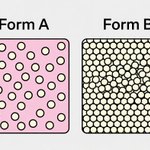



Same atoms. Same formula.
Mirror-image shape. Different job.
Mouse study, Nature Communications: L-BAIBA, not its mirror twin D-BAIBA, boosted running performance and muscle function.
doi.org/10.1038/s41467-026-7…

32
Useful list. One label detail on magnesium: the 300-400 mg usually means elemental magnesium. Magnesium glycinate is only about 14% magnesium by weight, so the compound dose on the bottle is much bigger than the magnesium you get.
2
Ammonia makes a smart hydrogen carrier: it is 17.6% hydrogen by weight and liquefies under 10 bar at room temperature. Cracking it efficiently has been the bottleneck, so high conversion is a big deal.
3
Beautiful biology. Insulin also switches on lipoprotein lipase in fat tissue, freeing fatty acids from circulating triglycerides for uptake, while shutting off hormone-sensitive lipase inside the cell. Storage on, release off.
14
Exactly right. Somatic cells are mostly white blood cells plus some shed udder lining cells, and pasteurization at 72 C for 15 seconds destroys them along with pathogens. Cell counts are a quality marker farmers watch closely.
1
5
Great story. The fat was heptadecanoic acid, C17:0, an odd-chain saturated fat found in dairy. Dolphins fed fish richer in C17:0 showed better insulin and ferritin markers, a reminder that not all saturated fats act alike.
5
The chemistry is elegant. Chlorine in water forms hypochlorous acid, HOCl, a small neutral molecule that slips through bacterial membranes and oxidizes their proteins. Typhoid deaths fell sharply in cities that adopted it.
4
Concentration is the issue. A cup of green tea has roughly 50-100 mg of EGCG, but extracts can pack several hundred mg into one capsule, often taken on an empty stomach, and high-dose EGCG is the form tied to liver injury.
15
Helpful reminder. Vitamin D is fat-soluble, so taking it with a meal that contains some fat can improve absorption. Handy label conversion too: 10 micrograms is the same as 400 IU.
6
The pairing is neat chemistry. L-theanine is an amino acid found mainly in tea leaves; it crosses into the brain and is linked to more alpha-wave activity. One reason tea often feels calmer than the same caffeine from coffee.
5
Nature beat us to it again. Cable bacteria pass electrons along centimetre-long filaments, and finding metal-organic frameworks inside them links microbiology to a materials class chemists only named in the 1990s.
2
A true giant. His work on self-assembled monolayers, thiols ordering themselves on gold, and on soft lithography shaped surface chemistry and microfluidics for decades. So many of us learned to think about surfaces through his papers.
3
Encouraging trend. PFOA and PFOS last so long because the carbon-fluorine bond is one of the strongest in organic chemistry, about 485 kJ/mol. Falling levels likely reflect phase-outs at the source, proof that controls can work.
2
Fascinating target. A big reason older eggs make chromosome errors is that cohesin, the protein ring holding sister chromatids together, wears out with age. Stabilizing that grip chemically is a clever fix for a mechanical problem.
1
7
Huge step for a drug with a tough supply story. Paclitaxel was first pulled from Pacific yew bark, and its biosynthesis takes around 20 enzymatic steps, so rebuilding that pathway inside a plant is a real feat.
2
What a treasure. Much of the Leiden Papyrus X reads like a workshop recipe book, with methods for imitation gold and silver alloys and dyes. Early alchemy was often careful, practical metallurgy long before theory caught up.
2
Urine really did transform chemistry. In 1669 Hennig Brand boiled down huge amounts of it hunting for gold and isolated phosphorus instead, the first element found by a known person. It glowed as it reacted with air.
4
Cooking chemistry in action. Hot oil breaks down and throws off fine droplets plus aldehydes like acrolein, and high-heat frying makes far more than boiling or steaming. A hood vented outdoors makes a real difference.
2
Love this. The key sensor is melanopsin in special retinal cells, most sensitive to blue light near 480 nm. That is why warm, dim light in the evening suppresses melatonin far less than bright white LEDs.
3