

Independent Australian economic research institute. We use innovative data and modern research methods to help tackle the big problems facing our society.
Sydney, Australia
Joined July 2022
- Tweets896
- Following108
- Followers1.7K
- Likes27

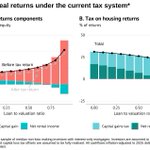
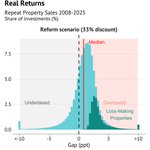

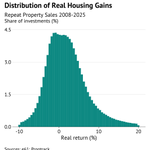


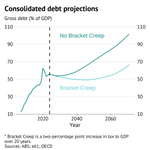
GST has been in the media again in recent weeks, with calls to increase and broaden it while cutting income tax rates to compensate. In this week’s plus61, Josh Clyne (@JoshClyne7) and Matt Nolan (@ZjubNZ) draw on research from the UNSW-e61 partnership to argue that in the long term a GST is just a better income tax – simpler, with fewer gaps and no longer double taxing the decision to save. But a tax-mix switch has transitional effects that could be substantial, including a one-off transfer from older to younger Australians.
e61.in/what-happens-if-we-ma…
“We are more like cartographers than captains.” e61 CEO, Michael Brennan on the role of economists in public policy.
At the University of Wollongong’s Annual Economic and Social Policy Lecture, Michael Brennan explored what economics can – and can’t – do for the public good 👇
His answer? “Draw the map honestly: Mark the cliffs, the currents and the trade-offs nobody wants to hear about. Then step back while the community, and the people who govern it, decide where to sail.” 2/3
He argues that the ‘credibility revolution’ in economics (better data and research methods that separate cause from correlation) can help economists stay humble and relevant in policy debates. 3/3
Read the full speech 👉 bit.ly/4jy7nOC
Immigration is once again dominating the political conversation, but the debate rarely turns to the next generation – the children of migrants, who now make up almost one in three 15-year-old Australian students. In most developed countries, these students do worse at school than their non-immigrant peers. In this week’s plus61, Pelin Akyol (@SPelinAkyol) and Michael Brennan dig into why Australia is a rare exception.
e61.in/where-australia-tops-…
What matters most is how the revenue is used.
Raise the GST or broaden its base, return the money as an equal cash payment to every adult, and the reform is progressive on every measure. 5/6
Read the full research note 👉 e61.in/is-the-gst-regressive… 6/6
#TaxReform #GST #EconomicPolicy #AusEcon #AusPol
Measured against spending, the GST is proportional. Households pay roughly the same share of what they spend in GST.
Measured against current income, it looks regressive, because higher-income households save more. 3/6
Australia collects less from the GST than most OECD countries. Proposals to expand it often stall on one concern: that it hits lower-income households hardest. 2/6
Is the GST regressive? It depends on how you measure it.
New e61 research by Josh Clyne (@JoshClyne7), Gianni La Cava and Matt Nolan (@ZjubNZ) uses household survey data to test the most common objection to GST reform 👇1/6
Daylight saving is an issue that continues to divide Australians. Queensland rejected it in a 1992 referendum, and WA has voted against it 4 times. Much of the disagreement comes down to preferences, but some claims about its consequences can be tested. In this week’s plus61, Tiya Banerjee and Gianni La Cava dig into what the data tells us about the original motivation for daylight saving (reducing electricity use) and a more alarming claim (that it increases car crashes).
e61.in/what-does-daylight-sa…
The gender gap is smallest for unincorporated businesses, the group covered in the data and largest for companies, where the evidence is thinnest and more work is needed on the causes and the role of barriers versus choice. 7/
Read the full research note 👉 bit.ly/4zpCUHo 8/8
#GenderEquality #Entrepreneurship #EconomicResearch #AusEcon #AusPol
Women are half of Australia’s employees. But they’re still a minority of business owners.
e61’s Rachel Lee and Ewan Rankin explore the gender ownership gap with new sources of evidence. 1/👇
Women’s business ownership rebounds after their first child unlike the persistent decline in wage employment.
But average business incomes remain lower. 5/
Some forms of business ownership seem less ‘greedy’ than employee jobs. The pay penalty for working short hours instead of long ones as an unincorporated business owner is smaller – except in health and law. 4/
It’s not just industry choice. The gap holds even within many detailed industries - men and women in the same field own businesses at different rates. 3/