

Optical not-so-remote sensing of biophysical systems ☀️+⚙️+🌱+🌊(❄️)=❤️ BSc, MSc Civ and Env Engineering Ph.D. Phys and Nat Sciences
Joined April 2018
- Tweets211
- Following325
- Followers279
- Likes1.1K
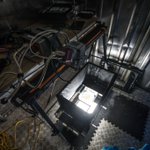


Critical thinking and a flexibility to embrace AI and machine learning will be central to turning spectra into unprecedented sea-ice biogeochemical information. With @AusAntarctic and Australian Antarctic Program partners.
From controlled freezing experiments in our new IMAS sea ice tank facilities, where signals can be calibrated against known conditions, to potential shipborne observations in the marginal ice zone, with links up to aerial and satellite remote sensing.
This project takes hyperspectral imaging into that gap. Novel imaging techniques let us visualise and measure biogeochemical elements of sea ice that have cascading implications for polar ecosystems.

Sea ice is one of the hardest environments on Earth to observe. Algae growing inside the ice, their pigments, minerals like gypsum forming as it freezes and releasing as it melts, all happen at scales conventional remote sensing and coring simply miss.

❄️ 💡🌿 Looking for a new PhD candidate at @IMASUTAS, Hobart: Advancing spectral imaging techniques to quantify sea-ice biogeochemical properties across scales. From our new sea ice tank to the marginal ice zone.
Closes 1 Oct 2026 🔗 [utas.edu.au/research/degrees…]

Emiliano Cimoli retweeted

New paper 🚨📃‼️
Just published in Remote Sensing of Environment, we show how drone-based hyperspectral imagery in the short-wave infrared (SWIR) region can be used to map leaf water potential across a diverse native forest.
📜👉 Read more here: sciencedirect.com/science/ar…

Finally happy to share our publication on HIcyBot in the Oceanography journal! 🎉🤖❄️
Robots under-ice & hyperspectral imaging for environmental monitoring in Antarctica
Could this methodology be integrated in your Antarctic studies?
LINK: oceanographydigital.tos.org/…