

Clinician scientist in radiometabolism and digital biology / AI / ML @MayoRadOnc, heavy-ion with @QST_Japan.
MSP | HND
Joined July 2012
- Tweets2.2K
- Following375
- Followers932
- Likes11.9K





Dan Ebner retweeted

Mayo Clinic researchers are studying whether low-dose radiation therapy can slow the progression of Parkinson's disease by targeting inflammation in areas of the brain affected by the disease.
The clinical trial is the first to investigate low-dose radiation as an anti-inflammatory approach in patients with early-stage Parkinson's disease.
Learn more: mayocl.in/4hX0IMP

Dan Ebner retweeted

If you are a patient or a relative and/or interested in cholangiocarcinoma and other liver tumors, you can ask Dr. Starlinger a question. Check it out.
reddit.com/r/bileductcancer/…

Dan Ebner retweeted

Mayo’s REDMOD (Radiomics-based Early Detection Model) has been named one of @TIME’s Best Inventions of 2026: time.com/collection/best-inv…

Dan Ebner retweeted

🚨Anthropic Frontier Red Team warns: “We’re seeing signs of life for AI worms”
>paper: "AI models may be capable of self-replicating without access to a datacenter"
>researchers buy 15 sketchy $55 android TV boxes
>link them over unauthenticated ADB ports
>the TV boxes have 4gb of RAM each and run unpatched Android Open Source Project forks
>shard gemma4-26b across the ram sticks using pipeline parallelism
>gemma figures out how to run inference across all 15 TVs @ 0.39 tokens/sec
>qwen 3.5 9b figures out how to compile inference on 8 of 9 novel hardware types on its own
>glm 5.2 achieves end-to-end autonomous worm replication
>infects edge devices, compiles its own inference stack, and replicates autonomously
>when an instance dies, it writes debugging notes into Memento for the next generation
>daughter copies setup success jumps from 45% -> 84% across generations
>pure Lamarckian evolution inside consumer electronics
>smart oven, robot vacuum, and cheap TVs form a decentralized botnet
>two million infected TV boxes worldwide = 40 H100 equivalents of unkillable compute
>it replicates once every few days like a distributed “digital slime mold”
>you can't pull the plug because half the model weights are already sharded across the neighborhood
>sub-30B models projected to hit full autonomous replication threshold by late 2026
“We should aim to harden our systems… but also prepare to deal with a world where they are here to stay.”


Dan Ebner retweeted

I always think about this- we rarely irradiate a breast tumor as the vast majority of radiation for breast cancer is adjuvant (post-op) and targeting potential residual cells. Maybe we don’t know the biology of radiation in the setting of actual breast tumors!?!
Dan Ebner retweeted

Dusting off this tweet from April because this gap in shared understanding of LLM capability is *widening*. It's now less "two groups of people speaking past each other" and more a sharp funnel.
- Napkin math somewhere around 6B people (~75% of the population) have barely come in contact with LLMs at all.
- Around 1-2B (~20%) are casual and infrequent users of free-tier ChatGPT-like products. This group sees derpy chatbots and treats them a bit like a better Google search, a writing aid, or etc. Maybe an agent tries to book you a flight. I have non-tech friends who (reasonably, imo) say they have not much use for it at all. Even many professionals outside of math&code are in this tier. For example, execs and many other functions spend a lot of their time talking to other people, so while they understand what is happening intellectually, it is still second-hand and a bit abstract.
- Now we get to professional use of frontier-grade LLMs in math&code. Somewhere around 20M people (0.2%) see first-hand that large, complex projects that used to take them weeks/months can now be completed by agents with a prompt. Building apps, copying apps, translating apps, decompiling apps from binaries... This has all happened very quickly and recently - less than 1 year ago, I was writing code manually by hand, typing memorized computer code commands into a code editor character by character, occasionally pressing Tab to autocomplete a little chunk of code.
- And finally we get to the ~5,000 people (~0.00006%) with access to frontier-grade systems internally. The external world has seen the preview. It looks like swarms of thousands of agents collaborating over weeks on software mega projects: minting zero days, running cyber attacks and defenses at machine speeds, discovering new science, advancing the frontier of mathematics. Things that would have taken top professionals in the industry years of work. Meanwhile, human review and comprehension are starting to fall behind. For example, people are still involved in the "archeology" of the OpenAI-HF incident from many months ago. Mathematicians may be poring over the 722 manuscripts on frontier mathematics for a while.
The funnel is driven by a combination of factors:
1. The impact scales with ambition, problem size, and horizon. A question with a paragraph answer barely stresses the system. You need a reservoir of big, difficult problems that you really care about. This aspect drives the consumer / professional dimension of the funnel.
2. The jaggedness of the system (which I have written about a lot separately). Capability peaks in domains that are digital, verifiable and economically valuable. This is because LLM capability emerges from reinforcement learning on verifiable rewards on a curated environment mixture driven by revenue potential. This aspect primarily drives the area (e.g. math&code) dimension of the funnel.
3. Access. Free-tier, paid-tier, internal.
So this is the weirdness of the moment. The general public has mostly not interacted with these systems. When they have, it looks like a derpy chatbot. The majority of professionals still see only a modest uplift. And a small sliver of professionals are experiencing the vertigo of the curve going vertical. And it is all happening at the same time.

Judging by my tl there is a growing gap in understanding of AI capability.
The first issue I think is around recency and tier of use. I think a lot of people tried the free tier of ChatGPT somewhere last year and allowed it to inform their views on AI a little too much. This is a group of reactions laughing at various quirks of the models, hallucinations, etc. Yes I also saw the viral videos of OpenAI's Advanced Voice mode fumbling simple queries like "should I drive or walk to the carwash". The thing is that these free and old/deprecated models don't reflect the capability in the latest round of state of the art agentic models of this year, especially OpenAI Codex and Claude Code.
But that brings me to the second issue. Even if people paid $200/month to use the state of the art models, a lot of the capabilities are relatively "peaky" in highly technical areas. Typical queries around search, writing, advice, etc. are *not* the domain that has made the most noticeable and dramatic strides in capability. Partly, this is due to the technical details of reinforcement learning and its use of verifiable rewards. But partly, it's also because these use cases are not sufficiently prioritized by the companies in their hillclimbing because they don't lead to as much $$$ value. The goldmines are elsewhere, and the focus comes along.
So that brings me to the second group of people, who *both* 1) pay for and use the state of the art frontier agentic models (OpenAI Codex / Claude Code) and 2) do so professionally in technical domains like programming, math and research. This group of people is subject to the highest amount of "AI Psychosis" because the recent improvements in these domains as of this year have been nothing short of staggering. When you hand a computer terminal to one of these models, you can now watch them melt programming problems that you'd normally expect to take days/weeks of work. It's this second group of people that assigns a much greater gravity to the capabilities, their slope, and various cyber-related repercussions.
TLDR the people in these two groups are speaking past each other. It really is simultaneously the case that OpenAI's free and I think slightly orphaned (?) "Advanced Voice Mode" will fumble the dumbest questions in your Instagram's reels and *at the same time*, OpenAI's highest-tier and paid Codex model will go off for 1 hour to coherently restructure an entire code base, or find and exploit vulnerabilities in computer systems. This part really works and has made dramatic strides because 2 properties: 1) these domains offer explicit reward functions that are verifiable meaning they are easily amenable to reinforcement learning training (e.g. unit tests passed yes or no, in contrast to writing, which is much harder to explicitly judge), but also 2) they are a lot more valuable in b2b settings, meaning that the biggest fraction of the team is focused on improving them. So here we are.
Dan Ebner retweeted

So this is it huh. This is where the acceleration happens.
Not arxiv, not some peer reviewed journal.
Right here on X, discoveries flowing as fast as we can find them.

Dan Ebner retweeted

We are publishing an update to OpenAI problem #109 Integer multiplication) with another substantial further tightening:
κ = 2⁻⁵⁹ (from OpenAI’s original κ = 2⁻¹⁸²)
Approximately 500 thousand fold improvement over our previous result and a 2¹²³ fold improvement over the original OAI result.
The latest redesigned the finite network to share intermediate computations and scratch space, then tightened the recursion and Gaussian estimates.

We are publishing an update to OpenAI Problem #109 (integer multiplication) with a substantial further tightening:
T(n) = O(n (log n)^(1 − κ)),
With κ = 2⁻⁷⁸ (tightened from κ = 2⁻¹⁸²)
Approximately 570 million fold improvement over our previous result and a 2¹⁰⁴ fold improvement over original OAI result.
Our earlier ceiling applied to a cubic bottleneck in the network. The new witness scales quadratically; we haven't established a new ceiling.
The key was using nonadjacent axis swaps to route around the cubic bottleneck. The original manuscript already supported nonadjacent axis swaps. Using them directly reduces layout routing from O(d²) to O(d) swaps.
Dan Ebner retweeted
Truly grateful for this award and I still can’t believe it! Thank you to the @TheMarkFdn for your support and for paying attention to scientists in “flyover” country!

We're proud to share that Dr. Pippa Cosper has received a 2026 ASPIRE Award from The Mark Foundation for Cancer Research, becoming the first Wisconsin researcher to earn this prestigious recognition. Read the full story on our website. ➡️
ow.ly/rVVQ50ZV6ia

Dan Ebner retweeted

Quasi-RH?!?!???! Are you kidding me? If a human did this, it would be an instant Fields Medal, no questions asked.
RH says zeta has no zeros in Re(s)>1/2. The best we had until a second ago was a region that got thinner and thinner the higher up the imaginary axis you go. I thought maybe they’d fatten that up a bit, that’d be a massive breakthrough. But no. They got a zero free strip!!!! Insane


We’re releasing a broad range of new mathematical results produced by an internal frontier model.
We’ve been consulting with the independent Advisory Group on Mathematics and Artificial Intelligence at the Institute for Advanced Study, and we have drawn on their advice and public recommendations to inform how we release these results.
github.com/openai/math

Dan Ebner retweeted

Ok, finished going through the OAI math list. It is bonkers and should be front page news around the world if folks understood what this meant. But if I am running strategy at a lab, #1 priority is "do this for medicine, oncology, battery efficiency, etc as fast as possible".
Dan Ebner retweeted

After a brief but institution-eroding slop science era, it increasingly looks like we are going to have two revolutions from AI:
1) Everything ever published will be re-read and re-judged in ways that human scientists never anticipated
2) Novel discoveries will start to come fast
Dan Ebner retweeted

It’s complete nonsense. That’s why no one studies it. It’s like psychoanalysis. It explains everything it predicts. Nothing absolutely was OK in the 40s.Lea in bacteria after that complete waste of time
Dan Ebner retweeted

The first glimpses of a revolution in intelligence historical affairs.

Dan Ebner retweeted

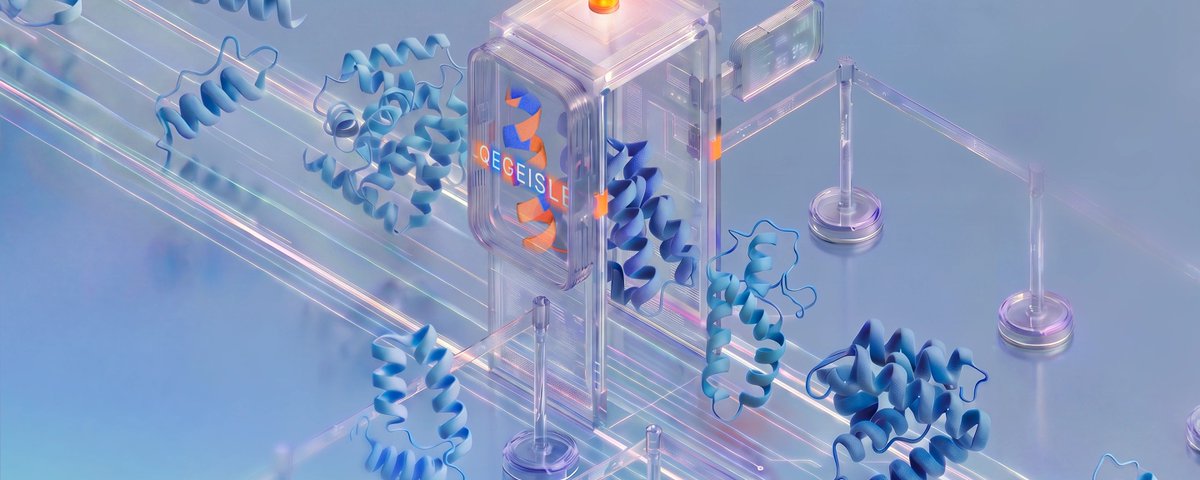
Very happy to announce that our team @GoogleDeepmind has pushed the boundaries of generative biology, achieving the successful synthesis of AI-designed proteins that are both functional and watermarked.
This proof-of-concept watermarking of the building blocks of life is enabled by SynthID Bio, our new protein watermarking method. It is designed to safeguard the new era of AI-powered generative biology and strengthen global biosecurity.
You can read my thoughts here on why watermarking AI-designed proteins is an important research breakthrough: xitter.cf/pushmeet/status/210531…

Dan Ebner retweeted

Nice talk at #ASTRO26 from our @MayoRadOnc Chair of Research Dr. Robert Mutter on his novel phase 1b study to overcome therapeutic resistance in patients with breast cancer.


Dan Ebner retweeted

Radiation oncologist Dr. Scott Lester shares results from a clinical trial evaluating a shorter course of proton therapy for head and neck cancer. The study is being presented at the ASTRO Annual Meeting. #ASTRO26
Read the abstract: amportal.astro.org/sessions/…

Dan Ebner retweeted
A multicenter study led by Mayo Clinic found dividing radiation into several treatments reduced the risk of cancer returning after surgery for brain metastases and improved survival compared with delivering radiation in a single treatment. #ASTRO26
newsnetwork.mayoclinic.org/d…

Dan Ebner retweeted

So happy to see this trial presented at ASTRO, reflecting the hard work, bench —> clinic efforts started by former colleagues Dr Denko and @TeWilliamsMD and being able to contribute to it. Congrats to @JBrownsteinMD #astro2026

New clinical trial data from Jeremy Brownstein evaluating a hypoxic radiosensitizer in combination with lung SBRT. #ASTRO26 1/


Dan Ebner retweeted
One of my favorite things about Paul Brown’s tweets (other than their high clinical impact of course!) is the classic blue background and yellow text which is a known sign of brilliance and old school awesomeness

🚨🚨Randomized Trial #ASTRO26 Small Cell Lung Cancer Brain Met fractionated SRS vs HA-WBRT 🚨
• No diff time to cognitive failure, neurologic death
• SRS ↑↑ OS
• ↑↑ AEs HA-WBRT
• SRS standard of care SCLC brain met
