

Physics @Cambridge_Uni, ex-VC, building @AISEA_builders. Codex Ambassador.
Malaysia
Joined May 2024
- Tweets420
- Following281
- Followers406
- Likes802



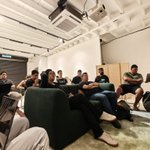



after the whole waze/tuju debacle the malaysian govt has been talking about open tender for navigation apps when a mini hack seems like it would do the job better
so as almost a joke I set up a luma event for this
within the first 20 mins before I even started marketing we had 15 signups
so I guess we're doing this now, if you wanna build a better navigation app, join us in the link below


of all the things i thought i'd see today
the fried rice man doing an ad for an ai voice model was defo not on it

$52M seed round. 15M+ users. But this is what we're most proud of yet.
Introducing Drama 3: the most emotive and controllable TTS model in the world
And yes, it's open-weight.
You can now control how even a single word should sound, change its tone, and shift your voice mid-sentence.
Uncle Roger was impressed too.
Try it here:
s.fish.audio/rqh0l8
Comment “DRAMA” within the next 48 hours for 1 month free.
If you're an enterprise your first month is on us:
s.fish.audio/qz9r0t
at our last paper club we talked about how to build an agent that improves itself
key takeaway is that you can't really yet
humans build better things because we have access to ground truths, where reality tells us if we're wrong, but AI relies on checks and evals to know it’s going in the right direction
when the check is ground truth, like a game result, a compiler, or a passing test, AI can go well past where it started, but when the evals are written by AI they can only reward what AI already knows how to recognise.
so “self-evolving” usually means evolving towards a targeted preference, not getting better
opportunity is in models that can check against ground truth, or explore beyond what they already know


Paper Club tonight talking about self-evolving agent harnesses
Key takeaways:
- "self-improving" harnesses is just iteratively getting towards a target criteria, and using some constrained gradient descent for iterative improvement seems to beat out spray and pray .mds
- human in the loop is still needed where goals are fuzzy (eg marketing, content) and sometimes the balance is how cheap you can keep RLHF

Brendan Beh retweeted

This is the place where people build people who build good in AI
Where through show & tells and weekly accountabilities,
run clubs and wall staring clubs (to clean our context windows)
We learn, bond and grow together and give back to the Malaysian AI ecosystem.

Brendan Beh retweeted

guys, we built a +1 you can bring to work 👀
Meet Tag: your personal assistant, in Slack. (not co-worker)
When @karpathy described Claude Tag as “significantly more ‘inline’ with all the other human activity org-wide,” the word “inline” stood out to me.
To me, that’s the interesting shift. You’re not leaving the work to go talk to AI. Your AI joins you where the work is happening.
Few months ago, I found out Slack literally stands for "Searchable Log of All Conversation and Knowledge." Instantly, I realise it is a pretty good place for an assistant to start.
If your team already works there, you’ve already discussed the problem, shared the links, and explained why the last idea didn’t work.
Why copy that context into a private AI chat, work through the answer alone, then paste everything back for your team?
With Tag, you mention your assistant in the thread. Ask it to investigate a question, turn the discussion into a plan, or work on a file. It uses the thread as context and brings the result back into the conversation.
But here’s the thing: working together shouldn’t mean everyone has to share one assistant.
Your Tag is yours. You choose its tools, skills, and connected accounts. Your teammates can each bring their own Tag, while everyone contributes to the discussion and follows the work.
It runs on a computer you control. We don’t host your conversations or working file, so your setup still uses Slack and OpenAI, rather than being fully offline.
Tag is also free and open source. It works with the Codex access you already have through ChatGPT, so there’s no extra Tag subscription.
I think the best place to work together with AI is where you’re already working together.
You bring your assistant. Your teammates bring theirs.
Bring your +1 to work.
→ hover.team/tag/
malaysian builders need rooms to lock in. so we're opening up ours.
being part of the malaysian.ai residency took us from concept -> pivot -> pivot again -> six-figure revenue in 4 months
we're opening up our first official cohort now. it's 8 weeks, full-time, in person in KL with some of the coolest builders in town
applications close oct 1. if you're obsessed with a problem, apply: platform.malaysian.ai

Overnight my feed just exploded with people talking about Jevs
If you're feeling out of the loop I gotchu, here's a primer on what Jevs and the current state of things to get you caught up to speed


made a fun little monte carlo simulator using Astra
draw shapes and let the rain fill it with water to find the area
asked Astra to format our report into a scrollytelling website as suggested by a friend
overall was pretty impressed with it, Astra two-shot this with minimal input from my end. I gave it very little direction and it figured out the whole thing
overall thoughts on using Astra for data analysis: it behaves more like a scientist than a data analyst, i.e. all claims it makes are only that which can be verified factually.
it tends towards the conservative end of the spectrum and provides summaries without drawing out clear hypotheses to be tested for deeper insights.
still useful for getting some thoughts out, but overall not as blown away as I'd have hoped to be

since yesterday I decided to give Astra even more of a chance to display what it can do
so I told it to formulate hypotheses about AI community activities, spin up subagents to evaluate, and test these findings individually
what it found:
- Malaysia actually has a distributed layer of recurring experimentation: recurring events occur at two levels, larger events supported by smaller recurring ones
- Singapore has regular gatherings, but its most frequent format is not always its largest registration channel: panels create continuity, while workshops and showcases periodically draw wider reach
- Indonesia shows the closest alignment between frequency and reach: workshops are both its most recurring format and its largest registration channel, suggesting a practical, skills-led community layer
- Vietnam is driven by concentrated bursts of ecosystem building: a small number of large programmes bring builders together at scale, while the layer of smaller recurring activity remains less visible and less sustained in our data


I asked GPT-6 Astra to go through our database of 200+ community events across Southeast Asia to generate a report on the state of AI adoption here
What it found:
- Malaysians prefer small rooms with frequent gatherings, focused on relationship building, peer-to-peer learning, and hands-on experimentation
- Singapore’s community activity is more curated, with workshops, roundtables and showcases connecting builders with institutions and new AI tooling.
- Indonesia leans towards structured, practical learning. Workshops and co-working sessions bring larger groups together around applied skills.
- Vietnam brings builders together through large hackathons and shared challenges. The opportunity is turning that momentum into regular community activity.
Full report available below 👇