

Clear electronics/RF guides, videos & downloads by Ian Poole | Resource hub for engineers & hobbyists | Shop: https://xitter.cf/t.co/ClrsfjiAbA
South East, England
Joined November 2016
- Tweets28.4K
- Following269
- Followers17.4K
- Likes2.5K





ElectronicsNotes by Ian Poole retweeted
The Iconic 2N3055 Power Transistor: the device that changed electronics.
There is a fascinating story behind this iconic power transistor. Not only was it revolutionary when it was introduced, but it has remained a go-to for many applications even to this day - over 60 years after it was launched.
The device is rugged, capable of handling serious power, it is widely available and cheap - what more could you want.
In my video I not only look at its history, but more importantly I look at its performance, its applications, and some points to watch out for as well as a surprising application.
Find out everything, watch my video now: youtu.be/AlKwDjhUxj8
#2N3055 #transistor #semiconductor #electroniccomponents #electronicsnotes
ElectronicsNotes by Ian Poole retweeted
How do you keep your DMM probe on the test point while you are away at looking at the display.
As you look away, it's so easy for the probe you are holding to slip.
Instead is so much easier to use a Pen style DMM like the ANENG A3008 that you see here.
(Sponsored link)
Check out more - its low cost and great performance: link.amazon/B06T6VkAG
#DMM #digitalmultimeter #ANENG #ANENGA3008
🤝 Paid partnership
Check out this excellent breakdown on Electronics-Notes: electronics-notes.com/articl…
Linear Power Supplies need a Reservoir Capacitor - Here’s Why!
The smoothing capacitor is used to convert the raw rectified AC into the smooth DC required by sensitive electronics. The capacitance and period the smoothing capacitor are crucial.
In both linear and switch-mode power supplies, the rectifier output consists of a series of half-sine waves.
Without smoothing, digital circuits would lose power every half-cycle, and analogue circuits would be plagued by hum and noise.
Here are 3 key takeaways for engineers and hobbyists on getting smoothing right:
1️⃣ The "Fill in the Gaps" Strategy:
A reservoir capacitor (typically an aluminum electrolytic) works by charging up at the voltage peak and discharging into the load when the rectifier voltage drops. Essentially, it "fills in the dips" to maintain a steady output.
2️⃣ Full-Wave vs. Half-Wave:
Efficiency matters! Full-wave rectification is always preferable because the gaps between peaks are shorter. This leads to significantly better smoothing and allows for a smaller capacitor to achieve the same ripple voltage.
3️⃣ Don't ignore Ripple Current!
When choosing a capacitor, capacitance and voltage aren't the only specs that matter. You must check the Maximum Ripple Current.
* Because the capacitor only charges during a very short window of the cycle, the peak charging current can be much higher than the steady-state load current.
* Overlooking this leads to overheating, reduced lifespan, or even catastrophic failure.
Pro-tip for the maths: To estimate peak-to-peak ripple Vripple for a full-wave rectifier, use:
👉 Vripple = Iload / (2 f C)
Looking to go deeper into the calculations and filters? Check out the link in the comments.
#ElectronicsEngineering #PowerSupply #circuitdesign #HardwareDesign #electronicsnotes #electroniccomponents #LearningElectronics

Check out the full guide on Electronics Notes: electronics-notes.com/articl…
Understanding Surface Mount Resistors: what they are & their properties.
Surface mount resistors are the go-to form of resistor these days as they can be used in today’s high volume automated manufacture.
But for many engineers and hobbyists, moving from through-hole to SMT feels like a big leap. When using these resistors, understanding the nuances of SMD (Surface Mount Device) resistors is critical.
Here is a breakdown of what you need to know, based on our latest deep dive at Electronics Notes:
1. Why SMT? It’s not just about size.
While miniaturization is the obvious benefit, SMT resistors offer technical advantages that through-hole components can't match:
✅ Lower Parasitics: Their small size and lack of leads mean significantly lower stray inductance and capacitance—essential for high-frequency RF applications.
✅ Automated Assembly: They are designed for high-speed pick-and-place machines, drastically reducing manufacturing costs and increasing reliability.
✅ High Density: You can pack far more functionality into the same PCB real estate.
2. Decoding the Package Sizes
SMD resistors are typically referred to by a four-digit code (e.g., 0805, 0603, 0402). These numbers represent the dimensions in hundredths of an inch.
• 1206: Great for prototyping; less difficult to hand-solder.
• 0603 & 0402: The industry workhorses for consumer electronics.
• 0201 & 01005: Used in ultra-compact tech like wearables (nearly impossible to rework by hand!). Being used increasingly.
Note: there is also a package sizing code based on the metric system, but the imperial system is by far the more widely used.
3. Power and Tolerance Matters
Because they are so small, power dissipation is a key constraint.
• A standard 1206 resistor might handle 0.25W, while an 0402 might only handle 0.0625W.
• Design Tip: Always de-rate your resistors. Running them at 50-60% of their maximum rated power improves long-term stability and reliability.
• Most modern SMT resistors use metal film technology, offering excellent tolerances (1% or 2% are now standard and affordable).
4. Reading the Codes
Unlike the colorful bands on axial resistors, SMD resistors use a numerical system:
• 3-digit code: This is the most common type of code. First two are significant figures, the third is the multiplier (e.g., 103 = 10,000Ω or 10kΩ).
• 4-digit code: Used for high-precision resistors (e.g., 1002 = 100 x 100 = 10kΩ).
• Note: Many ultra-small packages (0402 and smaller) have no markings at all—organization in your lab is key!
Want the full technical breakdown, including power rating tables and marking charts?
For more information, check out the link in the comments below.
#ElectronicsEngineering #resistors #HardwareDesign #SMT #ElectronicsNotes #EngineeringTips #electroniccomponents

Say goodbye to legacy barrel jacks and upgrade to modern USB-C power!
MIKROE is thrilled to announce the launch of the USB-C Sink 5 Click from MIKROE—designed to bring seamless, standard-compliant USB Power Delivery to your next embedded design.
Powered by the STMicroelectronics STUSB4531QTR controller, this compact add-on board lets your embedded systems autonomously negotiate and manage power (from 5V up to 20V) directly from modern USB-C chargers.
Key Highlights:
* Versatile Applications: Perfect for wearables, mobile gadgets, high-end portable instruments, and retrofitting legacy DC inputs in field-deployed devices.
* Smart & Autonomous: Features autonomous USB PD contract negotiation via Autorun mode, internal non-volatile memory for default PDO configuration, and dead battery mode support.
* Robust Protection: Built-in VBUS monitoring, input power path control, integrated protection/discharge functions, and high-voltage surge protection.
* Plug-and-Play Simplicity: mikroBUS™-enabled with built-in ClickID for automatic host system identification, backed by open-source mikroSDK libraries and ready-to-use projects on EmbeddedWiki.
"USB-C Sink 5 Click is perfect for wearables and mobile gadgets that need to draw power from modern USB-C chargers instead of traditional barrel jacks." — Nebojsa Matic, CEO of MIKROE.
Ready to cut your development time and modernize your hardware? Check out the link in the comments to learn more about the USB-C Sink 5 Click and explore over 2,000 other mikroBUS™ add-on boards!
#MIKROE #EmbeddedSystems #USBC #PowerDelivery #HardwareDesign #IoT #Wearables #Engineering
@mikroel

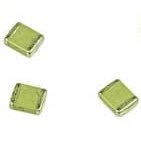
Have you ever encounter the SMD passive component size trap.
It could wreck your next project, so watch my latest TIikTok video so you don't fall into it.
Watch now: tiktok.com/@electronicsnotes…
