






Ellen Levy retweeted

I have been holding my tongue about something that happened during the Ohio gubernatorial race. I refused to speak while the election was underway because I did not want my words mistaken for an attempt to influence anyone’s vote.
But now that the election is over, I have something to say.
For nearly twenty years, my ministry has taken me among the homeless, the abused, the exploited, and the forgotten. I have sat with victims of sexual violence and witnessed the lifelong wounds of childhood trauma.
What Vivek Ramaswamy’s campaign did to Amy Acton was among the most morally repulsive things I have witnessed in American politics.
They took a woman whose stepfather was indicted for raping her when she was twelve years old and featured her mother, from whom she had been estranged for nearly fifty years, in a political advertisement attacking her credibility.
The advertisement challenged Acton’s account of her childhood without mentioning the sexual abuse allegations or the circumstances of that estrangement. When people expressed their horror, the campaign defended it.
Imagine examining another person’s childhood suffering and fractured family relationships, then deciding those wounds might help win an election.
Anyone who has worked with survivors of childhood sexual abuse understands the painful realities of denial, betrayal, shame, and estrangement. A child growing into a successful adult does not erase what happened. Nor does a parent’s denial make that suffering disappear.
I find it equally disturbing that an elderly mother, whom Acton herself described as unwell, was brought into this spectacle. Whatever her own struggles or responsibility for the past, exploiting that fractured relationship was grotesque.
To everyone who defended this, consider the message you sent to survivors. To the young woman whose family refuses to believe her. To the man who has carried the shame of childhood abuse for forty years. To the frightened child who has yet to tell anyone.
What did you teach them about the value of their suffering?
I am a priest. I believe in repentance, forgiveness, and redemption. But none of those things requires me to pretend that deliberate cruelty is anything less than a grave moral failure.
Your political allegiance does not absolve you of moral responsibility. You do not get to set aside your conscience during an election and retrieve it afterward.
If your loyalty requires you to defend the exploitation of a childhood sexual abuse survivor, your loyalty has become an idol. And if your conscience cannot recognize the wrong here, examine what political tribalism has done to it.
This is not about Republicans or Democrats. We have a choice as a people: continue excusing cruelty from our preferred political camp, or summon the courage to condemn it wherever it appears.
Amy Acton deserved better. Every survivor who watched this unfold deserved better.
And God help us if we have reached the point where winning an election matters more than protecting the dignity of a wounded human being.

Ellen Levy retweeted

Long post worth the read. I have a close friend who flies private jets. He flew Lear 60 for over 15 years and now flies a Gulfstream. This is a copy and paste of his response to me asking him if I thought Ice was the issue.
“We always fly in ridiculous cold temperatures.”
“Usually you get the bad ice when the temperatures are like 0 to negative 20. Believe it or not, there's a point where it gets too cold for ice. At negative 40, you pretty much can't get ice. Besides that, the airplane is equipped with hot wings and hot tail.”
“I flew the Lear 60 for like 15 years. It's a no joke airplane and probably the most dangerous airplane I've ever flown. It has a super critical wing. The airflow has to be perfect. When it gets into rough air and turbulence, it will easily stall. It has stalled on me at 41,000 feet just because we got into some turbulence. (On the way to Palm Beach as a matter of fact. ) we recovered and got her flying again around 30,000 ft. Scary
But here's the problem. This airplane has a terrible coffin corner. (At high altitudes) what that means is, you fly in a really narrow window where if you lose 20 knots, it stalls. And if you gain 20 knots, it goes into overspeed. The air goes supersonic over the wing and it goes into a high speed stall, or worse, a Mach tuck.
So if you stall, the normal recovery is to push the yoke forward to lower the nose and gain air speed again. At low altitude, you can push really hard and recover quickly. But in the 60... if you push hard, it will gain air speed and go into a high speed stall, it doesn't take much. It's very sensitive. The 60 has super short wings that don't make much lift. So then you high speed stall, and the computer is yelling at you... OVERSPEED! So then you pull back and enter a low speed stall. And you go back and forth trying to keep it in the air speed window.
This whole thing is pretty scary. And you should recover basically by using your finger tips using super small corrections. You can't over do it. If you try to muscle the recovery, she gets mad and will become unrecoverable. If she enters a mach tuck. You're done.”
“I taught the Lear 60 to other pilots and mentored them. I told them... this airplane has a soul and it's trying to kill you. Do not ever try to top the weather. Don't go over a thunderstorm. Go around it. If it means a half hour longer, then do it. Going over the thunderstorm will go into turbulence that you might not recover from.
These pilots went right over a thunderstorm. I think it stalled which caused them to drop down into the thunderstorm and ended up in mach tuck. They picked up so much speed that it ripped off the horizontal stabilizer. At that point... chuck Yeager can't fix it.
These same pilots did something similar a couple months ago. ATC got mad at them. They poked the bear one too many times.
This is not a beginner airplane. The Gulfstream would never do this. It has HUGE margins of error and won't stall like that. But then again... it's got HUGE wings. It's a pussy cat.
The Gulfstream is like driving a 4 wheeler. The Lear 60 is like riding a uni cycle.”
Ellen Levy retweeted

In 2014 I went nearly a week without sleep. I was running PayPal and attackers were inside our corporate network. They'd compromised an eBay employee's laptop, got onto the VPN, taken over a domain controller and made themselves domain admins. eBay and PayPal were one company then, on one Windows network. They stole 145M eBay user records, then came for the segregated vault holding PayPal's card credentials. We fought them off. They never got in, but they got close. Too close.
Yesterday Binance lost ~$6.3B in what looks like the same way. A DevOps engineer's laptop, then a service inside the withdrawal stack, then withdrawals the signer approved because they came from a trusted source. Hot wallets emptied in under four hours. No key was stolen.
Nobody broke cryptography or a ledger. They found someone with access and used the trust that came with it. Banks get hit exactly the same way.
2016: attackers inside Bangladesh Bank used its own SWIFT access to send $951M of payment orders to the NY Fed. $81M was lost. The rest was held because an unrelated sanctions filter tripped on the word "Jupiter". That was luck, and it only worked because wires took days to settle.
June 2025: an IT employee at C&M Software, which connects Brazilian banks to Pix, sold his credentials for about $2,700. Attackers used them to send fake Pix transfers out of six institutions' reserve accounts at the central bank. ~$140M in under three hours.
August 2025: stolen vendor credentials at Sinqia, another Pix connector. ~R$710M out of HSBC and one other institution in a single afternoon. The central bank froze most of it, after it had already moved.
Same attack every time. Speed is what changed. When settlement took days, a filter, a correspondent bank or someone in ops could catch a bad payment. Pix, FedNow, SEPA Instant and blockchains settle in seconds. Payment security was mostly built for the slow world.
PayPal's card and user data survived 2014 because domain admin on the corp network couldn't unlock it quickly enough, and our alerting caught the unusual activity on the network. That's the model. Approval policy no laptop or vendor login can reach. Velocity and anomaly limits enforced outside the system that sends. Dynamic caps on what any one wallet, account or service can move per hour. All of it in real time.
About $3B of what left Binance has been frozen, almost all of it stablecoins. The $1.4B in bitcoin is sitting in 19 wallets and nobody can touch it. I don't think that's the problem. For decades the ability to reverse a wire or a card charge let a lot of weak security slide. You either stop the transfer before it's signed or you eat the loss.
Nothing about the technology failed here. The chains processed exactly the transactions they were handed. Binance's own systems handed them the wrong ones because an engineer's laptop was compromised. That's operational security. eBay in 2014, Bangladesh Bank and two Pix connectors all failed at it on their own rails.
In 2014 the attackers never reached the vault. If they had, the fraud losses would have been the small part. PayPal existed so people could pay without handing their card details to every merchant on the internet. We held those details so they didn't have to. Losing them would have broken the one thing the company was built on, and I'm not sure we would have recovered.
I expect blockchains and digital assets to become the standard way money moves. Every custodian of digital assets, or of fiat on a real-time rail, is in that position now. The controls have to adapt to settlement in seconds, crypto or not.
Ellen Levy retweeted

The last time Americans googled "can't sell house" this much was 2008, when nearly 1 in 4 mortgages was underwater. Today it's under 2%. Same search, opposite crisis.
In 2008, people couldn't sell because their homes were worth less than their loans. Selling meant writing a check to the bank. At the bottom, 12.8 million homes were deeply underwater.
In 2026, homeowners are sitting on a record $18 trillion in equity, about $212K per borrower. Delinquency is 3.55%, lower than it was in 2019. Almost nobody is being forced to sell.
And that is exactly why nothing sells. The buyer needs a price that works at 6.3% rates. The seller is anchored to a 2022 price and a 3% loan, and with six figures of equity behind them, they can wait forever. So both sides sit. America has 6 million more jobs than 2019 and 1 million fewer home sales a year.
2008 was a solvency crisis. Everyone had to sell and nobody could afford to buy. 2026 is a liquidity freeze. Nobody has to sell, so nobody does. In 2008 that search meant losing the house. In 2026 it means being trapped in it.
The place to watch is where the freeze is thawing the 2008 way. Texas and Florida now account for 39% of all underwater mortgages in the country, and the number of owners who are both underwater and behind on payments nearly doubled in a year. Insurance premiums and property taxes force sales in a way interest rates never could.
A frozen market doesn't crash. A forced one does. Two states are quietly switching categories.


Ellen Levy retweeted
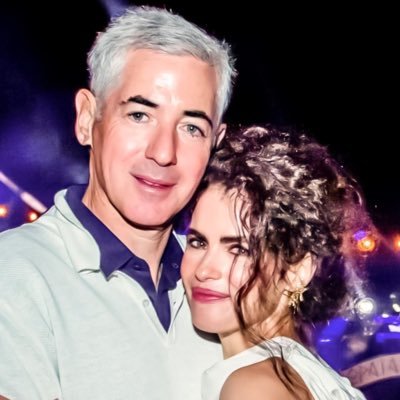
At midnight on February 6th, earlier this year, the doorbell to our apartment rang. The doorbell was followed by a pounding on the door. I answered the door and a security person in our building handed me his phone. It was my oldest daughter Eloise. She had found my 26-year-old daughter unconscious on the floor of her apartment and had called 911. The EMT team was already there, but they did not know what was wrong with Lucy or to which hospital they would take her.
I threw on some clothes and jumped in an Uber heading east toward Brooklyn. (Lucy lived alone in Williamsburg.) On the way, I learned that they were taking her to Elmhurst, a City trauma hospital in Queens. I arrived about five minutes after the ambulance to join Eloise, Lucy’s mom, and a friend, and waited to learn what was wrong.
After about 15 minutes, I asked a nurse where she was. I looked over his shoulder to his computer. Next to her name, it said “non-responsive.” I walked into the emergency room and wandered around looking for her until I found her unconscious on a gurney surrounded by several doctors and nurses.
By about 2:30am with the results from a CAT scan, Lucy’s doctors had determined that she had a massive brain hemorrhage and would need an emergency hemicraniectomy to release the pressure on her brain and remove the blood from the hemorrhage. I called our wonderful friend and family doctor Eddie Fisher and explained what was going on. He woke up Josh Bederson, Chairman of Neurosurgery at Mount Sinai, to find out more about Zach Hickman, the neurosurgeon on call that night. Dr. Bederson said Hickman was an excellent surgeon, which was comforting as we had no choice.
The surgery to save Lucy’s life began around 3:15am and finished around 5:30am. It was successful.
The following day, I joined Lucy in an ambulance while she was being transferred to Mount Sinai on Madison Avenue. Later that day, we determined from Lucy’s Oura ring that her hemorrhage had occurred around 9am, which meant that more than 19 hours had passed from the time of the hemorrhage to the completion of the surgery to release the pressure on her brain (I only wish @ouraring had an alert for this kind of a medical event. Imagine it could call a family member if the wearer doesn’t cancel the alert).
I later learned that the standard of care is not to do surgery to save a patient with a large brain bleed if more than five hours have passed since the hemorrhage. Even when the surgery is done, I was told that the likely outcome for the patient is a few months in a nursing home and death from pneumonia.
When I met Lucy’s doctors, I did my best to inspire them: “Let’s see what can be accomplished if we give her the best care possible and we invest unlimited resources to restore her to life.” And I promised that whatever we learned we would make available to everyone.
Dr. Chris Kellner, her neurosurgeon, and Dr. David Putrino, Director of Rehabilitation Innovation for the Mount Sinai Health System have led Lucy’s care team since that day. Words cannot describe the remarkable and compassionate care that she has received beginning with the EMT team and then from nurses, doctors, therapists, and the army of people who have worked to save her and return her to life. To this day, we have a daily Zoom where we discuss her progress and make adjustments to her care. While her care and oversight have been incredible, the learnings for the Mount Sinai team have also been elucidating and will assist in the care of many others.
Lucy began in a bad place. She was in a coma for several weeks and then awoke not being able to breathe on her own, unable to walk, see or speak.
Over the last six months, she has recovered her cognition – she understands everything including her circumstance – is able to walk a hundred or more steps at a time with assistance, is making progress with sounds, vowels and consonants and the beginnings of speech, but she remains unable to see.
Each day, she makes a little progress, and daily progress compounds. Every day I tell her that she just needs to make a little progress and it won’t be long before she is back.
We remain optimistic that Lucy will return to normal function. It will likely take years, but I believe it is only a matter of time, hard work, and technological progress, along with some, and perhaps a lot, of divine intervention.
Many people have been praying for Lucy and we are incredibly grateful for the prayers and remarkable support she has received. Lucy’s friends have been with her every day since the beginning, and their presence and friendship have saved her life and helped to rebuild and maintain her spirit. And on a very positive note, Lucy’s challenge has brought together our entire modern family who have all been incredibly devoted to her care and recovery.
Lucy's vision and other faculties may require some form of brain computer interface, work that is underway at Neuralink, Precision Neuroscience, Science, Synchron, Nudge, and other companies in the space.
If you are going to have a devastating brain injury, now is the best time in history for that to happen. We are living in a world when you can be confident that the blind will soon see again. We are going to do everything we can to help make that happen, including by assisting existing companies in the space.
With respect to our promise to make Lucy’s care available to others, we have made good progress. In May, a real estate colleague made me aware of a 93% vacant, brand new, 400,000 square foot Class A+ purpose-built biotech facility on West End Avenue between 65th and 66th Streets that missed the market and was available for sale. The Pershing Square Foundation acquired the building 60 days later.
We also put under contract an adjoining 130,000 square foot building at 320 West 66th Street that is currently being used by Saturday Night Live for studio space. The building has 35-foot ceilings with massive column-free spaces that can be converted into superb rehabilitation facilities. We will close on the SNL building in December.
We are also acquiring an adjoining vacant lot with additional air rights. With just the existing zoning rights, we can add a 150,000 square feet for a total of 680,000 square feet, a lab footprint larger than Rockefeller University, and that’s without including the potential for an upzoning that would allow for substantially more buildable area on the site’s 3.4 acres with spectacular views of the Hudson.
Our goal is to build the world’s greatest brain research, rehabilitation, recovery, human optimization, and longevity institute. We have named it The Ackman Oxman Institute or the AOI for lack of a better name, but also to reinforce the point that Neri and I and our family are all-in on the mission.
The AOI will be patient-centric. It will not be an academic research institute that produces lots of papers, a Nobel Prize winner or two, but little if any results for patients. We will be laser-focused on cures, treatments, devices, rehabilitation and exercise equipment, and targeted and basic research with a goal of massively accelerating the time from idea to innovation to production to helping a patient.
While the AOI will be a non-profit, it will have highly commercial instincts. The AOI will have its own venture funding and will work to develop innovations to create companies that we will seed, assist, and spinout to ensure technologies, treatments, techniques, and drugs get to patients as promptly as possible.
On one 3.4 acre campus in what is still the greatest city in the world, we will do neurosurgery, neuroscience, rehabilitation, nutrition, BCI and device development, human trials, hyperbaric oxygen treatments, and life extension programs, and we will mandate and incentivize collaboration among the teams with no silos, politics, bureaucracy, or any other constraint that is inconsistent with the mission.
Mount Sinai will be an important partner and deservedly so, but it won’t be our only hospital or medical school partner as we don’t believe any institution has a monopoly on the best ideas or the best talent. We don’t believe in exclusive relationships because that is not in the best interest of patients.
Five years ago, we considered launching a brain institute inspired by Neri’s mom who sadly died from Alzheimer’s. We couldn’t make the math work as the real estate was too expensive and we believed it would be too difficult to recruit the best talent from universities to our effort.
Since then, the real estate became available at a 70% discount, universities became a much less attractive place to work due to politics outweighing meritocracy, protests that disrupt learning, the curse of antisemitism, and a decline in funding. Fortunately, during the same time, I made sufficient personal economic progress to make the AOI possible.
The advance of AI in the last few years will also enable us to greatly accelerate our mission. AI still has a lot to learn about human intelligence and the brain, and the AOI should be at the forefront of the interplay between the brain and AI.
Today, I am making a public filing disclosing a gift from Neri and me of ~$400 million or 10,000,000 shares of Pershing Square Inc. (PS) to the AOI. It is very early days for Pershing Square so these shares are intended to anchor the long-term work of the AOI as the shares compound over time while generating what we expect will be a growing stream of quarterly dividends to fund the Institute.
We will also be announcing an additional gift of similar and potentially greater size which won’t be in the form of Pershing Square stock to provide the AOI with the short- and intermediate-term runway necessary to enable it to achieve its goal of becoming a self-sustaining institute, which reinvests all of its revenues, royalties, and the economic rewards of company formation to advance the fields of brain health and human longevity.
Neri and I have chosen to anchor the funding of the AOI to maintain vision alignment and limit the need for the organization to focus on fundraising. We expect the AOI to be the best-resourced brain, rehab, recovery, and longevity institute in the world.
We are grateful to have been able to form a board which includes Dean Kamen (our generation’s Thomas Edison), George Yancopoulus (CEO of Regeneron), James Rothman (Nobel Laureate), Bernardo Sabatini (neuroscientist), Chris Kellner (neurosurgeon), Olivia Flatto (CEO Pershing Square Foundation), Neri Oxman, and myself.
We have recently identified a CEO who we expect to announce by October along with other key hires, and are beginning searches for a Chief Scientific Officer, a Chief AI/Technology Officer, a Chief Operating Officer, a Chief Financial Officer, and other key leadership roles.
If you find what we are building compelling and want to be part of the leadership team that creates and builds the AOI from a standing start, please send an email to: [email protected] with a short note as to why you believe you can help. Please include your best three ideas for the AOI along with a summary of your background and your most important accomplishments.
We promise strict confidentiality to those expressing interest in working with us.
We have learned from Lucy that the brain can recover from even catastrophic injury. There is so much more work to be done as the mind is a terrible thing to waste.
For details from my Pershing Square SEC filing see:
sec.gov/Archives/edgar/data/…
Ellen Levy retweeted

Hosted a dinner last night with a group of IT leaders of large enterprises around agent adoption in the enterprise. Some quick notes:
* Change management remains one of the biggest topics for driving workflow transformation. Still most processes need to be upgraded to modern operating models to work with agents, which is a mix of technology, data, and human process change. Lots of emphasis on getting data (structured and unstructured) into a setup that can work with agents properly.
* IT teams are finding increasing success embedding full engineers into the business functions (essentially internal FDE) that go and implement agents into the internal workflows. There’s so much technical work to be done to make agents successful, that they can accelerate months or quarters of failed experiments by having someone technical in the workflow early.
* Consensus that the tech function is becoming more important than ever. It’s clear that the business could only expect automation to affect a minority of the business before (e.g. ERP) but now it can impact all of knowledge work. This means IT is becoming a more central role to the workflows across the company.
* Workflows are cross functional, and getting agents to work cross functionally is a complicated data modeling and permissions issue. Single users don’t have access to this. Which means you need to have agentic systems take on their own roles and have their own privileges, which is non-trivial given agents can’t keep things secure on their own.
* Huge variance in budgets between coding work and the rest of knowledge work. Some companies had a $1,000 a month budget for developers, and others had much higher amounts (like $5,000) that were merely triggers to notify the team vs. block them. Far smaller budgets for non-coding work at the moment.
* More companies are building their own multimodel systems for routing workloads by task to frontier and lower cost models. Lots of energy around open weights models, but still more in experimentation instead of at scale usage (some companies can’t due to perceived Chinese issue).
* Clear sense that all enterprise software must be headless in the future. Relief that they don’t need to train employees on hundreds of different apps. However, clear frustration with the traditional vendors that don’t play extremely nice (technically or cost wise) with agents in a headless fashion. Huge warning for existing software vendors.
* Mythos or mythos level-models are finding more and more sophsiticated security risks. The chaining together of vulnerabilities is what’s novel right now, and companies are coming up with long backlogs of what they need to go patch quickly.
Even more discussed, but just a few of the hottest topics.
Ellen Levy retweeted

Loved speaking to @atlblog about how the legal profession is changing re AI and how AI native law firms are doing it differently

AI-First Law Firms Don’t Work Fewer Hours, They Work Smarter Hours abovethelaw.com/2026/07/ai-f…

Ellen Levy retweeted

Imagine telling someone in 1999…
The year is 2026.
The President is Donald Trump in his second non consecutive term.
The richest man in the world is PayPal cofounder Elon Musk… but not because of fintech or Paypal. Because of rockets, electric cars, AI, satellites, brain chips and something called “Boring Company”.
Apple is worth trillions but its main business isn’t computers… its selling glass rectangles everyone stares at for 9 hours a day.
People don’t watch TV. They watch teenagers explain geopolitics, finance, and relationship advice in ~60 second videos.
The biggest taxi company owns no taxis.
The biggest hotel company owns no hotels.
The most powerful media companies are social networks where everyone argues with strangers for free.
Kids are making millions filming themselves playing video games.
AI Robots write emails, code, legal memos, songs, essays, and breakup texts.
The internet is mostly bots arguing with humans who are trying to prove they aren’t bots.
You can summon a car, groceries, a doctor, a date, a private jet, or a dog walker from your phone.
People pay real money for invisible currencies, digital monkeys, AI girlfriends and pictures that disappear after 24 hours.
The richest companies in the world don’t sell oil, steel, or cars. They sell attention, compute, data, and addiction.
And somehow, after all of that everyone is still using Excel.
Ellen Levy retweeted

This guy made a paper plane out of his match ticket during a UEFA Nations League match in a stadium in Germany.
The result was unexpected
Ellen Levy retweeted

I just wanted to update my resume. Instead, I accidentally proved how a multi-billion-dollar AI tool hallucinates a glass ceiling for women.
I changed a single variable: My name.
Here is what happened when "Jennifer" became "Jeff."
Ellen Levy retweeted
Lol this isn't true and telling people this is irresponsible.
Clause is really great at providing a broad overview of concepts and appearing correct but not great at drafting documents from scratch or making sure all legal protections are there
Sometimes situations need different contracts than originally presented or needs multiple contracts.
We see ai generated contracts that appear to be well drafted but are missing key provisions. Claude also doesn't know to ask that follow-up questions that can have deal altering implications.


Ellen Levy retweeted
Legal AI is good for consumers and will be despite additional regulations. I think this is more complicated than lawyers just wanting to protect their industry.
Right now AI is wrong a lot. It hallucinates and provides incorrect information. It's horrific at drafting contract from scratch. I see it everyday at Soxton.
AI is great at explaining broader concepts and getting folks to the right resources.
We are a d2c/b law firm using ai first to lower prices but still ensure accuracy by having human oversight. We're $20 a month and $100 a contract w/ an experienced lawyer in the loop.


Ellen Levy retweeted
At Soxton.AI, we’ve helped hundreds of startups with thousands of contracts. We’re just getting started.
Today we’re launching a suite of new features to help startups move faster and be VC-ready from day one including:
- Due diligence audit to spot (and fix) legal issues before they become deal blockers
- Initial cap table setup
- Funding scenario modeling so you can understand dilution and outcomes before you raise
Sign up for our waitlist here: @SoxtonAI
Felt that one in Menlo Park.

[USGS] M4.2 Nov-26 14:19:11 UTC, 8 km E of Gilroy, California, Depth:9.0km, earthquake.usgs.gov/earthqua… #quake


Ellen Levy retweeted

4.8 magnitude #earthquake. 3 km from #Berkeley, #CA, United States earthquaketrack.com/quakes/2… – at Oakland, CA
Ellen Levy retweeted
Multi-agent systems were found to use 15X more tokens than regular AI chat. This is Jevons paradox. Any efficiency improvement in AI models will quickly get eaten up by doing far more complex work with AI Agents. We’re only at the start of this curve right now.


