
Working to improve the accessibility, user experience, performance, consistency, and reliability of email markup
Worldwide
Joined October 2021
- Tweets83
- Following39
- Followers529
- Likes76
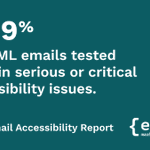
100% triggered at least one automated accessibility failure.
These findings indicate that platform defaults and generated markup have enormous influence over accessibility outcomes at scale.
If accessibility is going to improve in email industry wide, tooling must help users succeed by default.
Read the full report: MrEmail.dev/3PFRAR8
#EmailMarketing #GAAD #A11Y #Accessibility #EmailGeeks #WebAccessibility #WebStandards #WCAG
The 2026 Email Accessibility Report is now live
We analyzed 376,348 HTML emails across industries, geographies and platforms
• 99.88% triggered Serious or Critical issues
• Only 8 emails passed all automated checks
• Most failures were basic, machine-checkable issues
While developers play a role, this is a systemic ecosystem problem across senders, tooling and email clients.
Read the full report
mremail.dev/3PFRAR8
#GAAD #A11Y #EmailGeeks #WebAccessibility #WebStandards #WCAG
In 2022, we began our Data Collection project with a clear vision for how this data could benefit the ecosystem starting with our annual accessibility reports. Today, we’re excited to announce the next major step in that vision:
The Email Markup Database
emailmarkup.org/en/blog/2025…
Proton Mail (@ProtonPrivacy) noticed that some of their data on "Can I Email?" was outdated, and took the initiative to update it themselves. As a result, our 2025 Accessibility Report now reflects a much more accurate picture of Proton Mail’s strong accessibility support.
This kind of openness and collaboration benefits everyone in the email ecosystem. We’d love to see more email clients follow Proton Mail’s lead in sharing accurate, transparent data with the community.
emailmarkup.org/en/blog/2025…
Link to the "Accessibility in Email Clients" section in our 2025 Accessibility report:
emailmarkup.org/en/reports/a…
For years, email developers have relied on invisible spacing hacks to influence what appears alongside the subject line in the inbox. But there can be a cleaner, more consistent approach: a simple meta tag.
Our latest blog post explores how preview text could be standardized using a metadata-based solution, which aligns with how Google's Gmail and Yahoo Mail already support Schema structured data in emails today.
emailmarkup.org/en/blog/2025…
No need to reinvent the wheel. Just a shared, interoperable way to explicitly set the preview text.
#Interoperability #standards #EmailClients
Sign the EMC supporters list and show the industry Email Accessibility matters!
Add your name: emailmarkup.org/en/supporter…
#a11y

Accessibility in email is hard enough. When email clients block even the most basic accessibility features, they’re not limiting creativity; they’re limiting access.
Respecting user preferences is non-negotiable for inclusive digital communication. It's time email clients enable developers to build more accessible HTML emails.
If you’re working on Gmail, or any major email client: help us make this better.
Read our article "Email clients are stripping out accessibility at the expense of user needs" to learn more about this:
emailmarkup.org/en/blog/2025…
In celebration of #GAAD, we have published our annual email accessibility report.
Accessibility in HTML emails remains critically under-addressed in 2025. Across the ecosystem, accessibility failures are systemic, widespread, and largely preventable.
emailmarkup.org/en/reports/a…
If you believe in the importance of accessibility in email, join 200+ industry professionals and add your signature:
emailmarkup.org/en/supporter…
Email Markup Consortium retweeted

This is a fun frontend challenge. You don't have to be interested in email to find this interesting and discuss it with us.
How should a web app allow third-party HTML to make use of the CSS prefers-color-scheme media feature?
Mark Robbins has some good ideas utilising modern CSS features. Join the discussion on GitHub:
github.com/email-markup-cons…