

Accelerating the #energytransition, news and views on #renewables #smartenergy #climatechange #circulareconomy #sustainablemobility Tweets in English/Nederlands
Utrecht, Netherlands
Joined March 2014
- Tweets5.6K
- Following1.4K
- Followers2.3K
- Likes2.7K









Pinned Tweet
#Germany did it again! Consumed 100 percent #renewableenergy, today from 13:00 to 15:00 pm @agoraEW #energiewende


Cees Steendijk retweeted

Albert and Isabella, Sovereigns of the Habsburg Netherlands (1598-1621) understood the importance of PR. Here they are after party crashing a peasants' wedding (Jan Breughel the Elder)

Cees Steendijk retweeted

Tsar Nicholas II of Russia and his mother Dowager Empress Maria Feodorovna in Empress Alexandra’s sitting room at the Winter Palace in Saint Petersburg, Russia. Photograph taken by Empress Alexandra in 1899.
Maria Feodorovna became Dowager Empress after her husband, Tsar Alexander III, died in 1894. The title identified her as the emperor’s widow.

Cees Steendijk retweeted

The City Gate to the Biblical City of Dan, formerly Laish, Genesis 14. This gate is 4,000 years old, and you are looking at something that Abraham saw

Cees Steendijk retweeted

This beauty is the oldest church in Paris, with origins in 543.
It predates Notre Dame by 600 years.
Merovingian kings were buried here.
It was literally a royal cemetery in the early Middle Ages.
The abbey was repeatedly sacked and set on fire by Vikings in the 9th century.
It was rebuilt in 1014.
During the French Revolution the church was turned into a saltpeter refinery and cannon foundry.
Furnaces were installed inside the chapels, and 15 tons of gunpowder exploded, blowing part of the church apart.
Its monks produced hundreds of scientific and historical works, including Dom Mabillon’s De re diplomatica, which basically invented modern document authentication.
Descartes’ ashes were reburied here in 1819.
The interior we see today is 19th‑century color. The gorgeous painted interior was created by Hippolyte Flandrin starting in 1843, part of a huge restoration campaign.
It still contains Romanesque architecture. It’s one of the last surviving Romanesque structures in Paris, especially the nave. Almost everything else from that era is gone.
All of this is what makes Saint‑Germain‑des‑Prés one of the most extraordinary churches in Paris.


Cees Steendijk retweeted
Hattusa is an ancient city, the capital of the Hittite Empire, located in the Boğazkale district of Çorum province. Used as a settlement by the Hittites around 1650 BC, the site reached the peak of the empire during the reign of Suppiluliuma I in the 13th century BC, and is famous for its massive walls, temples (such as the Great Temple), royal palaces, and underground cisterns. A UNESCO World Heritage site, the city was abandoned with the collapse of the Hittite Empire around 1200 BC and partially used by the Assyrians and Phrygians. Archaeological excavations have been carried out by German teams since 1906, and cuneiform tablets have shed light on Hittite mythology and history.





Cees Steendijk retweeted
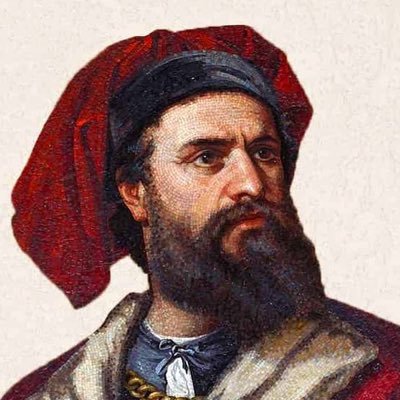
Before the Louvre guarded the world’s art, it guarded Paris.
Beneath today’s museum survive the foundations of the fortress built by Philippe Auguste around 1190.

Cees Steendijk retweeted

“Sometimes you have to stand alone, not to prove you're right, but to prove you're not afraid of being wrong.”
- Marcus Aurelius
Marcus Aurelius (121–180 CE) was a Roman emperor, Stoic philosopher, and one of the ancient world’s most influential thinkers. Born in Rome on April 26, 121 CE, he ruled from 161 until his death in 180. His reign was marked by warfare, political difficulties, and personal tragedy, yet he remained devoted to Stoic principles of reason, discipline, justice, and inner calm.
His private writings, eventually collected as Meditations, were never meant to become a published work. They served as personal reminders about maintaining integrity, accepting what lies beyond our control, and developing strength of character through reason and self-reflection. Centuries later, Meditations remains one of the most widely read works of Stoic philosophy.
Marcus Aurelius is remembered both for his reign as emperor and for the philosophical legacy he left behind. His reflections on resilience, self-control, mortality, and finding peace amid adversity continue to resonate with people navigating the challenges of everyday life.

Cees Steendijk retweeted
September 23, 1459. The first real battle of the Wars of the Roses was won by an old man pretending to run away, and covered by a friar firing a cannon into an empty field all night.
The Wars of the Roses did not begin with two armies meeting in a field. They began with a failing king, Henry VI, who suffered periods of complete catatonic breakdown, a court run in his absence by his wife Margaret of Anjou, and a rival claimant in Richard, Duke of York, who insisted he was perfectly loyal right up until he wasn't.
By 1459 Margaret was working openly to destroy the Yorkist lords. She was personally recruiting in Cheshire and handing out a livery badge of a silver swan to knights and squires who took her service.
York was gathering at Ludlow. The Earl of Salisbury, a Neville and one of the most powerful men in the north, set out from Middleham in Yorkshire with about 5,000 men to join him.
Margaret sent Lord Audley to intercept him with roughly 10,000.
Audley caught him at Blore Heath in Staffordshire, and he chose the ground well. Open heath, his army drawn up behind a great hedge, and between the two armies a brook with steep banks, wide and running fast.
Salisbury was outnumbered two to one with a stream in front of him. He was also about fifty nine years old and had been soldiering most of his life.
So he cheated.
He drew his line up, made a show of it, and then began to withdraw. Wagons pulling away, men turning, the whole picture of a smaller force deciding it did not want this fight after all.
The Lancastrian cavalry came after him across the brook.
And Salisbury's line turned around and was waiting for them.
Cavalry crossing a steep sided watercourse cannot arrive in order. They come over in ones and twos, disordered, on bad footing, and what met them was formed infantry and archers. They were slaughtered at the water.
They tried again and it went the same way. Audley led a third attack himself and was killed in it.
Lord Dudley took over, attacked on foot, and failed.
Then about 500 Lancastrians changed sides in the middle of the battle and began fighting their own army, at which point it stopped being a battle.
The Yorkists lost nearly 1,000 men. The Lancastrians lost at least 2,000 and their commander.
Salisbury's problem now was that he had won, there were still Lancastrian forces nearby, and he had to get to Ludlow.
So, according to the story, he hired an Augustinian friar and left him behind with a cannon and instructions to fire it at intervals all night into an empty field, so the enemy would believe the Yorkist army was still sitting there.
The friar did it. Salisbury marched. It worked.
That story comes from a later chronicle and may well be embroidered, but it has been attached to this battle for centuries and it is too good to leave out without at least the warning label.
The victory did the Yorkists almost no good at all. Three weeks later at Ludford Bridge the Yorkist army looked across and saw the royal banner, understood they would be fighting the anointed king in person, and melted away overnight. York fled to Ireland. Salisbury and his son Warwick fled to Calais.
They came back the following year, and the war ran another twenty six.
Salisbury was captured at Wakefield in December 1460 and beheaded. His head was set on the gates of York beside the Duke of York's, which had been fitted with a paper crown.
His son, Richard Neville, Earl of Warwick, went on to depose two kings and is remembered as the Kingmaker.
Blore Heath is still open ground, and there is a stone cross on it said to mark the place where Audley fell.

Cees Steendijk retweeted
September 23, 1338. The first naval battle of the Hundred Years War, and the first sea fight in European history in which anybody fired a gun.
Edward III had claimed the French throne and needed money, and the money came from wool. English wool went to Flanders, was woven into cloth there, and that trade was the largest source of wealth in the kingdom. Edward was spending it buying alliances among the princes of the Low Countries.
In September 1338 five great English cogs sailed for Antwerp carrying a wool cargo meant to pay for those alliances. A cog is a fat, high sided merchant ship. Slow, tough, built to carry cargo rather than fight.
The flagship was the Christopher, and aboard her were three cannon and a handgun.
Nobody is certain what they looked like. Guns at this date were small, short ranged, fired stone or iron shot or bolts, and were about as likely to injure their own crew as the enemy. They were not a weapon system. They were a novelty an English king had bought because he liked new things.
But that is the first recorded use of artillery at sea, and it happened at the very opening of a war that ran, on and off, for 116 years.
The escort did not do its job. The commander, John Kingston, was caught off Arnemuiden on Walcheren with a good part of his crews ashore.
Against him came a French and Genoese force under the admirals Hugues Quiéret and Nicolas Béhuchet.
Forty eight galleys against five cogs.
A galley is everything a cog is not. Fast, oar driven, manoeuvrable, independent of the wind, and packed with fighting men instead of cargo. In confined water, against half crewed merchantmen, that is not a battle.
The English held out for most of a day and Kingston surrendered.
And then the part worth knowing about how this war was going to go. The French killed the prisoners. All of them.
That was not normal practice between Christian kingdoms in 1338. Knights were ransomed and sailors were usually put ashore. It set a tone at the very beginning that both sides remembered.
All five ships were taken, wool and all. The Christopher was put into French service.
Two years later at Sluys the French fleet was annihilated by Edward III, and the Christopher was recaptured, having spent the interval fighting for France.
Both French admirals were at Sluys. Quiéret was killed. Béhuchet was captured, and Edward had him hanged from a yardarm, which is what you do to a pirate rather than to an admiral.
Whether that was specifically for Arnemuiden is argued. Béhuchet had also burned Southampton later in 1338, and Edward loathed him.
Sluys is the famous one. Arnemuiden is the battle before it, where the English lost badly, a wool convoy was destroyed, a crew was murdered, and three small guns went off on the deck of a merchant ship and began something that ended with battleships.

Cees Steendijk retweeted
“Political language is designed to make lies sound truthful and murder respectable.”
- George Orwell (1946)
George Orwell’s personal experiences gave him firsthand insight into the political structures he would later examine in his writing. Born Eric Arthur Blair in 1903, he served in the British colonial police in Burma, experienced poverty among working-class communities in Paris and London, and traveled to Spain during the Spanish Civil War. These encounters shaped his commitment to democratic socialism while strengthening his opposition to imperialism, authoritarianism, and unquestioning political obedience.
In his 1946 essay Politics and the English Language, Orwell examined how political language can distort reality rather than clarify it. He argued that governments and political organizations often rely on vague expressions, complicated terminology, and euphemisms to disguise uncomfortable truths. By replacing straightforward descriptions with abstract language, serious events can be made to appear routine or impersonal. Orwell believed that imprecise writing was more than a stylistic weakness; it could encourage equally imprecise thinking.
His proposed remedy was straightforward: choose familiar words, eliminate unnecessary language, and describe reality with as much clarity as possible. He criticized overused metaphors and elaborate jargon designed to sound sophisticated without conveying genuine meaning, while acknowledging that his writing principles were flexible guidelines rather than absolute rules.
These concerns also appeared in his novel Nineteen Eighty-Four, where the fictional language of Newspeak demonstrates how controlling vocabulary can restrict independent thought. By systematically reducing the words available to people, the ruling Party seeks to make certain ideas increasingly difficult to formulate or communicate. Through both his essays and fiction, Orwell explored the relationship between language, political power, and the freedom to think independently.

Cees Steendijk retweeted

Caravaggio didn’t want you to watch this scene.
He wanted you sitting at the table.
Look at the man on the right.
His arm seems to reach straight out of the painting.
Even the basket of fruit hangs over the edge.
Caravaggio wanted to make you feel like you were there.
Does it work?
Supper at Emmaus, 1601

Cees Steendijk retweeted
Although Charles died in Spain, he was given a lavish funeral in Brussels, the capital of his native Low Countries and place where he spent a large part of his life. An empty coffin was carried around through the streets of Brussels.


#OTD in 1558, Emperor Charles V died in Yuste. Born (Ghent) and bred (Leuven & Mechelen) in the Low Countries he would become the most powerful man in Europe ruling a massive empire. After a string of abdications he retired to a monastery in Yuste where malaria killed him.
