

Science minded (though not scientist), engineer, programmer (even know VEE), hate irrationality, hope to live long enough to see another person on the moon.
USA, PA
Joined March 2014
- Tweets196K
- Following1K
- Followers2K
- Likes242K







Pinned Tweet
#gmo Another great product just got the nutrition sucked out of it by the @NonGMOProject


First Officer 🇺🇦 🇮🇱 🇺🇸((Space Laser Force)) retweeted

HIV - 40 years of research, now completely treatable and preventable
Cancer - more than 100 years research, many cancers now curable
Covid - massive global effort, vaccine achieved in a year
Science is AMAZING

HIV - 40 years of research, no vaccine discovered.
Cancer - more than 100 years research, no vaccine discovered.
Common Cold - no vaccine available.
And yet a brand new virus emerges and within 12 months, ‘Four Separate Big Pharma Companies discover a vaccine all within one week of each other.’
What are the odds of this?
Readers added context they thought people might want to know
False equivalency. COVID vaccines used prior mRNA/coronavirus research & funding; no HIV vaccine; cancer has HPV preventive vaccines; common cold has 200+ viruses.
niaid.nih.gov/diseases-condi…
hiv.gov/hiv-basics/hiv…
cdc.gov/hpv/hcp/vaccin…
technologyreview.com/2025/10/31/112…
First Officer 🇺🇦 🇮🇱 🇺🇸((Space Laser Force)) retweeted

⚡️️ Norway to provide Ukraine with at least $7 billion in 2027, expand air defense cooperation.
The ministers also discussed supplying additional combat aircraft and ammunition, expanding cooperation on unmanned systems, and scaling up cooperation through joint production projects and the exchange of battlefield experience.
kyivindependent.com/norway-t…

First Officer 🇺🇦 🇮🇱 🇺🇸((Space Laser Force)) retweeted

In July 1976, a padlock snapped shut on a Harvard laboratory door, and the work inside was declared illegal.
The Cambridge city council had just voted to ban the research. Lydia Villa-Komaroff packed her glass pipettes and lab notes into a cardboard box. The bacteria in her vials were harmless, but the city did not care.
Eleven years earlier, Lydia had been told she did not belong in science at all.
Born in Santa Fe, New Mexico, in 1947, she grew up in a house with five siblings, a father who taught music, and a mother who worked as a social worker. In her neighborhood, women were expected to become teachers or nurses. Lydia chose chemistry after reading through her uncle's old college textbooks.
In 1965, she sat in an advisor's office at the University of Washington to declare her major. The man behind the desk reviewed her academic file, looked up at her, and said women did not belong in chemistry.
Lydia stood up and walked out. She transferred to Goucher College in Maryland and shifted her focus to biology.
Even there, the friction never stopped. In the 1960s, hard science was treated as territory reserved for white men. As a Mexican American woman from the Southwest, Lydia was constantly mistaken for a secretary and asked to fetch coffee before seminars.
When she moved to MIT for her doctorate, the pressure only grew. She failed her first set of oral qualifying exams, and the review panel suggested she reconsider her academic path.
She walked out to a concrete stairwell in the science building, sat on the steps, and cried. Then she went back to the library and passed on her next attempt.
By 1976, she was a postdoctoral researcher at Harvard, working on a team trying to solve a quiet global emergency.
The world was running out of insulin. Millions of people with diabetes depended on daily injections to stay alive, and the supply chain was brutal. Pharmaceutical companies had to harvest the hormone from the pancreases of slaughtered pigs and cows.
It took eight thousand pounds of animal glands to produce a single pound of usable insulin. As the human population grew, livestock numbers could not keep up. A severe medical shortage was mathematically inevitable.
Lydia's team was racing against rival laboratories in California to pull off something that had never been done. Their plan was to splice mammalian genetic code into a circular piece of bacterial DNA called a plasmid, turning ordinary bacteria into microscopic medicine factories.
Then local politics brought everything to a halt.
After reading a magazine article about genetic engineering, the mayor of Cambridge called an emergency city council meeting. Terrified residents packed the municipal building, convinced that mutant bacteria would escape Harvard and poison the city water supply.
Scientists tried to explain their safety protocols, but the council voted for an immediate moratorium. Overnight, the Harvard team was locked out of its own experiments.
Lydia and her colleagues loaded their fragile equipment into the trunks of their cars and drove hundreds of miles to Cold Spring Harbor Laboratory in New York, outside the ban's jurisdiction.
They slept on cots in empty dormitories and worked in borrowed space sealed under strict negative air pressure. Every time a door opened, air flowed in rather than out. Even though they wore heavy gowns and gloves, sterilized every drop of chemical waste, and worked with a strain of E. coli that smelled like rotting garbage, the stench clung to their clothes and hair long after they left the building.
Inside the academic hierarchy, little had changed. During a major department review, a senior male scientist stood at a chalkboard and walked the room through a technique Lydia had spent a full-month refining. He never mentioned her name.
Lydia sat in the audience and listened. When it was over, she went back to her bench and started the next sequence.
For months, the work was a grind of daily failure. They coated petri dishes with a chemical indicator designed to turn bacterial colonies blue if they absorbed the insulin gene. Week after week, the dishes stayed clear.
Grant money was running low. The rival team in California published a major breakthrough on a different hormone. Every morning, Lydia checked the incubators, adjusted the temperature dials, and recorded another round of failed plates in her logbook.
Finally, the team changed tactics. Instead of targeting active insulin directly, they built a genetic sequence for proinsulin, its biological precursor. They infected a fresh batch of E. coli, poured new agar plates, and placed them in the heat to wait.
In the middle of 1978, Lydia pulled a stack of plastic dishes from the incubator.
The agar was covered in tiny blue dots.
To prove the bacteria were actually producing the hormone, she washed the dishes with a radioactive probe that bound only to the insulin sequence, then pressed them against X-ray film in a darkroom.
When she held the developed film up to the light, small dark smudges lined up directly with the bacterial colonies. For the first time in history, a microbe had produced a mammalian hormone.
The team published its findings in the Proceedings of the National Academy of Sciences, with Lydia listed as a primary author. Within a short time, the method was adapted for human insulin, ending the world's reliance on animal organs and putting reliable medicine on pharmacy shelves worldwide.
Today, millions of people take a daily dose of insulin without ever knowing about the woman who cried on an MIT stairwell, scrubbed the smell of E. coli out of her clothes in a borrowed dorm, and kept checking her incubators when her name was left off the chalkboard.

First Officer 🇺🇦 🇮🇱 🇺🇸((Space Laser Force)) retweeted

Dass eine Frau in Deutschland angegriffen wird, weil sie Antisemitismus nicht schweigend hinnimmt, ist eine Schande. Dass sie überhaupt den Mut dazu aufbringen muss, ein Armutszeugnis für unsere Gesellschaft.
Volle Solidarität mit @PreislerKa !
First Officer 🇺🇦 🇮🇱 🇺🇸((Space Laser Force)) retweeted

Not even close: this is false information. Here’s my infographic on the risks of what happens if a child contracts measles vs a dose of MMR vaccine. Adapted from our 2020 NYT op-ed


You are more likely to die from the measles vaccine than measles itself.
Readers added context they thought people might want to know
Measles kills about 1–3 per 1,000 cases in the US, and WHO estimates 95,000 deaths globally in 2024. Vaccine-caused deaths are extremely rare; serious reactions occur about once per million doses. Vaccination averted ~59 million deaths from 2000–2024. who.int/news-room/fact… cdc.gov/measles/about/…
First Officer 🇺🇦 🇮🇱 🇺🇸((Space Laser Force)) retweeted

Fun fact: it's harder to make a jet engine than a nuke.
There are 9 countries that have succeeded in making a nuclear bomb and 5 that can produce high end jet engines. And of those 5, only 4 can produce both commercial and fighter engines.
The reason is the turbine blades which power the entire engine. They need to withstand some of the harshest conditions of any machinery on the planet. Temperatures inside reach ~3600F which melts steel, there are about 10 tons of force on each blade, and they need to be durable enough to run for tens of thousands of hours.
The only way anyone has gotten them to work is with custom nickel super alloys cast as a single metal crystal. Typically when you melt metal into a mold, it forms into many smaller crystals, but at the temps a turbine blade is subjected to, that creates weak points. So companies spent decades and billions of dollars perfecting processes to create these rotor blades that results in 1 singular crystal for the entire blade.
It feels so normal taking a flight these days, but it's truly one of the greatest materials engineering achievements we've ever seen. I love aerospace man.

First Officer 🇺🇦 🇮🇱 🇺🇸((Space Laser Force)) retweeted

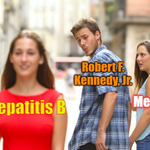
This will translate directly into lifelong hepatitis B infections, liver transplants, liver cancer, and preventable death.

Just 66% of newborns got the hepatitis B vaccine in the first half of 2026 — down from 80% in 2022.
nbcnews.com/health/health-ne…


First Officer 🇺🇦 🇮🇱 🇺🇸((Space Laser Force)) retweeted

With Russian casualties now outpacing recruiting by around 60%, the Russian military is rapidly shrinking.
Since the month of March, a blistering uptrend in casualties, yet low recruiting, with October the widest disparity of the war, at -20,000.

First Officer 🇺🇦 🇮🇱 🇺🇸((Space Laser Force)) retweeted

🔥 Ukrainian forces have reportedly completely driven russian troops out of the village of Zlahoda.
Glory to our defenders! 🇺🇦

First Officer 🇺🇦 🇮🇱 🇺🇸((Space Laser Force)) retweeted

Voorkom kanker aan de anus, vagina, vulva en penis van je kind, en anderen: parool.nl/nederland/onderzoe… ⚕️ #wetenschap #zorg


Bescherm je kinderen, jezelf en anderen tegen kanker aan de penis of baarmoederhals eenvandaag.avrotros.nl/doe-m… ⚕️ #eenvandaag

First Officer 🇺🇦 🇮🇱 🇺🇸((Space Laser Force)) retweeted

Months - 55
Victories-0
Casualties - 1,650,000
Economy - 🚽
War crimes - ♾️
Purge - Pending
Bridges - -1 🌉 💥
Warship - Submarine
Oil refineries - 🔥💥🦩
Prez - 😭🙏➡️🇺🇸
Donald - 🤡🙏➡️🇺🇦
Zelensky - 🖕➡️🇷🇺➕️🇺🇸
Racoons - 1🦝
I remain a master strategist
First Officer 🇺🇦 🇮🇱 🇺🇸((Space Laser Force)) retweeted
These are the indicative estimates of Russia’s combat losses as of Nov. 24, according to the Armed Forces of Ukraine.



First Officer 🇺🇦 🇮🇱 🇺🇸((Space Laser Force)) retweeted

🇩🇪🇺🇦 Germany will become the first country to gain access to Ukraine’s DELTA military ecosystem, the Defense Ministry says.
German forces will be able to use the system for their own needs, modify its capabilities, and take part in developing new functions.
At the same time, partners will not have access to the Armed Forces of Ukraine’s combat and operational data.


First Officer 🇺🇦 🇮🇱 🇺🇸((Space Laser Force)) retweeted

BIG | 🇺🇦🇸🇪🇬🇧🇷🇺‼️‼️ Russian military analysts are warning that Ukraine’s expected Gripen fighter jets, armed with Meteor air-to-air missiles capable of engagements at distances approaching 200 km, could pose a serious threat to Russian Su-34 bombers operating near the front line.
The Russian military Telegram channel Voyenny Osvedomitel claims Ukraine, Sweden, and the United Kingdom have coordinated plans covering 16 Gripen C/D fighters, a potential additional 16 Gripen E/F aircraft, pilot training, maintenance, and Meteor missile supplies. The channel suggests the first aircraft could arrive in January, following President Volodymyr Zelenskyy’s recent remarks. The reported agreement and delivery figures have not been independently established. Meteor missiles use a ramjet propulsion system that helps maintain speed and maneuverability at long distances, making them particularly dangerous to aircraft attempting to launch glide bombs from outside Ukrainian air defense coverage.
The most significant consequence could be a change in how Russia employs its Su-34 bombers. The threat of long-range interception could force Russian pilots to launch their glide bombs from greater distances, alter flight routes, or require additional fighter escorts. Even without frequent missile launches, a combat-ready Gripen and Meteor combination could complicate Russian air operations and reduce the freedom with which Moscow’s aircraft attack Ukrainian positions.
See the latest updates with us: @visionergeo
First Officer 🇺🇦 🇮🇱 🇺🇸((Space Laser Force)) retweeted

#nucleare
Belgio🇧🇪
Il reattore belga di Tihange 3 è ripartito in anticipo, dopo 7.000 interventi in 7 mesi.
Il reattore ha 41 anni.
1. Una ripartenza dopo attenti lavori:
Gli interventi svolti riguardano pompe, valvole, cavi. Ognuno è stato controllato, con una prova scritta. Il reattore riparte solo quando tutte queste prove sono raccolte.
2. Una ripartenza meritata, giorno dopo giorno:
7.000 interventi in 193 giorni, cioè più di 35 al giorno, weekend inclusi. Sulla stessa struttura, con gli stessi accessi. E non un giorno di ritardo.
Senza le prove, il reattore non riparte.
Senza la giusta sequenza, riparte in ritardo.
Finire in anticipo uno stop di 7.000 interventi non è frutto del caso. È la conferma di un mestiere ben sviluppato da decenni di esperienza, nonostante i tentativi politico-ideologici di fermare tutto e far perdere questo enorme bagaglio di know-how industriale.
E si riparte per 10 anniiiii!!! 🥂

First Officer 🇺🇦 🇮🇱 🇺🇸((Space Laser Force)) retweeted

Remember this when @SecKennedy tries to pretend he’s working to stop the measles outbreak.
He’s working to promote misinformation to increase it and it’s harms.
Yes, he earned the blame.

First Officer 🇺🇦 🇮🇱 🇺🇸((Space Laser Force)) retweeted
BREAKING:
Ukrainian long-range drones have struck the oil refinery in Perm, Russia, setting it on fire.
It’s one of Russia’s largest oil refineries and is located more than 1500 km from the frontlines.
First Officer 🇺🇦 🇮🇱 🇺🇸((Space Laser Force)) retweeted

In September 1887 a 23-year-old reporter spent a night in a New York boarding house pulling faces she had practised in the mirror, and within days a judge and a string of doctors had certified her insane, one of them calling her positively demented and a hopeless case, and put her on the boat to the women's asylum on Blackwell's Island.
Her name was Nellie Bly, and Joseph Pulitzer's New York World had sent her to do it. She checked into the boarding house as Nellie Brown, stared at nothing, and frightened the other lodgers until they called the police.
The judge decided she had been drugged. The head of the insane pavilion at Bellevue pronounced her undoubtedly insane. One of the examining doctors, she noted, paid rather more attention to the pretty nurse than to the patient.
On the island she dropped the act and behaved exactly like herself. It made no difference. She wrote that the more sanely she talked and acted, the crazier they thought she was.
Supper was a bowl of pinkish tea and a slab of bread with butter so rancid she could not eat it. On other days it was spoiled meat, thin broth, and bread so stale it was dried dough, one slice with a spider in it. The women were put through ice-cold baths and made to sit on hard benches from morning until night. The most troublesome were roped together by belts at the waist and marched out like a team of mules.
She met women she believed were no more insane than she was: immigrants who could not make themselves understood, and poor women nobody had come for.
After ten days the World got her out. Her articles caused a sensation, a grand jury went over to the island, and the city found nearly a million dollars more for the care of the insane.
The doctors had taken minutes to certify her.
It took her ten days to certify them.
