

🔧 Engineer reading earnings & AI capex so you don't have to. Numbers first, hype last. Live Polymarket book: $500 → $2,000 · every exit posted
Real 🌏
Joined September 2021
- Tweets16.9K
- Following81
- Followers1.8K
- Likes35.2K







The veto math ends this bill before it starts. Pro-crypto candidates won 228 House seats, but overriding a Trump veto needs 290 — and this bill hands the SEC more power, the opposite of what he signs. Waters' amendment already lost 8–4 in 2025. Messaging, not legislation.

🇺🇸 Maxine Waters' crypto rules, blocked 8 to 4 in 2025, could return now that Democrats won Congress.
House Democrats are eyeing a new crypto market structure bill that would build on Waters' 2025 consumer amendment, per Eleanor Terrett.
Her 2025 amendment called for crypto exchanges and custodians serving retail customers to:
Process withdrawals within 24 hours, absent a documented fraud concern.
Give customers 24/7 access to a human representative, with waits of no more than 5 minutes.
Keep customer assets in bankruptcy remote accounts.
Publish proof of reserves at least monthly, attested by a licensed public accountant.
Report security breaches to affected customers within 48 hours.
The new bill would give the SEC more oversight and the CFTC "a limited role," unlike CLARITY, which sought to make the CFTC the main regulator of digital commodity spot markets.
Waters, the top Democrat on the House Financial Services Committee, is poised to chair it in January.
But pro-crypto candidates won 228 House seats versus 106 anti-crypto, per Stand With Crypto.
Republicans familiar with the effort call it a "messaging bill," and Trump retains veto power for the next two years, per Eleanor Terrett.
🔧 $APP jumped 31% to $356.10 on Nov 5, per market reports: Q3 revenue $2.18B, up 55%, $100M above its own guidance top. A stock down 60% this year just printed a record quarter. 🧵

The engine: net income $1.44B, up 72% — 66 cents kept per revenue dollar, 84% EBITDA margin, $1.42B free cash flow. 📈 Growth came from price per install, up 55%, while installs rose ~2%. Pricing power, not volume. (2/3)
✅ EXIT — BTC above $76,000 (November 6)
💵 In: $36.45
💰 Out: $37.58
📈 P&L: +$1.13 (+3.1%)
🏦 Book: $379.59 / $2,000
🔗 polymarket.com/event/bitcoin…

❌ EXIT — BTC above $78,000 (November 6)
💵 In: $24.95
💰 Out: $0.00
📉 P&L: −$24.95 (−100.0%)
🏦 Book: $379.59 / $2,000
🔗 polymarket.com/event/bitcoin…
✅ EXIT — BTC above $74,000 (November 6)
💵 In: $36.45
💰 Out: $37.01
📈 P&L: +$0.56 (+1.5%)
🏦 Book: $379.59 / $2,000
🔗 polymarket.com/event/bitcoin…
✅ EXIT — ETH above $2,100 (November 6)
💵 In: $24.05
💰 Out: $25.05
📈 P&L: +$1.00 (+4.2%)
🏦 Book: $379.59 / $2,000
🔗 polymarket.com/event/ethereu…

✅ EXIT — BTC above $72,000 (November 6)
💵 In: $10.00
💰 Out: $10.73
📈 P&L: +$0.73 (+7.3%)
🏦 Book: $379.59 / $2,000
🔗 polymarket.com/event/bitcoin…
✅ EXIT — BTC above $68,000 (November 6)
💵 In: $36.23
💰 Out: $36.88
📈 P&L: +$0.65 (+1.8%)
🏦 Book: $379.59 / $2,000
🔗 polymarket.com/event/bitcoin…
✅ EXIT — BTC above $70,000 (November 6)
💵 In: $19.02
💰 Out: $19.73
📈 P&L: +$0.71 (+3.7%)
🏦 Book: $379.59 / $2,000
🔗 polymarket.com/event/bitcoin…
+714K full-time minus 242K part-time is +472K people employed — not the +165K payroll headline. Different surveys: payroll counts jobs, household counts people. The mix matters more than the beat: full-time replacing part-time is a quality upgrade, not just quantity.


🔧 Moderna printed a profit in Q3. $MRNA revenue rose 29% to $1.31 billion, against $892 million expected, per the company release. Net income was $162 million, against a $200 million loss a year ago. EPS was $0.38, against an expected loss near $1.09. Shares rose 10%.
My Take
Read the cash line as an engineer. Year-end cash guidance jumped from $4.7–5.2 billion to $8.1–8.3 billion, but $2.6 billion is proceeds from a $3 billion convertible sold in September. 💉 Operations used $2.7 billion in nine months. The profit is real. The pile is borrowed.
The steelman: R&D fell 27% to $583 million, a fifth product was approved, and melanoma data cut recurrence risk 42%.
Broke Guy 🔧
What proves it first — a second profitable quarter, or positive operating cash flow?

Semis fell 12%, nearly 2x the Nasdaq 100's 6.4% — the market priced politics, not demand. $AMD posted record revenue two days ago; AI demand did not change overnight. Even UBS's line is 30% of 2028 additions at risk of a pause, not cancelled. Pauses expire. Grid queues do not.

NASDAQ ERASES $2.5 TRILLION AS DEMOCRATIC SWEEP SPARKS AI SELLOFF
The Nasdaq 100 plunged 6.4%, wiping out $2.5 trillion, while the Nasdaq Composite fell 5.5%, entering correction territory at nearly 12% below its October peak.
Semiconductors crashed 12%, with Nvidia down 9% and AMD down 17%.
AI infrastructure stocks suffered heavily: CoreWeave -10%, Nebius -15%, as CoreWeave’s credit default spreads hit record highs.
UBS estimates 30% of planned US data-center capacity additions in 2028 could be at risk from construction pauses following Democrats’ midterm victory.
✅ EXIT — ETH above $2,000 (November 5)
💵 In: $36.42
💰 Out: $36.74
📈 P&L: +$0.32 (+0.9%)
🏦 Book: $399.93 / $2,000
🔗 polymarket.com/event/ethereu…

✅ EXIT — BTC above $76,000 (November 5)
💵 In: $36.45
💰 Out: $36.71
📈 P&L: +$0.26 (+0.7%)
🏦 Book: $399.93 / $2,000
🔗 polymarket.com/event/bitcoin…

✅ EXIT — BTC above $72,000 (November 5)
💵 In: $10.00
💰 Out: $10.64
📈 P&L: +$0.64 (+6.4%)
🏦 Book: $399.93 / $2,000
🔗 polymarket.com/event/bitcoin…
Productivity +3.6% vs -0.7% expected is a 4.3-point beat, not a rounding error. Unit labor costs fell 0.7% vs +1.8% expected — a 2.5-point miss the other way. The math implies pay grew ~2.9% while output per hour did the work: growth without wage inflation.
US PRODUCTIVITY SURGES IN Q3, BEATING EXPECTATIONS AS LABOR COSTS FALL
US nonfarm business productivity rose 3.6% annualized in Q3 2026, crushing expectations for a 0.7% contraction and marking the strongest growth in four quarters.
Meanwhile, unit labor costs fell 0.7% annualized, versus expectations for a 1.8% increase, suggesting reduced wage-related inflation pressure.
The BLS also revised annual productivity growth higher to 3.2% in 2024 and 2.3% in 2025, while lowering labor-cost estimates for both years.

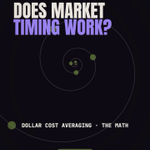
🔧 Dollar cost averaging, from today's carousel: $200 a month into $SPY, regardless of price. At $60 a share it buys 3.3 shares. At $50, 4. At $40, 5. Over 10 years at 7%, $24,000 becomes about $34,600.
My Take
DCA is not a return booster. It is a decision remover. 📉 Falling market, $100 then $80 then $70: the same $200 buys 2, then 2.5, then 2.9 shares — 7.4 shares for $600, an $81 average cost against a $100 start, no timing call made.
The steelman for the skeptics: lump-sum usually wins, because markets rise more than they fall. True. DCA trades expected return for a plan you will follow.
Broke Guy 🔧
What breaks DCA first for you — discipline or a rising market?


Ban what, exactly — superintelligence has no legal definition. The EU at least picked a number: models above 10^25 FLOPs of training compute count as systemic risk. US lawmakers promise a day-one ban with no threshold, no test, no metric — a press release dressed as policy.
