

Senior Lecturer in Machine Learning at Imperial College London. Metalhead. Cyclist. Biker. Father of 2.
London, UK
Joined July 2009
- Tweets1.8K
- Following1.3K
- Followers1.4K
- Likes2.6K




Felipe Tobar retweeted

Congrats 🎊 to Wenlong Chen who has passed his PhD viva today with only typographical corrections!
Now you can burn more GPUs at @IsomorphicLabs 😂
Thanks 🙏 @arnosolin and @Felipe_Tobar for your examination and Ben Glocker for your help!

Felipe Tobar retweeted
Happy birthday Joseph Fourier, whose 1822 equation allows us to listen to mp3s today: bit.ly/22kbNfi

Felipe Tobar retweeted

Fully funded PhD in Neurosymbolic AI for Finance 💰🤖 🔍 Work at Imperial College London on cutting-edge AI for financial applications! [1/3]
Felipe Tobar retweeted

Don't forget to register for our upcoming AI: Cutting-Edge Seminar with Dr @Felipe_Tobar (I-X & @ImperialMaths), titled “Optimal Transport for Machine Learning and Data Analysis”.
🗓️ 4 February (Tuesday)
🕐 1 – 2 pm (GMT)
📍 Hybrid (I-X & MS Teams)
imperial.ac.uk/events/188310…

Felipe Tobar retweeted

My book is (at last) out, just in time for Christmas!
A blog post to celebrate and present it: francisbach.com/my-book-is-o…

Felipe Tobar retweeted

𝗜𝗝𝗖𝗡𝗡 𝟮𝟬𝟮𝟱 in Rome, June 30 to July 5, 2025📢🧠🇮🇹
👉2025.ijcnn.org 👈
We are very glad to invite you all to contribute to the International Joint Conference on Neural Networks #IJCNN2025
Looking forward to welcoming you to IJCNN 2025 in Rome!

Felipe Tobar retweeted
Join us for our next I-X seminar with Professor @MihaelaVDS (@CC4AIM) titled "Pushing the boundaries of what is possible with ML: The Reality-Centric AI Agenda."
🕓 13.00 (GMT)
📅 Tuesday, 5 November
📍 Hybrid (I-X / Microsoft Teams)
Register now! ➡️ ix.imperial.ac.uk/event/i-x-…

Felipe Tobar retweeted
We are excited to welcome Dr @Felipe_Tobar to the I-X Team! 🎉
Felipe joined @imperialcollege earlier this month, as a Senior Lecturer in Machine Learning at I-X and @ImperialMaths.
Learn about Felipe's work and academic & non-academic interests ➡️ ix.imperial.ac.uk/news/i-x-m…

Felipe Tobar retweeted

📢 #IJCNN2025 solicits proposals for special sessions within the technical scope of the conference. Submission Deadline: 15 November 2024
🔗Learn more: 2025.ijcnn.org
#INNS #NeuralNetwork #AI #ArtificialIntelligence #futureofwork #AI #AIconference

Felipe Tobar retweeted

I have an exciting postdoctoral position @imperialeee on machine learning for Computational Light-field Microscopy. More details here: jobs.ac.uk/job/DJV050/resear…


Felipe Tobar retweeted
Join us next month for our I-X Seminar with Professor Terry Lyons who will be presenting on “Rough Analysis and Anomalous Streams”.
📅 Date: 12 September
🕒 Time: 1.30pm (GMT)
📍 Where: Hybrid (I-X Conference Room / via Teams)
Register here ➡ ix.imperial.ac.uk/event/i-x-…

Felipe Tobar retweeted

Conchetumare!

Metal Fans Chile.Inc: EL HÉROE DE LA GUITARRA, MARTY FRIEDMAN SOBRE SU ... metalfanschileinc.blogspot.c…

Felipe Tobar retweeted

- Regulators should regulate applications, not technology.
- Regulating basic technology will put an end to innovation.
- Making technology developers liable for bad uses of products built from their technology will simply stop technology development.
- It will certainly stop the distribution of open source AI platforms, which will kill the entire AI ecosystem, not just startups, but also academic research.
- the strangest aspect of all this is that all of these regulations are based on completely hypothetical science fiction scenario that very, very few people in the field are plausible.

The effort to protect innovation and open source continues. I believe we’re all better off if anyone can carry out basic AI research and share their innovations. Right now, I’m deeply concerned about California's proposed law SB-1047. It’s a long, complex bill with many parts that require safety assessments, shutdown capability for models, and so on.
There are many things wrong with this bill, but I’d like to focus here on just one: It defines an unreasonable “hazardous capability” designation that may make builders of large AI models liable if someone uses their models to do something that exceeds the bill’s definition of harm (such as causing $500 million in damage). That is practically impossible for any AI builder to ensure. If the bill is passed in its present form, it will stifle AI model builders, especially open source developers.
Some AI applications, for example in healthcare, are risky. But as I wrote previously, regulators should regulate applications rather than technology.
- Technology refers to tools that can be applied in many ways to solve various problems.
- Applications are specific implementations of technologies designed to meet particular customer needs.
For example, an electric motor is a technology. When we put it in a blender, an electric vehicle, dialysis machine, or guided bomb, it becomes an application. Imagine if we passed laws saying, if anyone uses a motor in a harmful way, the motor manufacturer is liable. Motor makers would either shut down or make motors so tiny as to be useless for most applications. If we pass such a law, sure, we might stop people from building guided bombs, but we’d also lose blenders, electric vehicles, and dialysis machines. In contrast, if we look at specific applications, like blenders, we can more rationally assess risks and figure out how to make sure they’re safe, and even ban classes of applications, like certain types of munitions.
Safety is a property of the application, not a property of the technology (or model), as @random_walker and @sayashk have pointed out. Whether a blender is a safe one can’t be determined by examining the electric motor. A similar argument holds for AI.
SB-1047 doesn’t account for this distinction. It ignores the reality that the number of beneficial uses of AI models is, like electric motors, vastly greater than the number of harmful ones. But, just as no one knows how to build a motor that can’t be used to cause harm, no one has figured out how to make sure an AI model can’t be adapted to harmful uses. In the case of open source models, there’s no known defense to fine-tuning to remove RLHF alignment. And jailbreaking work has shown that even closed-source, proprietary models that have been properly aligned can be attacked in ways that make them give harmful responses. Indeed, the sharp-witted @elder_plinius regularly tweets about jailbreaks for closed models. Kudos also to Anthropic’s @cem__anil and collaborators for publishing their work on many-shot jailbreaking, an attack that can get leading large language models to give inappropriate responses and is hard to defend against.
California has been home to a lot of innovation in AI. I’m worried that this anti-competitive, anti-innovation proposal has gotten so much traction in the legislature. Worse, other jurisdictions often follow California, and it would be awful if they were to do so in this instance.
SB-1047 passed in a key vote in the State Senate in May, but it still has additional steps before it becomes law. I hope you will speak out against it if you get a chance to do so.
[Original text (with links): deeplearning.ai/the-batch/is… ]

Felipe Tobar retweeted

🚀 ¡Acompáñanos en la próxima charla IDIA!
🗓 Jueves 06/06
🕒 13:00 hrs. Café de Bienvenida | 13:30 hrs. Inicio Charla
📍 OpenBeauchef, Beauchef #851
Aprende sobre "Técnicas avanzadas de datos en la industria" con Adrián Soto, Director de Innovación del IMFD @IMFDChile

Felipe Tobar retweeted

Jaime San Martín y el supercomputador para Chile: "Nos permitirá tener independencia intelectual" biobiochile.cl/biobiotv/prog… a través de @biobio
Felipe Tobar retweeted

Michael Bay acostumbra a utilizar en sus películas el llamado "Hero shot", un plano en el que la cámara gira lentamente alrededor del héroe desde un ángulo contrapicado otorgándole así un aura de épica y grandeza. Estos son solo algunos de sus más célebres ejemplos.
Felipe Tobar retweeted
Un poco de lo que fue hoy la inauguración del año académico @MundoFAU_uchile con la charla "¿Cómo darle forma a la ciudad con datos?" del académico Eduardo Graells Garrido @UChile_Beauchef @dccuchile



Felipe Tobar retweeted

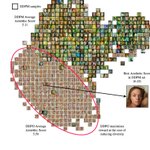
We made it to the cover of Nature Machine Intelligence @NatMachIntell !
Congrats @rodbonazzola @affrangi and team!
If you are interested in imaging genetics and how to discover new phenotype-genotype associations for anatomy, check it out: nature.com/natmachintell/
👇
