




There are people, who believe that Uqba did not exist, they also don't believe in 9th C. Arab traditionist scribes.
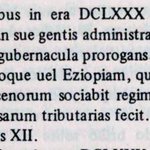
How then, is it possible that a Christian scribe in 8th C. Spain notes the governorship of 2 Fihrid governors.


Tree of prominent figures of Banu al-Harith & Muharib ibn Fihr in the western frontier of the Caliphate.
Part of Quraysh al-Zawahir, the clans of the Quraysh tribe who lived on the outskirts, hills, and surrounding areas outside the central valley of Mecca.

1
8
215
Abd al-Malik ibn Qatan al-Fihri served two terms (732–734 and 740–742) and Yusuf ibn Abd al-Rahman al-Fihri governed from 747 to 756, ruling effectively independently after the fall of the Umayyad Caliphate in 750 until his defeat by Abd al-Rahman I.


1
1
31
Governor of Ifriqiya Ubayd Allah ibn al-Habhab sent Habib b. Abi 'Ubayda al-Fihri to raid al-Sus (anti atlas mountains and western sahara) and the land of the Sudan (Land of the black people) after he returned from al-Andalus.


8
357


These paintings simplify what was worn in the Nasrid period.
Tiraz is what was fashionable, which is 7th C. Caliphal Arabic tradition.
You can see Muhammad I ibn al-Ahmar, depicted with a Tiraz tunic in the Cantigas de Santa Maria too.


"Gazaniam quoque uel Eziopiam, que supra Egiptum in heremi
adiacent plagis, Sarracenorum sociabit regimini"
"He also brought Gazania (Fezzan)—or Ethiopia, which lies in the desert regions beyond Egypt—under the rule and dominion of the Saracens"


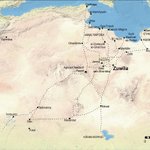
Uqba also campaigned into modern day Niger, securing the eastern trans-saharan trade route, his campaign was harsh, Ibn Abd al-Hakam notes the mutilation of kings, massacres of fighting men and the enslavement of dependents.
pp. 194 - 196.


1
240
Uqba also campaigned into modern day Niger, securing the eastern trans-saharan trade route, his campaign was harsh, Ibn Abd al-Hakam notes the mutilation of kings, massacres of fighting men and the enslavement of dependents.
pp. 194 - 196.

Uqba cut off the ear of the Berber king of Waddan, in Northern Fezzan, Modern Libya.
The king asked him, 'Why have you done this to me?' 'Uqba replied, 'I did this to you as a lesson: whenever you touch your ear, you will remember it and will not fight the Arabs again.'"


The Arab slave trade of Berbers in the Maghreb started with Amr's invasion of Cyrenaica, Tripolitania and Fezzan (Modern Libya).
Source: Ibn Abd al-Hakam's " The Conquest of Egypt and North Africa and al-Andalus" written in the 9th. C - Charles Cutler Torrey's Edition (1922)


Umayyad rule in NA was objectively far more oppressive: discriminatory taxation (including slave-girl tribute despite conversion), unequal booty distribution, Berber soldiers tattooed like slaves, and systematically relegated to the front lines
xitter.gq/lbnBattuta/status/2121…


@alFutuwwa Recreated a nice example of the Bronze crossguard from Los Algarbes with the tang and pommel of the Martin's Cave Gibraltar sword.

61