
Historian, UC Clermont. Friend to dogs/cats everywhere. Fighting the Future War. New Approaches in Teaching History (Using Science Fiction to teach history)
Cincinnati, Ohio
Joined December 2011
- Tweets3.4K
- Following175
- Followers144
- Likes1.4K

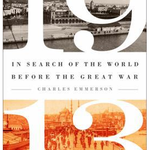





the reader that many people did not predict a future of war but had expectations of a long period of peace and economic and social expansion. Morton’s description of fin de siècle Vienna was of a society that felt they were facing a gloomy future.
From the bookshelf: Charles Emmerson, 1913: In Search of the World Before the Great War
I’ve had this one on my shelf for some time and only recently found the time to read it. A number of years ago I read Frederic Morton’s Thunder at Twilight, which looked at the last years

of the Austro-Hungarian empire. One of the fascinating questions raised by that book is whether the denizens of the Habsburg empire were aware that they lived at the end of an era? Emmerson takes the reader on a world tour of two dozen cities, from Imperial Capitals like London
Fred Krome retweeted

“My grandfather Alexander, my father's father, was an enthusiastic Zionist for many years. But he lived in Vilnius. Why didn't he come to the Land of Israel? Because the Land of Israel seemed to him, perhaps rightly so, not yet European enough for him. One day, maybe.
When anti-Semitism in Vilna became really violent, Alexander applied for a US visa him and his family. They told him, ‘You have to wait 17 years. There's a 17 year waiting list’.
In Vilnius, in the early thirties, he really didn't have 17 years to wait.
So he asked to be French. He even asked to be German. He was crazy enough to apply for German citizenship, maybe two or three months before Hitler came to power. I am eternally grateful to the Germans for refusing him, otherwise I wouldn't be here.
He even applied for Scandinavian citizenship, I don't know which one.
My grandfather came here because no one wanted him. This is the forgotten truth. Neither today’s Istael haters nor our children know it. Nobody wanted them.”
Amos Oz, The Last Lecture, 2018

I’d not heard of Jason Arday until a few weeks ago. Not too surprising as his work was outside my field and I am not particularly interested in the internal politics of Cambridge. As with most such controversies reactions tend to be based on a person’s politics.
Nader comment posted above. When reading letters of recommendation, I look for specific information, and then always check a candidate’s CV. Saves a lot of trouble later. Morale of these stories? I suppose even academics see and hear what they want to see and hear.