

Kol
Dubai, United Arab Emirates
Joined July 2020
- Tweets106K
- Following220
- Followers75.8K
- Likes6.8K








BloFin × Garrett Black Friday Rewards are live!
New users registering through my referral link can unlock:
$600 Free Position — 2 × 15 USDT BTC futures vouchers at 20x leverage (first 100 users)
20% Deposit Bonus — up to 500 USDT, subject to deposit and trading requirements
7 Days VIP1 — unlock after 100,000 USDT in qualifying futures trading volume
Campaign: Nov 19 – Dec 2, 2026
Limited spots available. Rewards are subject to eligibility and campaign terms.
Register here:
blofin.com/register?referral…
#BloFin #Crypto #Futures

Before using the @binance Card for this Black Friday campaign, i’d check the account first not the cashback percentage.
because the reward is not automatic for every cardholder.
the practical flow is simple:
open Binance → check if you received the campaign notification → make sure KYC is completed → confirm the offer is available in your region.
then check which offer applies to you.
for a new user, the first eligible purchase can get 50% cashback, capped at **5 USDC**, and the reward goes to the Spot Account.
for an existing user, spending more than $50 can qualify for 5 USDC back.
the Black Friday booster is separate, capped at 20 USDC, and that reward is paid by 31 December 2026.
one more thing beginners should know:
these rewards are limited and first come, first served, so simply making a transaction does not guarantee a reward.
the campaign caps are:
new user → 5 USDC
existing user → 5 USDC
Black Friday booster → 20 USDC
total November cashback → 100 USDC
so my order would be:
check eligibility first, then spend normally, then track the reward.
much better than seeing a cashback headline and assuming it applies automatically.
#Binance #BinanceCard #CryptoCashback #BlackFriday #USDC #SpendCrypto
I almost made one wrong assumption about the Binance Card Black Friday Booster:
That every card transaction would move me toward the reward.
it doesn’t work that way.
While checking the campaign terms, i noticed the useful distinction is between eligible everyday spending and transactions that are excluded from the booster.
So if i’m tracking my Black Friday activity, i’d separate it like this:
likely relevant everyday spend
retail
food & drink
transport
travel
digital goods
utilities
flights
but some transactions specifically do not count toward the extra 6% booster:
cash withdrawals
payments to financial institutions
government payments
gambling
That matters because the booster only applies to the eligible amount above $1,000 during the campaign.
So simply seeing more than $1,000 of total card activity does not automatically mean the same amount is being used for the booster calculation.
The better way to look at it is:
total card activity ≠ qualifying Black Friday spend
I'd check what the purchases actually were before doing the cashback math.
and even after qualifying, the extra Black Friday reward is capped at 20 USDC per eligible user, comes from a 250,000 USDC pool, and is first come, first served.
there’s also the wider 100 USDC November cashback cap, including the regular monthly Binance Card cashback program.
The other campaign offers have their own limits too:
new-user first purchase → maximum 5 USDC
existing-user offer → 5 USDC
Black Friday Booster → maximum 20 USDC
for me, that makes the campaign easier to use sensibly.
I wouldn’t count every transaction blindly or spend extra just to chase a threshold.
I'd use Binance Card for purchases i already planned, then check which part of that spending actually fits the Black Friday cashback rules.
For anyone following Binance Card, binance pakistan, Black Friday cashback, crypto cashback or looking to spend crypto, the full terms are here:
binance.com/en/events/binanc…
#Binance #BinanceCard #CryptoCashback #BlackFriday #BlackFridayDeals #SpendCrypto #USDC
General announcement. Products and services may not be available in every region. Digital assets carry market risk. Not financial advice.

One part of @binance security that i think is easier to understand when you look at the sequence, not the feature names:
an account action happens
→ the system checks the context
→ something looks unusual
→ extra verification or a temporary hold can kick in
that matters because an attacker usually does not stop at getting a password.
the real goal is often to turn access into a withdrawal as quickly as possible.
so imagine a new device logs in, then tries to change security settings or move funds.
Binance says its risk systems monitor things like logins, devices and withdrawals, and unusual activity can trigger additional checks or restrictions.
from a user side, this is where a few controls become much more useful together.
if i saw a security alert i didn’t recognise, i would not start clicking links from emails or messages.
i’d open Binance directly and check:
device management
is there a phone, browser or session i don’t recognise?
login and withdrawal alerts
does the time or activity match what i actually did?
withdrawal whitelist
are withdrawals still limited to addresses i already approved?
2FA / passkey
is my sign-in method still under my control?
and if an email claims to be from Binance, i’d check my anti-phishing code before trusting it.
the part beginners sometimes miss is that security is not only about blocking the first login.
it is also about making the next steps harder:
stolen password ≠ instant withdrawal
that is why temporary withdrawal restrictions after important security changes can actually be useful.
they create time to notice that something is wrong.
and one scam line is worth remembering:
Binance will not ask you to move funds to a safe wallet, join a trading group, or send crypto to verify your account.
that is not an account-security procedure.
for me, the best way to think about Binance security is layered:
the platform monitors unusual activity, while the user strengthens crypto security with 2FA / passkeys, an anti-phishing code a withdrawal whitelist and regular device checks.
if you’re wondering how to secure your crypto account, start with the controls you can verify yourself rather than waiting until something looks wrong.
Official Binance security page:
binance.com/en-GB/event/user…
Proof of Reserves:
binance.com/en/proof-of-rese…
Digital asset prices are subject to high market risk and price volatility. Not financial advice.
#Binance #BinanceSecurity #StaySAFU #CryptoSecurity #2FA #Passkeys #ScamAlert #CryptoSafety


GOLD perps are coming to @grvt_io, and the part i keep thinking about is the time before i’d even open one.
say i’m watching gold into a fed release. i might have usdc ready and still decide to sit through the first move. sometimes the setup i wanted never comes, and the capital i set aside just sits there.
That’s here grvt’s setup gets interesting to me. eligible capital can earn yield while i wait, and part of the yield from its eligible vault can count toward trading margin when a setup does come along.
gold is one of two markets in the stable funding perps alpha. it gets tradfi-backed quotes, zero trading fees on market and limit orders, and funding every 24h.
i’m curious which market they bring this setup to next.
grvt.io/a/g/ahw58gnb


JUST IN: Stable Funding Perps are live on Grvt.
→ 0% trading fees
→ Low slippage, tight spreads
→ Assets plugged into TradFi LP venues for deep liquidity
→ Fixed funding, charged every 24 hours
Initial alpha: gold (XAU), silver (XAG) & WTI oil (CL). Try SFP today: grvt.io/a/g/jw73mkxm

I’ve spent years in crypto across spot and perps, but I’ve never opened a US brokerage account.
For a long time, I assumed early IPO access was only for institutions and high-net-worth clients. Retail investors like me typically participated through secondary markets after listing . I’d watch hot listings pop on day one, and no matter how much I told myself I’d get in earlier, I always ended up buying on secondary markets.
There always felt like an invisible barrier.
I recently tried Bitget IPO Prime’s public round for Anthropic* rToken (rANT). I wasn’t chasing massive returns — I just wanted to see what participating in this token offering actually feels like, instead of only watching from the sidelines.
For this round, the minimum subscription is $100, subject to eligibility, verification requirements, and the offering terms.
Subscriptions use USDT I already hold, so no wire transfers, although platform verification requirements apply. The 5% subscription fee is disclosed upfront; with no hidden costs buried in fine print.
rANT is scheduled for delivery right before US market open, so I’m not locked in immediately — full flexibility on day one to hold or adjust. Allocation isn’t guaranteed, but if I don’t get filled, my funds automatically move into Earn, with variable returns and redemption subject to those terms.
I want to be clear: this isn’t a guaranteed win. There’s still market, liquidity and valuation risk.
I only put in a small amount I could afford to lose to experience something I never thought I could access. For years I was always late to the party; this was my first chance to try this type of token offering, even with a tiny position.
If you’re in crypto but always felt these types of token offerings were out of reach, I’d suggest reviewing the relevant terms, eligibility requirements, and risks before deciding whether to try the public round with a small amount you can afford to lose.
Not for quick riches, but to understand how the product works and to experience what it’s like to participate in a token offering rather than only trading on secondary markets.
For me, that experience alone was worth it.
Please click the link below to subscribe:
bitget.com/spotlight/ipo-pri…
@bitget


One trade is enough for the new-user reward in my @KTX_Exchange campaign. the deposit and futures volume rewards are separate.
If you’re new to ktx, register through my referral link and complete one trade to qualify for a 20 usdt position voucher.
The net deposit tiers are 500 / 1,000 / 2,000 usdt, with 100 / 150 / 200 usdt in trial funds, respectively. the perpetual futures volume rewards start at 15 usdt in trial funds for 200,000 usdt in volume and go up to 200 usdt at 5 million usdtin volume.
The rewards are vouchers or trial funds, not cash payouts. the campaign is limited to the first 100 participants and ends at midnight on nov 25 (utc+8).
My referral link (i may earn a commission) 👇
3w.madex.cc/en/login/registe…

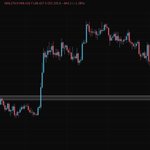
$BTC bulls and bears are battling around $73.5K! 👀
A reclaim could trigger a recovery toward $75.5K, while continued rejection may open the door for more downside.
This is a key level to watch.


Most traders focus on winning trades, but @tryrumor has introduced something interesting for the losing side too.
I’ve been looking into Rumor Perps, and the Shards system is probably the first thing worth understanding before trading.
Rumor Perps is live on BNB Chain, offering BTC, ETH and BNB perpetuals with up to 1000× leverage.
But here’s what caught my attention.
While the protocol pool is below $500K, the Shards rate is 100 per $1 of eligible realized loss.
For example, at that rate:
• $10 liquidated margin = 1,000 Shards
• $50 liquidated margin = 5,000 Shards
• $100 liquidated margin = 10,000 Shards
There’s one detail worth knowing. On an ordinary losing close, when the payout queue is empty, only 98% of the loss counts toward Shards.
Liquidations count the full margin.
So this is not the usual trading-volume farming system.
Winning trades don’t earn Shards. Only realized losses and liquidations qualify.
The rate is also interesting. Once the pool reaches $500K, the earning rate follows a declining curve based on cumulative platform losses. That means the early 100-Shard rate is worth paying attention to, although it can return whenever the pool falls below $500K.
For me, that’s the distinction traders need to understand. A favorable farming rate is interesting, but it shouldn’t become a reason to take unnecessary losses, especially with leverage this high.
And the trading experience itself is different.
You trade directly from your wallet using USDT, starting from $1. No separate deposit, no order book, no funding payments, no spread, no opening fee, no gas on trades, and no KYC.
Trades execute against the protocol pool using Pyth oracle prices.
Profitable closes carry a haircut and a 2% fee, while unpaid profits can enter a payout queue if the pool is short.
One important thing: Shards are non-transferable, recorded onchain, and intended to form the basis of future Rumor distributions. Their eventual value is not guaranteed, and earning them doesn’t recover your trading losses.
UTM Link: perps.rumor.trade/?utm_sourc…
Rumor has introduced a different approach for the losing side of trading, giving traders a chance to earn Shards from realized losses.
Explore: perps.rumor.trade
One number from Starknet's recent development research caught my attention: 564 BTC.
That's how much of the 621 BTC delegated in the developer's mainnet staking sample was held in accounts whose contract classes appeared capable of supporting an in-place post-quantum upgrade.
Roughly 91%.
I think this deserves attention because @Starknet's independent L1 research isn't only about replacing Ethereum settlement or adopting stronger cryptography.
There's an existing staking system with validators, operational accounts and delegators that must continue working if the network's security architecture changes.
And the account structure matters here.
A developer examining Starknet's staking contract noted that a validator's staker address cannot simply be replaced.
Moving that identity to an entirely new account would mean creating a new validator relationship rather than just changing a signing key.
But upgrading the existing account's verification logic could preserve the staker address, associated stake and delegators.
That's a meaningful use of account abstraction beyond ordinary wallet transfers.
The difficulty moves to the operational side.
Validators also use accounts to sign block attestations. If those accounts adopt hybrid ECDSA + Falcon-512 verification, their signing tools must support the new format without disrupting normal operations.
An independent operator, Cumulo, has already raised this concern in Starknet's governance discussion and expressed interest in coordinated Sepolia testing.
There's a second issue I would examine before treating an independent L1 as a security upgrade.
Starknet's current staking phase includes block attestations, but independent L1 security would require clearly defined responsibilities for consensus, finality and data availability.
That affects validator hardware, uptime requirements, operating costs and the economic security provided by stake.
The 91% figure is encouraging, but it measures potential account compatibility in a read-only analysis. It doesn't mean those accounts have migrated or that validator operations are ready.
For me, the next useful evidence would be a coordinated validator test showing that upgraded accounts can continue attesting, existing delegation relationships remain intact and operators can recover safely from failed changes.
The research white paper also needs to explain how the validator set would secure an independent chain.
I wouldn't measure Starknet's progress toward an L1 by governance support alone.
I'd measure it by whether the infrastructure already securing and operating parts of Starknet can take on greater responsibility without putting users, delegators or network continuity at unnecessary risk.
quantum.starkware.co/researc…


Why confidential finance needs to work after the deposit
I've been looking more closely at how @primus_labs handles confidential finance on BNB Chain, and one thing stands out to me.
Hiding a deposit is only the beginning. What happens to that money afterward matters just as much.
Think about a company holding $5 million in stablecoins. Even if its initial deposit is private, the advantage disappears if every payment to suppliers, every treasury movement, and every yield position becomes public.
Anyone watching the wallet could start piecing together how that company operates.
This is where Primus is taking a more practical approach with FHE (Fully Homomorphic Encryption).
On BNB Chain, users can shield $U into eU or USDT into eUSDT at a 1:1 ratio. Instead of making those assets visible like ordinary stablecoins, FHE allows the system to process encrypted balances and transfer amounts without exposing the underlying numbers.
But the part I find more interesting is what happens next.
Those encrypted assets aren't limited to sitting in a wallet. Users can transfer them and participate in Primus's Confidential Vault, where individual yield positions can remain encrypted while the underlying strategy operates through Unitas.
That makes confidentiality useful beyond simply holding funds.
There are still limitations worth understanding.
Wallet addresses and transaction activity remain visible. Vault batch totals can be audited, and moving funds back into ordinary public assets can expose information again. The yield product also introduces strategy risk, additional fees, and withdrawal delays.
So this isn't complete financial anonymity, and it shouldn't be presented that way.
For me, the bigger question is whether institutions can keep using public blockchain infrastructure without revealing every financial decision they make.
That's the part of confidential finance worth paying attention to.
@primus_labs is working on exactly that problem, and the real measure of progress will be how reliably privacy holds up during everyday financial activity, not just at the moment of deposit.
primuslabs.xyz
