

Dedicated to bringing accurate health info to Albertans|#HESA| #HealthExpertsForASaferAlberta
- Tweets26
- Following14
- Followers76
- Likes1



ALT infographic about understanding encampments with three assumptions. Myth 1. drug use causes homelessness. Truth 1. There is no single cause of homelessness. Myth 2. encampments are dangerous shelters are safe. Truth 2. Trust individuals to assess their own safety, Not every shelter bed is accessible. 3. People camping is causing a disturbance in the neighbourhood. Truth 3. Displacing encampments is dangerous, Loss of personal belongings, increases overdose risk.

ALT inforgraphic with 5 of the 12 domains of Indigenous homelessness. 1. historic displacement homelessness. 2. contemporary geographic separation homelessness. 3. Cultural Disintegration and Loss Homelessness. 4. Climatic Refugee Homelessness. 5. Nowhere to go homelessness

ALT infographic comparing edmonton and calgary homeless populations broken down by category of unsheltered, emergency shelter, and provisional space. Calgary has a total of 2782 population that is homeless with most living in emergency shelters. Edmonton has a total population that is homeless of 3137 with most of the population in provisional housing. Average income assistance for each city is $440 per month. Average rent for a bachelor apartment is more than double this amount for each city.

ALT infographic about understanding opioid poisonings. Some important points on this inforgraphics are that some poisoinings respond slowly to naloxone because of benzos or xylazine but it should still be given. Giving rescue breaths is very important. Getting trained and responding to a suspected poisoning.


ALT Are you arriving in Edmonton from the Northwest Territories and need support for drug use? Stay safe! The drug supply in Alberta is toxic, unpredictable, and dangerous. Your body might respond differently to the drugs here, so please be VERY careful. - Use a ‘test dose’ first – only take a small amount of a drug at a time. - Don’t use alone! Make sure there are people nearby who can help you if you need it or call the NORS hotline at 1-888-484-3731 and they can call for help if you become unresponsive. - Carry naloxone! You can get it for free at any pharmacy. Go to the supervised consumption site at Radius Community Health & Healing (10628 96 St NW) or George Spady Society 24 hours 7 days a week (10115 105A Ave NW) Get your medications! If you take methadone, Suboxone, Sublocade, or Kadian, there are clinics here that can help you! - See the attached list Get clean supplies and drug testing strips at George Spady or Boyle Street Community Centre (10116 105 Ave) or call 780-990-664

ALT Opioid Dependency Program (ODP) 10225 106 St Phone: 780-342-7810 Ideal Medical Center 12147 82 St NW Monday – Friday: 9:00 am to 5:00 pm Saturday: 10:00 am to 2:00 pm Phone: 780-756-1234 City Centre Medical Clinic 10264 100 St NW Monday – Friday: 9:00 am to 6:00 pm Weekend: 10:00 am to 2:00 pm Phone: 587-414-5000 Savera Clinic 6730 75 St NW Monday – Friday: 9:00 am to 5:00 pm Weekend: 9:00 am to 2:00 pm Phone: 780-761-6767 Metro City 10419 102 Ave NW Monday – Thursday: 9:00 am. to 6:00 pm Friday: 9:00 am to 4:00 pm Saturdays and Sundays: 9:00 am to 1:00 pm Phone: 780-429-3991 Virtual ODP (VODP) Clients need a phone 7 days a week: 8:00 am – 8:00 pm Phone: 1-844-383-7688 (toll free) Emergency physician after hours access (pharmacy or client calls): 403-783-7770


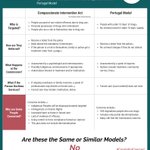
ALT Infographic of a table comparing the Portugal Model to the compassionate intervention act and answer 5 questions about each. Questions are who is targeted, how are they referred, what happens at the commission, what If a person declines services, and why are some people concerned. This table shows that the compassionate intervention act has used some of the same language as the Portugal Model but is very different from that model. It has not decriminalised personal possession of drug use and it includes a component of court ordered forced care. Concerns about both models are coercion. The Compassionate Intervention Act may infringe on charter rights and disproportionately target Indigenous Peoples

ALT Infographic about public substance use. Seeing people using drugs in public can sometimes make us feel unsafe. Many individuals choose public drug use because they lack a safe place to do so. Public substance use may make us feel uncomfortable, as we often associate following laws and regulations with safety. Instead of ‘tough on crime’, let's focus on finding real solutions. Housing, a safer supply of drugs, and safe consumption spaces can make a significant difference. By providing these resources, we can create a safer environment for everyone.

ALT An infographic explaining the unregulated drug poisoning crisis. Follows Tom and Julie through their days to explain the difference between regulated and unregulated market. Julie buys pain medicine and cannabis. Julie is able to dose her pain medicine, call for health advice when there is a recall on the pain medicine. Julie’s daughter is not able to buy cannabis because she is underage. Tom buys fentanyl and we learn his seller is at risk of being arrested and Tom would lose access to his usual fentanyl. Tom is unable to safely dose his fentanyl because he does not know what is in his drugs so he asks his friend to be with him. Tom’s friend disposed of his fentanyl after learning it had sedatives in it at a drug checking site. Tom’s friend needs wound care but will not go to this hospital because he will be treated poorly.

ALT Two people are talking. One asks "why don't people without housing just get government assistance? Or a job?" The other says "in Alberta, you need an address to get income support, so people without housing don't qualify. Plus, it's really difficult to hang on to ID and it can be tough to replace - a lot of supports and jobs aren't available without documents." The first person replies "I didn't realize it was so hard to access help. How are people supposed to get by without housing or income?"


ALT Two people are talking. One asks "what is fentanyl?" and "why are so many people who use it dying?" The other person answers "when we talk about the current public health crisis, fentanyl is a catch-all term to describe an unpredictable mix of lab-made opioids of different potencies. Opioids are chemicals that can treat pain but can also cause drowsiness and can stop your breathing. These days, people don't know how they will respond to each dose." The first person says "people are being poisoned by the current street drug supply. They would be safer if they knew what they we taking!"

ALT Three people are talking. Person 1 asks "why don't more people with addiction go to treatment". Person 2 replies "a lot of people want to go, but it can be so hard to get it! Prerequisite detox beds are limited, some programs don't allow meds, some need letters from multiple doctors, most don't take families..." Person 3 says "plus, many programs are not regulated or monitored. Some might be harmful! Risk of overdose increases, and bringing up traumas without support can many things worse". Person 1 replies "Sounds like we need better options!"

ALT A mother and child are talking. The child asks "why are people camping out at the transit station?". Mother answers "many people who use drugs are worried about their safety. If something bad happens to them at a transit station, somebody might see and be able to help." A text box reads "having a safe, designated place to use substances where help and services are close by is a win-win!" Bottom reads "Learn more about Supervised Consumption Sites online. Check out WhySCS.ca. We all deserve safety! #CareIsNotCoercedAB".

ALT Two people having coffee. One asks "what is meth?" and "why do people take it?". Other answers "Meth, or methamphetamine, is a substance that can give you energy. Some people use it to work for longer. Many people use it to stay awake if they don't have a safe place to sleep." First person replies "they are doing their best to survive! Providing safe housing sounds like a great way to help!" Bottom reads "Get informed! Learn more about housing first online. We all deserve safety! #CareIsNotCoercedAB".

ALT Infographic with five assumptions about the need for forced treatment related to safety and addiction and truth statements below. Assumption 1 Alberta streets are more dangerous than ever before. Truth The overall CSI has been decreasing in Alberta. Assumption 2 We are in an addiction crisis. Truth A poison drug supply is the reason for the crisis. Assumption 3 Addiction leads to social disorder and violence. Truth While the overall CSI has decreased in Alberta, the violent CSI in Canada increased due to sexual assault. Forced treatment does not address this violence. Assumption 4 Forced care can save lives. Truth Research tells us that forced care does not lead to positive outcomes. Some parents have found forced care helpful short-term in times of desperation but data overwhelmingly shows that it causes harm. Assumption 5 We need to help when someone is a danger to themselves or others. Truth We already have those options in place with the Mental Health Act.